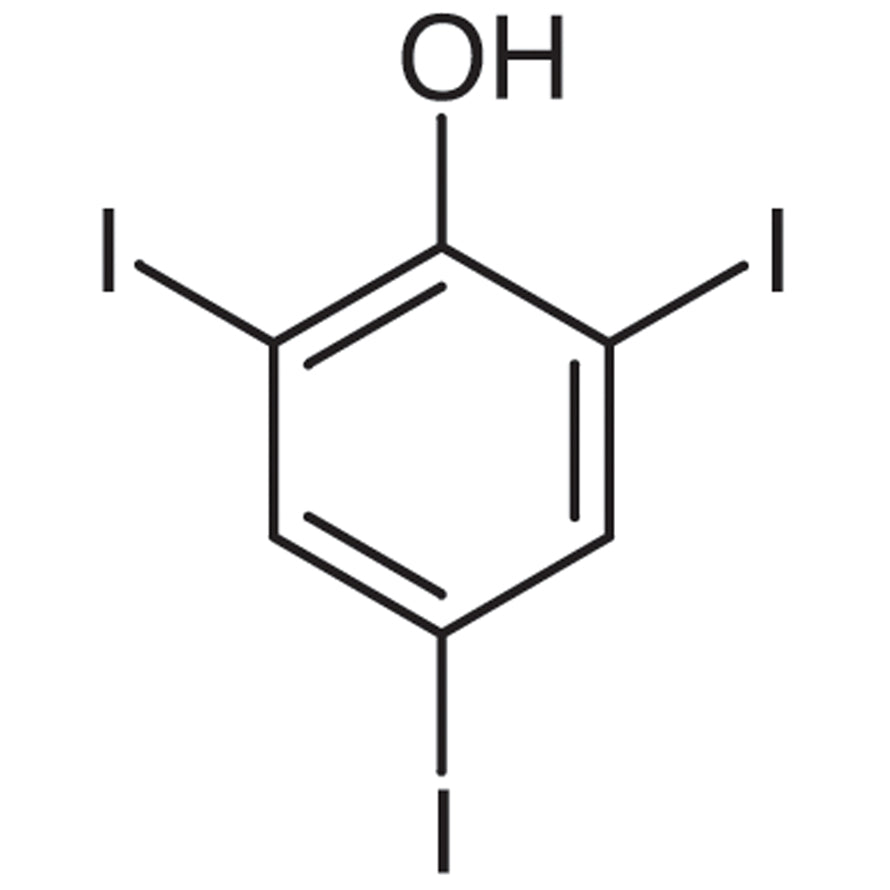
2,4,6-Triiodophenol is a chemical compound widely used in various laboratory experiments across different fields of chemistry. As a building block in chemical synthesis, it plays a crucial role in the development of complex molecules and structural modifications. Its aromatic structure, with three iodine atoms positioned at the 2, 4, and 6 positions, makes it a versatile reagent in organic and inorganic chemistry. This compound is particularly valued for its ability to participate in a wide range of chemical reactions, including substitution, redox, and qualitative and quantitative analysis.
The chemical properties of 2,4,6-Triiodophenol make it a preferred choice for laboratory use. It exhibits high polarity and electronegativity due to the presence of iodine atoms on the benzene ring, which enhances its reactivity with various reagents such as acids, bases, and organic solvents. Additionally, its relatively high melting and boiling points allow for stable handling during heating or cooling processes. These characteristics make it suitable for a variety of experimental setups, contributing to its widespread use in both research and educational settings.
In Indonesian laboratories, 2,4,6-Triiodophenol is commonly used in organic chemistry research, analytical chemistry, and the development of new chemical products. Its availability and chemical versatility make it an essential material for both academic and industrial applications. The compound is frequently employed in experiments requiring precise chemical reactions and structural modifications, supporting a wide range of scientific investigations.
TCI brochures (PDF)
- Iodinated Phenol/Benzoic Acid/Benzaldehyde Building Blocks 2024-11-15 · p. 1
- Organic synthesis applications benefit from 2,4,6-Triiodophenol's ability to undergo substitution reactions, making it ideal for creating complex molecular structures.
- Redox reactions often utilize this compound due to its reactivity and ability to participate in electron transfer processes.
- Qualitative analysis relies on its reactivity with various reagents, allowing for the identification of specific chemical compounds.
- Quantitative analysis benefits from its stable properties, enabling accurate measurements in analytical procedures.
- Structural modification experiments leverage its aromatic ring and iodine atoms for targeted chemical transformations.
| Brand | TCI |
|---|---|
| CAS number | 609-23-4 |
| Molecular formula | — |
| Purity | — |
| Category | Chemistry > Building Blocks > Non-Heterocyclic Building Blocks |
| Pack sizes | Available in various quantities as per standard laboratory requirements |
| Physical form | Solid |
| Storage | Store in a cool, dry place away from light and moisture |
2,4,6-Triiodophenol should be stored in a cool, dry environment, away from direct light and moisture to maintain its chemical stability. It is recommended to use airtight containers made of glass or polyethylene to prevent contamination and degradation. Due to its reactivity, it should be handled with care, using appropriate personal protective equipment such as gloves and safety goggles. In laboratory settings, it is important to ensure proper ventilation and to avoid contact with incompatible substances like strong acids or bases. Regular monitoring of storage conditions helps maintain the integrity of the compound, ensuring its effectiveness in experimental applications.
—
Produk Terkait
-
4-Iodophenol[forBiochemicalResearch] TCI I0840
Regular price From Rp 848.400,00Regular priceRp 593.250,00Sale price From Rp 848.400,00 -
4-Bromo-2-iodophenol TCI B4957
Regular price From Rp 2.491.650,00Regular priceRp 1.741.950,00Sale price From Rp 2.491.650,00 -
3-Iodophenol TCI I0495
Regular price From Rp 1.776.600,00Regular priceRp 1.242.150,00Sale price From Rp 1.776.600,00 -
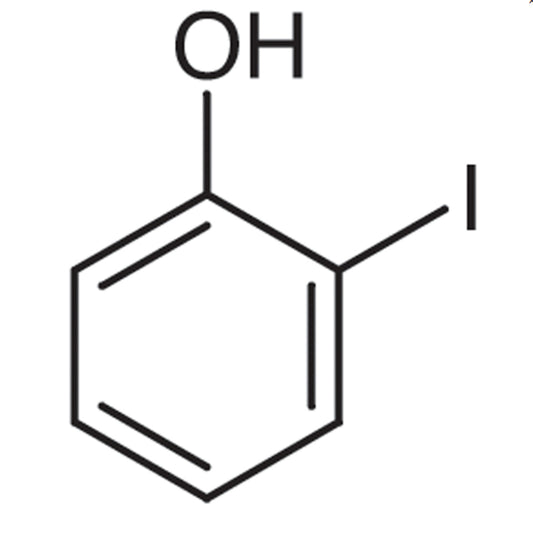
2-Iodophenol TCI I0460
Regular price From Rp 1.378.650,00Regular priceRp 963.900,00Sale price From Rp 1.378.650,00 -
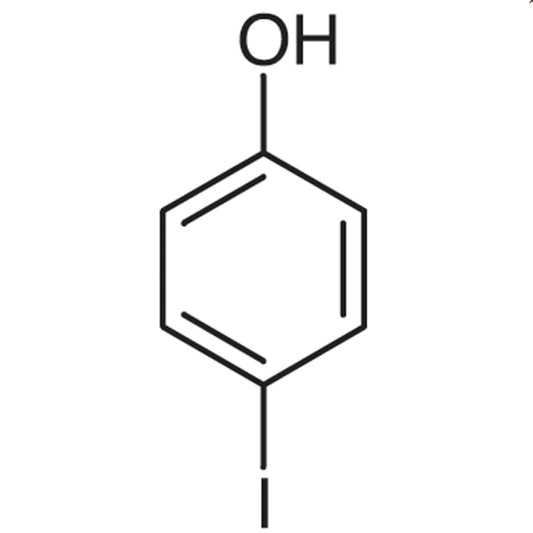
4-Iodophenol TCI I0311
Regular price From Rp 1.298.850,00Regular priceRp 908.250,00Sale price From Rp 1.298.850,00 -
4-Chloro-2-iodophenol TCI C3172
Regular price Rp 1.856.400,00Regular priceRp 1.297.800,00Sale price Rp 1.856.400,00 -
4-(Hydroxymethyl)-2,6-diiodophenol TCI H1958
Regular price From Rp 3.419.850,00Regular priceRp 2.390.850,00Sale price From Rp 3.419.850,00 -
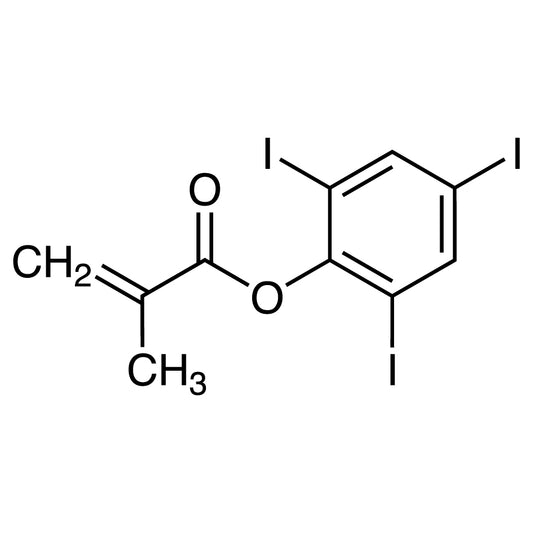
2,4,6-TriiodophenylMethacrylate TCI T4361
Regular price From Rp 3.392.550,00Regular priceRp 2.371.950,00Sale price From Rp 3.392.550,00