

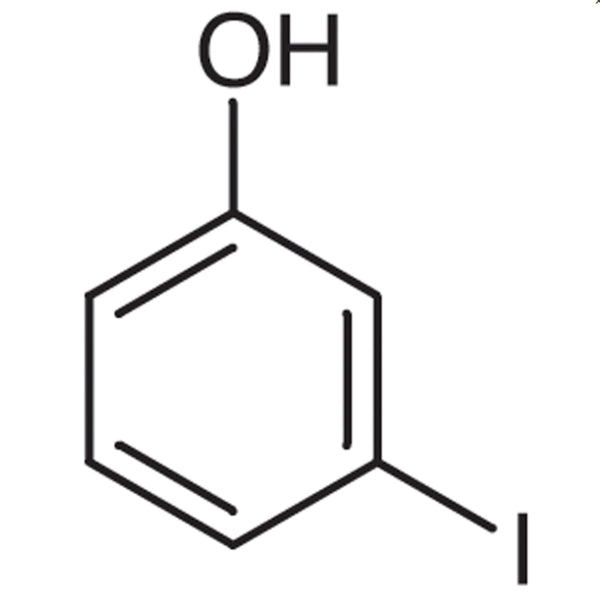
3-Iodophenol is a chemical compound widely used as a foundational material in various laboratory applications. It is a key building block in organic chemistry, particularly in the synthesis of complex organic molecules. Its aromatic structure, with an iodine atom attached to the phenol group, gives it unique chemical properties and high reactivity. This makes it an essential reagent for researchers working on synthetic pathways that require precise chemical transformations. The compound’s versatility is further enhanced by its ability to participate in both electrophilic and nucleophilic reactions, making it a valuable asset in diverse chemical processes.
The chemical properties of 3-Iodophenol, such as its reactivity at the phenolic and iodine groups, make it a preferred choice for synthetic chemists. The presence of iodine, a highly electronegative atom, contributes to its ability to engage in a wide range of chemical reactions. This reactivity is particularly useful in substitution and redox reactions, where the compound can act as both an electrophile and a nucleophile. Additionally, its solubility in organic solvents facilitates its use in various synthetic protocols, enhancing its applicability in both academic and industrial research settings.
In Indonesian laboratories, 3-Iodophenol is commonly used in organic chemistry research, especially in academic institutions and research centers. Its role in the synthesis of pharmaceutical compounds and industrial chemicals makes it a sought-after material. Researchers in Indonesia rely on 3-Iodophenol for its reliability and effectiveness in producing complex molecular structures, supporting advancements in chemical sciences and related fields.
TCI brochures (PDF)
- Iodinated Phenol/Benzoic Acid/Benzaldehyde Building Blocks 2024-11-15 · p. 1
- Organic synthesis is a primary application where 3-Iodophenol is used to create complex organic compounds through substitution and redox reactions.
- Pharmaceutical research benefits from its reactivity, as it is involved in the development of various drug compounds and medicinal agents.
- Industrial chemical production utilizes 3-Iodophenol due to its ability to participate in a wide range of chemical transformations.
- Analytical chemistry applications include its use as a reference standard for identifying and quantifying compounds in various samples.
- Educational institutions use 3-Iodophenol for teaching and research purposes, providing students with hands-on experience in synthetic chemistry.
| Brand | TCI |
|---|---|
| CAS number | 626-02-8 |
| Molecular formula | — |
| Purity | — |
| Category | Chemistry > Building Blocks > Non-Heterocyclic Building Blocks |
| Pack sizes | Available in various sizes as per supplier specifications |
| Physical form | Solid |
| Storage | Store in a cool, dry place away from light and moisture |
3-Iodophenol should be stored in a cool, dry environment, away from direct light and moisture to maintain its chemical integrity. It is recommended to use airtight containers made of glass or inert plastic to prevent contamination and degradation. Due to its reactivity, it should be handled with care, using appropriate personal protective equipment such as gloves and goggles. Avoid exposure to strong oxidizing agents or incompatible materials. In laboratory settings, it should be kept in a well-ventilated area to minimize inhalation risks. Proper labeling and storage practices are essential to ensure safety and compliance with laboratory protocols.
—
Produk Terkait
-
4-Iodophenol[forBiochemicalResearch] TCI I0840
Regular price From Rp 848.400,00Regular price -
4-Bromo-2-iodophenol TCI B4957
Regular price From Rp 2.491.650,00Regular price -
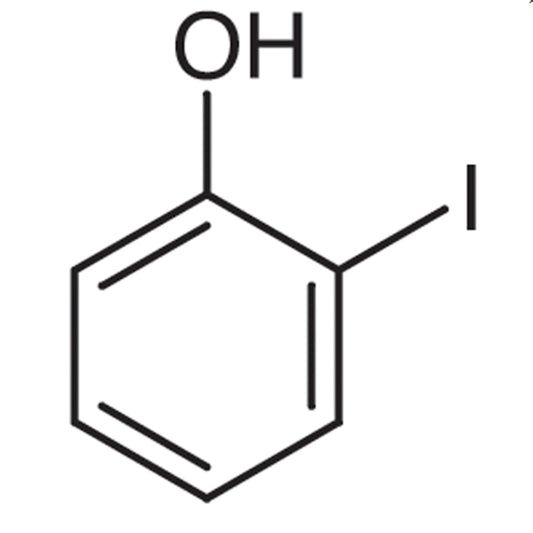
2-Iodophenol TCI I0460
Regular price From Rp 1.378.650,00Regular price -
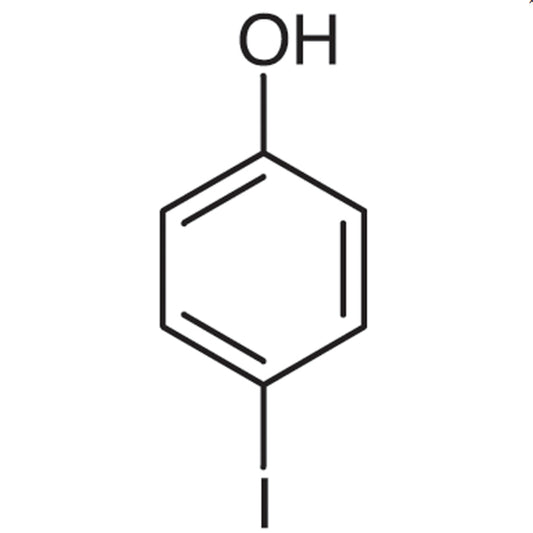
4-Iodophenol TCI I0311
Regular price From Rp 1.298.850,00Regular price -
4-Chloro-2-iodophenol TCI C3172
Regular price Rp 1.856.400,00Regular price -
2,4,6-Triiodophenol TCI T0452
Regular price From Rp 2.782.500,00Regular price -
4-(Hydroxymethyl)-2,6-diiodophenol TCI H1958
Regular price From Rp 3.419.850,00Regular price -
5'-Isopropyl-2'-methylindophenolSodiumSalt[RedoxIndicator] TCI M0408
Regular price Rp 1.167.600,00Regular price
![540-38-5 4-Iodophenol [for Biochemical Research] - AMI Scientific](http://amiscientific.com/cdn/shop/files/TCI2510I0840.jpg?v=1769180954&width=533)





![5418-43-9 5'-Isopropyl-2'-methylindophenol Sodium Salt [Redox Indicator] - AMI Scientific](http://amiscientific.com/cdn/shop/files/TCI2510M0408.jpg?v=1768361315&width=533)