3-Bromo-9-(4-bromophenyl)-9H-carbazole is a complex organic compound widely used in synthetic chemistry applications. It belongs to the class of heterocyclic building blocks, which are essential for the development of structurally diverse molecules. This compound plays a crucial role in the synthesis of various organic compounds, particularly those with biological activity. Its unique molecular structure, featuring bromo groups and a carbazole core, makes it a versatile reagent in chemical research.
The compound’s stability and controlled reactivity make it a preferred choice for researchers seeking reliable and predictable chemical behavior. Its ability to participate in substitution, addition, and aromatic reactions enhances its utility in synthetic pathways. The presence of multiple bromo substituents also allows for selective functionalization, making it a valuable tool in the design of complex molecules. These properties contribute to its popularity among scientists working in organic chemistry and related fields.
In Indonesian laboratories, 3-Bromo-9-(4-bromophenyl)-9H-carbazole is commonly used by chemists, pharmacologists, and materials scientists. It is particularly relevant in the development of bioactive compounds and industrial chemicals. Its application spans across various research areas, including pharmaceutical development and advanced material synthesis. The compound’s versatility and chemical stability make it a key component in many experimental setups within the scientific community.
TCI brochures (PDF)
- Carbazoles 2025-06-27 · p. 5
- Building Blocks for Organic Semiconductor 2026-03-24 · p. 18
Related TCI products
- TCI B5437 1616607-88-5 2-(2-Bromophenyl)-9-phenyl-9H-carbazole
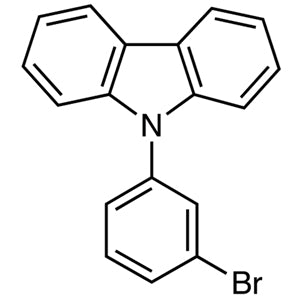
- TCI B4427 185112-61-2 9-(3-Bromophenyl)carbazole
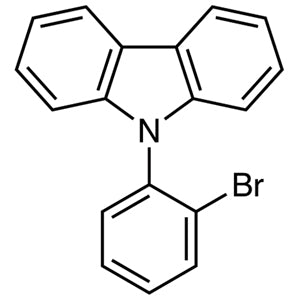
- TCI B4109 902518-11-0 9-(2-Bromophenyl)-9H-carbazole
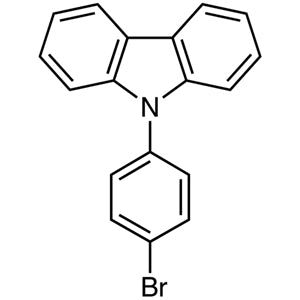
- TCI B3554 57102-42-8 9-(4-Bromophenyl)carbazole
- TCI D4563 73087-83-9 3,6-Dibromo-9-(4-bromophenyl)carbazole
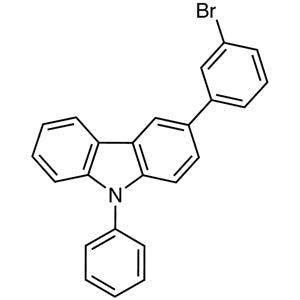
- TCI B5869 854952-59-3 3-(3-Bromophenyl)-9-phenyl-9H-carbazole
- Organic synthesis research utilizes this compound for constructing complex molecular frameworks due to its versatile reactivity and structural features.
- Pharmaceutical development benefits from its ability to participate in substitution and aromatic reactions, aiding in the design of bioactive molecules.
- Materials science applications leverage its heterocyclic structure for the synthesis of advanced functional materials with specific properties.
- Biochemistry studies incorporate it for the preparation of compounds with potential therapeutic applications and biological activity.
- Chemical engineering projects use it as a building block for creating novel compounds with tailored chemical properties and functional groups.
| Brand | TCI |
|---|---|
| CAS number | 1226860-66-7 |
| Molecular formula | — |
| Purity | — |
| Category | Chemistry > Building Blocks > Heterocyclic Building Blocks |
| Pack sizes | Available in standard laboratory quantities as per supplier specifications |
| Physical form | Solid, crystalline or amorphous depending on purity and storage conditions |
| Storage | Store in a cool, dry place away from light and moisture |
This compound should be stored in a cool, dry environment, away from direct sunlight and sources of heat. It is recommended to use airtight containers to prevent moisture absorption and contamination. Due to its brominated structure, it is important to handle the compound with appropriate personal protective equipment, such as gloves and safety goggles. It should be kept in a well-ventilated area to minimize exposure to vapors. Avoid contact with incompatible materials, such as strong oxidizing agents, to ensure safe handling. Proper labeling of storage containers is essential for safety and traceability in the laboratory.
—
Produk Terkait
-
2-(2-Bromophenyl)-9-phenyl-9H-carbazole TCI B5437
Regular price From Rp 1.246.350,00Regular priceRp 887.250,00Sale price From Rp 1.246.350,00 -
9-(3-Bromophenyl)carbazole TCI B4427
Regular price From Rp 1.351.350,00Regular priceRp 960.750,00Sale price From Rp 1.351.350,00 -
9-(2-Bromophenyl)-9H-carbazole TCI B4109
Regular price From Rp 875.700,00Regular priceRp 627.900,00Sale price From Rp 875.700,00 -
9-(4-Bromophenyl)carbazole TCI B3554
Regular price From Rp 1.405.950,00Regular priceRp 998.550,00Sale price From Rp 1.405.950,00 -
3,6-Dibromo-9-(4-bromophenyl)carbazole TCI D4563
Regular price From Rp 717.150,00Regular priceRp 1.683.150,00Sale price From Rp 717.150,00Sale -
3-(3-Bromophenyl)-9-phenyl-9H-carbazole TCI B5869
Regular price From Rp 1.431.150,00Regular priceRp 1.016.400,00Sale price From Rp 1.431.150,00 -
9-Benzyl-3-bromo-9H-carbazole TCI B5461
Regular price From Rp 1.563.450,00Regular priceRp 1.108.800,00Sale price From Rp 1.563.450,00 -
10-Bromo-7H-benzo[c]carbazole TCI B4883
Regular price From Rp 822.150,00Regular priceRp 590.100,00Sale price From Rp 822.150,00