4,5-Bis(dicyclohexylphosphino)-9,9-dimethylxanthene is a phosphorus-containing organic compound widely used as a catalyst in various chemical reactions, particularly in catalysis and inorganic chemistry. This compound plays a crucial role in laboratory settings where efficient and stable catalytic systems are required. It is especially valuable in cross-coupling reactions, which are fundamental in the synthesis of complex organic molecules. Its ability to facilitate chemical transformations with high efficiency makes it a key component in modern synthetic chemistry.
The compound's unique molecular structure, featuring two dicyclohexylphosphino groups, contributes to its effectiveness as a catalyst. These groups enable strong coordination with transition metals, forming stable and active catalytic complexes. This property enhances its reactivity and makes it highly suitable for applications requiring precise control over reaction conditions. The compound's stability under various reaction environments further supports its reliability in laboratory processes.
In Indonesian laboratories, 4,5-Bis(dicyclohexylphosphino)-9,9-dimethylxanthene is commonly used in both academic and research settings. It is particularly relevant for studies involving organic and inorganic chemistry, supporting advancements in synthetic methods and catalytic processes. Its widespread application highlights its importance in modern chemical research and development in the region.
TCI brochures (PDF)
- C-H Bond Activation Reaction 2025-06-20 · p. 9
- Ligands 2025-12-01 · p. 7
- Suzuki-Miyaura Cross Coupling Reaction 2025-12-01 · p. 26
Related TCI products
- TCI B2709 161265-03-8 4,5-Bis(diphenylphosphino)-9,9-dimethylxanthene
- TCI D3834 628333-86-8 1-[2-(Di-tert-butylphosphino)phenyl]-3,5-diphenyl-1H-pyrazole
- TCI B2064 95464-05-4 [1,1'-Bis(diphenylphosphino)ferrocene]palladium(II) Dichloride Dichloromethane Adduct
- TCI M2103 1229444-44-3 1-Methyl-1-[4-(diphenylphosphino)benzyl]pyrrolidinium Bromide
- TCI T4047 97739-46-3 1,3,5,7-Tetramethyl-8-phenyl-2,4,6-trioxa-8-phosphaadamantane
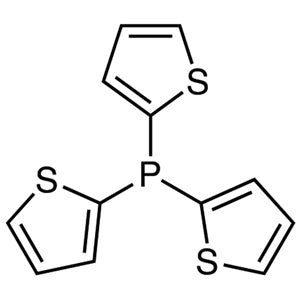
- TCI T1666 24171-89-9 Tri(2-thienyl)phosphine
- Cross-coupling reactions such as Suzuki and Kumada benefit from its ability to form stable and active catalytic complexes, enhancing reaction efficiency and selectivity.
- Organic synthesis projects often utilize this compound due to its capacity to facilitate complex molecule formation with high yield and purity.
- Inorganic chemistry research leverages its strong coordination properties with transition metals, enabling precise control over reaction pathways.
- Catalytic studies in academic institutions rely on its stability and reactivity for consistent results in experimental protocols.
- Industrial-scale chemical processes in research labs use it for its efficiency in promoting chemical transformations under varied reaction conditions.
| Brand | TCI |
|---|---|
| CAS number | 940934-47-4 |
| Molecular formula | — |
| Purity | — |
| Category | Chemistry > Catalysis and Inorganic Chemistry > Cross-Coupling [Catalysis] |
| Pack sizes | Available in various quantities as per standard laboratory supply |
| Physical form | Solid powder |
| Storage | Store in a cool, dry place away from moisture and direct sunlight |
This compound should be stored in a cool, dry environment to maintain its stability and effectiveness. It is recommended to keep it in airtight containers to prevent exposure to moisture and air, which could degrade its catalytic properties. Laboratory personnel should handle it with care, using appropriate personal protective equipment such as gloves and safety goggles. Due to its chemical nature, it should be stored away from incompatible substances to ensure safety. Regular monitoring of storage conditions is advised to ensure optimal performance in catalytic applications. Proper labeling of containers is essential for safe handling and to prevent accidental exposure.
—
Product Categories
- Catalysis and Inorganic ChemistryCross-Coupling [Catalysis]Phosphine Ligands (for Cross-Coupling) [Catalysis]
- Catalysis and Inorganic ChemistryCross-coupling Reaction using Transition Metal Catalysts [C-C Bond Formation]Phosphine Ligands [Cross-coupling Reaction using Transition Metal Catalysts]
- Catalysis and Inorganic ChemistryPhosphorous Compounds [Catalysis and Inorganic Chemistry]Polydentate Phosphine Ligands [Catalysis]
- Synthetic ReagentsC-C Bond Formation [Synthetic Reagents]Cross-coupling Reaction using Transition Metal Catalysts [C-C Bond Formation]
- Synthetic ReagentsC-X(Non-Halogen) Bond Formation [Synthetic Reagents]C-H Bond Activation Reaction [Synthetic Reagents]
Produk Terkait
-
4,5-Bis(diphenylphosphino)-9,9-dimethylxanthene TCI B2709
Regular price From Rp 1.351.350,00Regular priceRp 960.750,00Sale price From Rp 1.351.350,00 -
1-[2-(Di-tert-butylphosphino)phenyl]-3,5-diphenyl-1H-pyrazole TCI D3834
Regular price From Rp 1.510.950,00Regular priceRp 1.072.050,00Sale price From Rp 1.510.950,00 -
[1,1'-Bis(diphenylphosphino)ferrocene]palladium(II)DichlorideDichloromethaneAdduct TCI B2064
Regular price From Rp 2.121.000,00Regular priceRp 1.498.350,00Sale price From Rp 2.121.000,00 -
1-Methyl-1-[4-(diphenylphosphino)benzyl]pyrrolidiniumBromide TCI M2103
Regular price Rp 6.943.650,00Regular priceRp 4.870.950,00Sale price Rp 6.943.650,00 -
1,3,5,7-Tetramethyl-8-phenyl-2,4,6-trioxa-8-phosphaadamantane TCI T4047
Regular price From Rp 2.227.050,00Regular priceRp 1.572.900,00Sale price From Rp 2.227.050,00 -
Tri(2-thienyl)phosphine TCI T1666
Regular price From Rp 2.544.150,00Regular priceRp 1.794.450,00Sale price From Rp 2.544.150,00 -
Copper(I)TrifluoromethanesulfonateBenzeneComplex TCI T1442
Regular price From Rp 2.041.200,00Regular priceRp 1.426.950,00Sale price From Rp 2.041.200,00 -
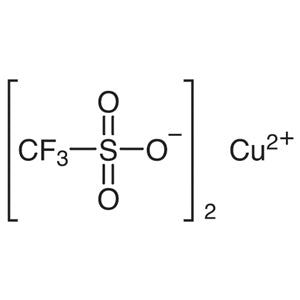
Copper(II)Trifluoromethanesulfonate TCI T1292
Regular price From Rp 1.510.950,00Regular priceRp 1.056.300,00Sale price From Rp 1.510.950,00