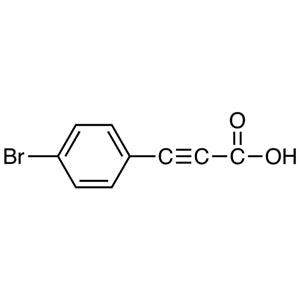
3-(4-Bromophenyl)propiolic acid, with CAS number 25294-65-9, is an organic compound belonging to the non-heterocyclic building block category, supplied by TCI as a laboratory-quality starting material for chemical synthesis. Its structure combines a benzene ring substituted with a bromine atom at the para position, an alkyne group (a carbon-carbon triple bond), and a carboxylic acid group, which together make it a highly versatile intermediate in molecular design. In the laboratory, this material is generally used as a substrate or initial reagent in cross-coupling reactions, functional group modifications, and the construction of frameworks for pharmaceutical compounds, specialty chemicals, and functional materials. Its availability in the TCI catalog gives researchers convenient access to this intermediate with consistent quality that can be traced through lot marking on each package.
The principal advantage of this compound lies in the presence of three reactive sites within a single molecule: a bromine atom that is readily substituted in metal-mediated coupling reactions, an alkyne group that is reactive toward a range of addition and cycloaddition reactions, and a carboxylic acid group that can be esterified or amidated. This combination of functional handles makes it a preferred choice for synthetic chemists who need a reliable, multifunctional scaffold for the stepwise elaboration of more complex structures. Because each reactive position can be addressed selectively, researchers can plan multi-step synthetic routes with confidence, reducing the number of intermediate steps and improving overall efficiency in route design.
In Indonesian research and quality-control laboratories, this building block is typically applied in organic synthesis workflows, including medicinal chemistry projects aimed at developing new pharmaceutical candidates, as well as in the preparation of specialty chemicals and functional materials. Academic institutions, contract research organizations, and industrial research and development facilities commonly employ intermediates of this type in cross-coupling and derivatization sequences, where the traceable lot marking provided by TCI supports reproducible results and proper documentation for laboratory records and audits.
Related TCI products
- Cross-coupling reactions: The bromine atom at the para position is readily activated in metal-catalyzed transformations, making this compound a dependable aryl electrophile for Suzuki, Sonogashira, and related cross-coupling sequences commonly run in synthesis laboratories.
- Alkyne functionalization: The carbon-carbon triple bond readily participates in addition and cycloaddition reactions, allowing chemists to construct cyclic or further functionalized frameworks from a single, well-defined starting point.
- Esterification and amidation: The carboxylic acid group can be converted into esters or amides, enabling the introduction of this aromatic scaffold into more complex pharmaceutical and specialty chemical structures during route development.
- Pharmaceutical building block design: The combination of three reactive sites supports the design of drug-like intermediates, where each functional group can be elaborated in a controlled, stepwise manner throughout a synthesis campaign.
- Functional materials synthesis: The rigid alkyne linkage together with the polar carboxylic acid group makes this compound useful for preparing conjugated or surface-active materials for advanced laboratory research and material development.
| Brand | TCI |
|---|---|
| CAS number | 25294-65-9 |
| Molecular formula | — |
| Purity | — |
| Category | Chemistry > Building Blocks > Non-Heterocyclic Building Blocks |
| Pack sizes | available in standard laboratory pack sizes as listed in the TCI catalog |
| Physical form | as indicated on the product label and accompanying TCI documentation |
| Storage | — |
- Product name: TCI B5243 3-(4-Bromophenyl)propiolic Acid
Store the product in its original, tightly sealed container in a cool, dry, and well-ventilated area, protected from direct sunlight and sources of heat or ignition. Keep the container closed when not in use and reseal it promptly after each sampling to avoid moisture uptake and contamination. Handle the material with appropriate laboratory personal protective equipment, including gloves and safety goggles, and work in a fume hood or with adequate ventilation. Keep the substance away from incompatible materials, particularly strong oxidizing agents, and dispose of any waste in accordance with applicable local regulations.
Note: Where specific pack sizes or physical form were not provided in the source data, the description refers to standard TCI catalog labeling.
—
Produk Terkait
-
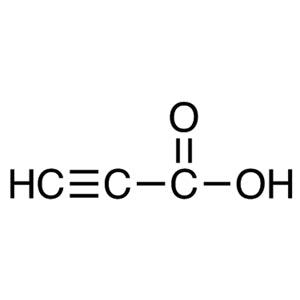
PropiolicAcid TCI P0497
Regular price From Rp 1.458.450,00Regular price -
3-(p-Tolyl)propiolicAcid TCI M3542
Regular price Rp 8.560.650,00Regular price -
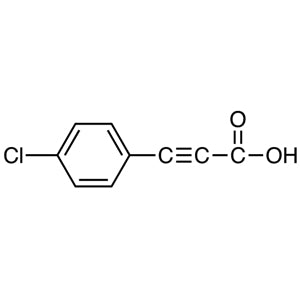
3-(4-Chlorophenyl)propiolicAcid TCI C3314
Regular price Rp 3.605.700,00Regular price -
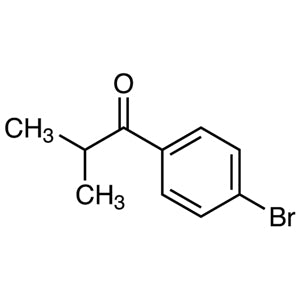
1-(4-Bromophenyl)-2-methyl-1-propanone TCI B5232
Regular price Rp 2.094.750,00Regular price -
1,3-Bis(4-bromophenyl)-2-propanone TCI B4791
Regular price From Rp 1.961.400,00Regular price -
1-(4-Bromophenyl)-1,3-butanedione TCI B4754
Regular price From Rp 4.929.750,00Regular price -
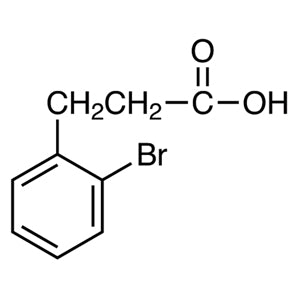
3-(2-Bromophenyl)propionicAcid TCI B4409
Regular price From Rp 1.087.800,00Regular price -
4-BromophenylCyclopropylKetone TCI B4076
Regular price Rp 1.298.850,00Regular price