Propiolic Acid (TCI P0497), with CAS number 471-25-0, is a versatile chemical compound widely used in laboratory settings for its reactivity and utility in chemical synthesis. As a non-heterocyclic building block, it plays a crucial role in the development of complex organic molecules. Its unique structure, featuring a triple bond and a carboxylic acid group, makes it an essential component in various synthetic pathways. This compound is commonly utilized in academic and industrial research to create new compounds, including pharmaceuticals, polymers, and specialty chemicals. Its availability in both solid and liquid forms allows for flexibility in experimental design and application.
Propiolic Acid is known for its high reactivity, which makes it a preferred choice for chemists seeking efficient and effective synthetic routes. Its polar nature and low melting point contribute to its volatility, enabling it to participate in a wide range of chemical reactions. The compound's ability to undergo acylation, alkylation, and covalent bonding reactions makes it particularly valuable in the synthesis of functionalized molecules. Its reactivity also allows for rapid and specific reactions, which are essential in the development of new materials and drug compounds. These properties make it a reliable and widely used reagent in modern chemical research.
In Indonesian laboratories, Propiolic Acid is extensively used in organic chemistry research, particularly in the fields of pharmaceuticals and materials science. Its role in synthesizing complex compounds has made it a key reagent for researchers working on drug development and advanced material synthesis. The compound's availability and ease of handling have contributed to its popularity among both academic and industrial chemists in Indonesia. Its application in various experimental setups highlights its importance in the chemical research landscape of the region.
TCI brochures (PDF)
- Cross-linkers 2026-04-14 · p. 2
- Bioconjugation Reagents 2026-07-07 · p. 8
- Colloidal Quantum Dot (QD) Research Reagents 2026-05-21 · p. 4
- Click Chemistry 2026-09-08 · p. 14
- Reagents for Biological Research 2025-03-11 · p. 29
- Organic synthesis in pharmaceutical research due to its reactivity and ability to form complex molecular structures.
- Polymer chemistry applications for creating functionalized polymers and specialty materials.
- Catalytic reactions in synthetic pathways where rapid and specific chemical transformations are required.
- Analytical chemistry for use in standardization and calibration of chemical reagents and solutions.
- Material science research for the development of advanced organic compounds and nanomaterials.
| Brand | TCI |
|---|---|
| CAS number | 471-25-0 |
| Molecular formula | — |
| Purity | — |
| Category | Chemistry > Building Blocks > Non-Heterocyclic Building Blocks |
| Pack sizes | Available in various quantities to suit different laboratory needs |
| Physical form | Solid or liquid, depending on the specific product variant |
| Storage | Store in a cool, dry place away from direct sunlight and moisture |
Propiolic Acid should be stored in a cool, dry environment, away from direct sunlight and sources of heat. It is recommended to keep the compound in a tightly sealed container to prevent exposure to moisture and air. Due to its reactivity, it should be handled with care, using appropriate personal protective equipment such as gloves and safety goggles. Storage in a well-ventilated area is advisable to minimize the risk of inhalation of vapors. The compound should not be stored near incompatible substances, such as strong bases or oxidizing agents. Regular monitoring of storage conditions is essential to ensure the stability and integrity of the material.
—
Product Categories
- Building BlocksNon-Heterocyclic Building BlocksCarbonyl Compounds [Non-Heterocyclic Building Blocks]
- Chemical BiologyConjugation Chemistry/Click ChemistryCrosslinker Azides/Alkynes [Conjugation Chemistry/Click Chemistry]
- Chemical BiologyConjugation Chemistry/Click ChemistryTerminal Alkynes [Conjugation Chemistry/Click Chemistry]
- Pharmaceutical Development and Drug Discovery ResearchConjugation Chemistry/Click ChemistryCrosslinker Azides/Alkynes [Conjugation Chemistry/Click Chemistry]
- Pharmaceutical Development and Drug Discovery ResearchConjugation Chemistry/Click ChemistryTerminal Alkynes [Conjugation Chemistry/Click Chemistry]
Produk Terkait
-
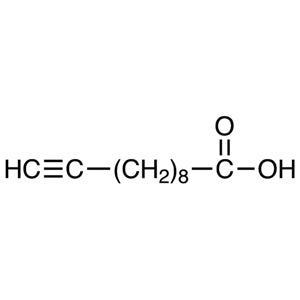
10-UndecynoicAcid TCI U0054
Regular price From Rp 1.060.500,00Regular priceRp 757.050,00Sale price From Rp 1.060.500,00 -
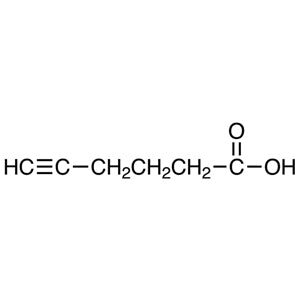
5-HexynoicAcid TCI H0882
Regular price From Rp 2.199.750,00Regular priceRp 1.554.000,00Sale price From Rp 2.199.750,00 -
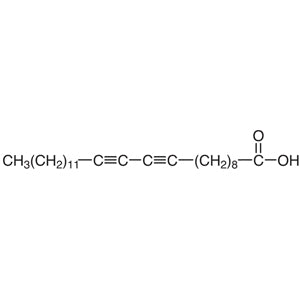
10,12-PentacosadiynoicAcid TCI P1030
Regular price From Rp 610.050,00Regular priceRp 442.050,00Sale price From Rp 610.050,00 -
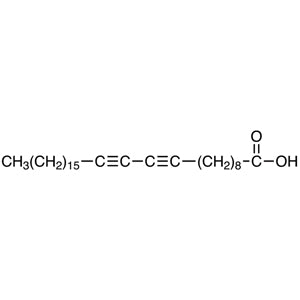
10,12-NonacosadiynoicAcid TCI N0514
Regular price Rp 7.684.950,00Regular priceRp 5.389.650,00Sale price Rp 7.684.950,00 -
10,12-HeptadecadiynoicAcid TCI H0775
Regular price Rp 4.504.500,00Regular priceRp 3.165.750,00Sale price Rp 4.504.500,00 -
2,4-HeptadecadiynoicAcid TCI H0667
Regular price Rp 3.392.550,00Regular priceRp 2.387.700,00Sale price Rp 3.392.550,00 -
10,12-HeptacosadiynoicAcid TCI H0666
Regular price From Rp 1.643.250,00Regular priceRp 1.164.450,00Sale price From Rp 1.643.250,00 -
3-(4-Bromophenyl)propiolicAcid TCI B5243
Regular price Rp 3.207.750,00Regular priceRp 2.258.550,00Sale price Rp 3.207.750,00