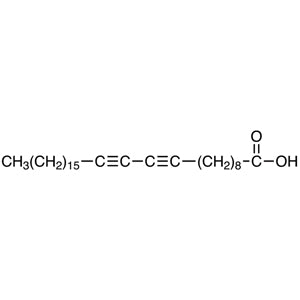
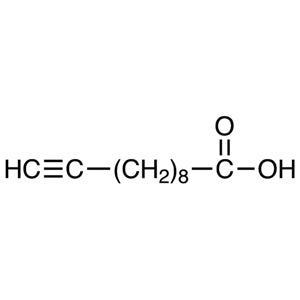
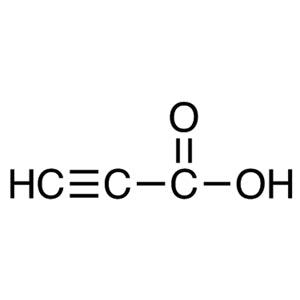
10,12-Pentacosadiynoic Acid (TCI P1030) is a long-chain fatty acid with two consecutive carbon–carbon triple bonds, known as a diacetylene group, near the middle of its chain. In the laboratory it is best known as a key monomer for making polydiacetylene, a conjugated polymer that can change colour. Its long hydrocarbon chain and terminal carboxylic acid group also make it a useful building block in organic chemistry, materials science, and sensor research that relies on ordered molecular assembly.
Researchers choose this compound mainly because it can polymerise in the solid state after exposure to ultraviolet light. The result is a blue polymer that can turn red when exposed to stimuli such as heat, changes in pH, solvents, or biological interactions. The hydrophilic carboxylic acid head and hydrophobic hydrocarbon tail let the molecules arrange themselves easily into vesicles, Langmuir–Blodgett thin films, or self-assembled films. The acid group can also be converted into esters or amides when researchers need to attach a specific recognition ligand.
In Indonesia, this compound suits laboratories working in materials chemistry, nanotechnology, and sensor development. University research groups, postgraduate programmes, and research institutes studying colour-changing polymers, functional thin films, and supramolecular assemblies can use it as a reliable starting material. As part of the TCI range supplied by AMI Scientific, it supports both teaching-oriented research projects and advanced work on stimuli-responsive materials and colorimetric detection systems in Indonesian academic and industrial laboratories.
TCI brochures (PDF)
- Colloidal Quantum Dot (QD) Research Reagents 2026-05-21 · p. 5
- Polydiacetylene synthesis: the diacetylene group allows UV-initiated solid-state polymerisation, giving a conjugated blue polymer used to study colour-changing materials.
- Colorimetric sensor development: the blue-to-red colour transition triggered by heat, pH, solvents, or biological interactions makes it a suitable base for visual detection systems.
- Vesicle and self-assembly studies: its hydrophilic carboxylic head and hydrophobic chain allow it to form ordered vesicles and self-assembled structures in aqueous systems.
- Langmuir–Blodgett thin film preparation: its amphiphilic structure makes it suitable for building organised monolayers and thin films for surface and materials science research.
- Functionalisation with recognition ligands: the carboxylic acid group can be converted into esters or amides, allowing researchers to attach targeting or recognition units for biosensing work.
| Brand | TCI (product code P1030) |
|---|---|
| CAS number | 66990-32-7 |
| Molecular formula | — |
| Purity | — |
| Category | Chemistry > Building Blocks > Non-Heterocyclic Building Blocks |
| Pack sizes | as listed on the product page or in the TCI catalogue |
| Physical form | refer to the manufacturer's Certificate of Analysis and product documentation |
| Storage | follow the manufacturer's label and Safety Data Sheet; protect from light |
Store 10,12-Pentacosadiynoic Acid in its original, tightly closed container in a cool, dry place, following the storage conditions on the manufacturer's label and Safety Data Sheet. Because the compound polymerises when exposed to ultraviolet light, keep it away from direct sunlight and strong light sources, ideally in an amber or opaque container. Keep it away from heat and incompatible substances. When handling, wear standard laboratory protective equipment, including gloves, safety glasses, and a lab coat. Avoid creating or breathing in dust, and work in a well-ventilated area or fume hood. Read the Safety Data Sheet before use and dispose of waste according to local regulations.
—
Product Categories
Produk Terkait
-
10,12-HeptacosadiynoicAcid TCI H0666
Regular price From Rp 1.643.250,00Regular priceRp 1.164.450,00Sale price From Rp 1.643.250,00 -
10,12-NonacosadiynoicAcid TCI N0514
Regular price Rp 7.684.950,00Regular priceRp 5.389.650,00Sale price Rp 7.684.950,00 -
10-UndecynoicAcid TCI U0054
Regular price From Rp 1.060.500,00Regular priceRp 757.050,00Sale price From Rp 1.060.500,00 -
PropiolicAcid TCI P0497
Regular price From Rp 1.510.950,00Regular priceRp 1.072.050,00Sale price From Rp 1.510.950,00 -
10,12-HeptadecadiynoicAcid TCI H0775
Regular price Rp 4.504.500,00Regular priceRp 3.165.750,00Sale price Rp 4.504.500,00 -
2,4-HeptadecadiynoicAcid TCI H0667
Regular price Rp 3.392.550,00Regular priceRp 2.387.700,00Sale price Rp 3.392.550,00 -
10,12-Pentacosadiyn-1-ol TCI P1053
Regular price From Rp 4.320.750,00Regular priceRp 3.020.850,00Sale price From Rp 4.320.750,00 -
ValericAcid TCI V0003
Regular price From Rp 610.050,00Regular priceRp 426.300,00Sale price From Rp 610.050,00