10,12-Pentacosadiyn-1-ol from TCI is a long-chain alcohol with a conjugated diacetylene unit in the middle of its chain. A diacetylene unit is two triple bonds in sequence. The compound belongs to the family of amphiphilic diacetylene monomers, which are known for topochemical polymerization. When the monomers are packed in an ordered way, such as in crystals, thin films, or vesicles, UV light turns them into polydiacetylene. In the laboratory, this compound serves as a building block for colorimetric sensors and functional materials.
The most important feature of this compound is the color change of the polydiacetylene it forms. The polymer usually looks blue. It can turn red in response to heat, a change in pH, mechanical stress, or contact with certain molecules. The long alkyl chain is hydrophobic and helps the molecules pack in an ordered way. The hydroxyl group at the end of the chain is hydrophilic. This hydroxyl group can also be turned into an ester, an ether, or another functional group so that specific receptors can be attached. Together, these features make the monomer a flexible starting point for responsive materials.
In Indonesian laboratories, 10,12-Pentacosadiyn-1-ol is typically used in university research groups, materials science laboratories, and analytical chemistry units that develop sensing platforms. Researchers use it to prepare vesicles, self-assembled films, and modified monomers for colorimetric detection studies. Polymerization is triggered by light, so the material needs careful handling during weighing, preparation, and storage. AMI Scientific supplies this TCI building block to support research and development work across Indonesia.
- Colorimetric sensor development: the polydiacetylene made from this monomer changes from blue to red, which gives a visual signal for detecting heat, pH changes, mechanical stress, or target molecules.
- Vesicle and liposome-type assemblies: its amphiphilic structure, with a hydrophobic alkyl chain and a hydrophilic hydroxyl end, helps the molecules form ordered assemblies that can then be polymerized with UV light.
- Thin film and surface coating research: when the monomers are packed in ordered thin films, UV light can polymerize them topochemically, giving functional polydiacetylene layers for materials studies.
- Synthesis of functionalized diacetylene monomers: the terminal hydroxyl group can be converted into esters, ethers, or other functional groups to attach specific receptors for selective detection.
- Functional materials research: as a non-heterocyclic building block with a conjugated diacetylene core, it supports work on stimulus-responsive polymers and smart materials in academic and industrial laboratories.
| Brand | TCI (product code P1053) |
|---|---|
| CAS number | 92266-90-5 |
| Molecular formula | — |
| Purity | — |
| Category | Chemistry > Building Blocks > Non-Heterocyclic Building Blocks |
| Pack sizes | as listed on the product page; contact AMI Scientific for available options |
| Physical form | see the TCI Certificate of Analysis and product label |
| Storage | protect from light, because polymerization is triggered by light; follow the conditions on the TCI label |
10,12-Pentacosadiyn-1-ol polymerizes when exposed to light, so it should be kept in its original tightly closed container and protected from light. Amber glass or opaque containers are suitable. Store the product in a cool, dry place away from heat sources and direct sunlight, and follow the storage conditions on the TCI label and Safety Data Sheet. Wear suitable laboratory protective equipment, such as gloves, safety glasses, and a lab coat. Avoid creating dust or inhaling it, and work in a well-ventilated area. Keep exposure to light short while weighing and preparing solutions. Close containers promptly after use, and dispose of waste according to local regulations.
—
Produk Terkait
-
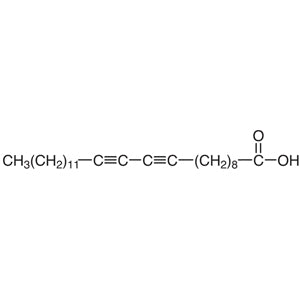
10,12-PentacosadiynoicAcid TCI P1030
Regular price From Rp 610.050,00Regular priceRp 442.050,00Sale price From Rp 610.050,00 -
10-Undecyn-1-ol TCI U0055
Regular price Rp 3.446.100,00Regular priceRp 2.409.750,00Sale price Rp 3.446.100,00 -
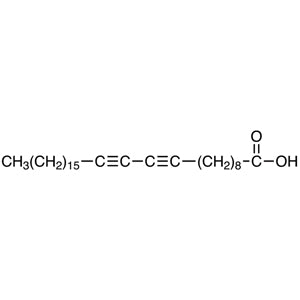
10,12-HeptacosadiynoicAcid TCI H0666
Regular price From Rp 1.643.250,00Regular priceRp 1.164.450,00Sale price From Rp 1.643.250,00 -
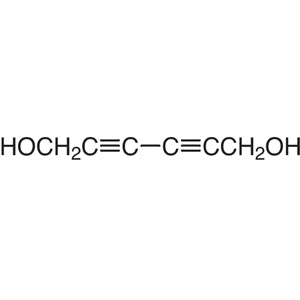
2,4-Hexadiyne-1,6-diol TCI H0619
Regular price From Rp 1.483.650,00Regular priceRp 1.053.150,00Sale price From Rp 1.483.650,00 -
10,12-NonacosadiynoicAcid TCI N0514
Regular price Rp 7.684.950,00Regular priceRp 5.389.650,00Sale price Rp 7.684.950,00 -
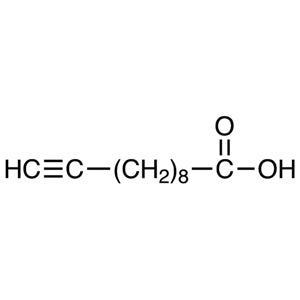
10-UndecynoicAcid TCI U0054
Regular price From Rp 1.060.500,00Regular priceRp 757.050,00Sale price From Rp 1.060.500,00 -
1-Iodo-1-propyne TCI P1065
Regular price Rp 10.997.700,00Regular priceRp 7.690.200,00Sale price Rp 10.997.700,00 -
1-PentynylIodide TCI P1055
Regular price Rp 4.743.900,00Regular priceRp 3.316.950,00Sale price Rp 4.743.900,00