Bis(4-bromophenyl)iodonium trifluoromethanesulfonate is a synthetic reagent widely used in organic chemistry laboratories. It belongs to the class of hypervalent iodine compounds and functions as a sulfonylating agent in various chemical reactions. This compound is particularly valuable for its ability to participate in substitution and electrophilic reactions, making it a key reagent in the synthesis of complex aromatic compounds. Its unique molecular structure allows for high reactivity and specificity, which is essential in modern synthetic chemistry.
The compound is known for its stability under controlled conditions and its ability to react with a wide range of organic substrates. These properties make it a preferred choice for researchers aiming to achieve precise and efficient synthetic outcomes. Its reactivity and selectivity are further enhanced by its trifluoromethanesulfonate group, which contributes to its effectiveness in promoting sulfonyl transfer reactions. This makes it a versatile tool in both academic and industrial research settings.
In Indonesian laboratories, this reagent is commonly used in organic synthesis, especially in the development of pharmaceutical compounds and industrial chemicals. Its role in creating complex molecular structures is critical in research focused on drug discovery and chemical innovation. Due to its chemical reactivity, it is often included in the standard inventory of chemical suppliers like AMI Scientific, supporting a wide range of research activities.
TCI brochures (PDF)
- Hypervalent Iodine Compounds 2025-06-12 · p. 6
Related TCI products
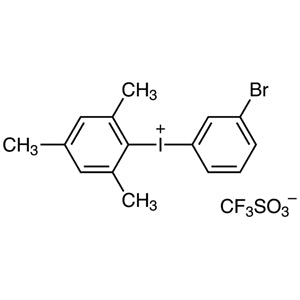
- TCI B5277 1203709-76-5 (3-Bromophenyl)(mesityl)iodonium Trifluoromethanesulfonate
- TCI P2413 905718-46-9 Phenyl[3-(trifluoromethyl)phenyl]iodonium Trifluoromethanesulfonate
- TCI P2097 175224-35-8 Phenyl[4-(trimethylsilyl)thiophen-3-yl]iodonium Trifluoromethanesulfonate
- TCI T2029 333-27-7 Methyl Trifluoromethanesulfonate
- TCI T1442 42152-46-5 Copper(I) Trifluoromethanesulfonate Benzene Complex
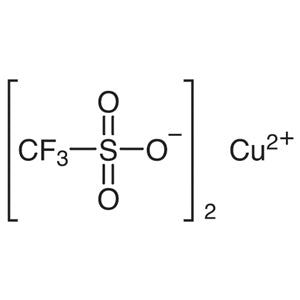
- TCI T1292 34946-82-2 Copper(II) Trifluoromethanesulfonate
- Organic synthesis applications benefit from this reagent's ability to facilitate sulfonyl transfer reactions, making it ideal for creating complex aromatic compounds.
- Pharmaceutical research utilizes this compound to develop new drug molecules, leveraging its reactivity in synthetic pathways.
- Industrial chemical production relies on its efficiency in catalyzing reactions that lead to the formation of functionalized aromatic structures.
- Academic research in chemistry uses it to explore new synthetic methodologies, particularly in the study of hypervalent iodine compounds.
- Environmental chemistry studies may employ it to investigate the reactivity of halogenated compounds in various reaction mechanisms.
| Brand | TCI |
|---|---|
| CAS number | 139139-81-4 |
| Molecular formula | — |
| Purity | — |
| Category | Chemistry > Synthetic Reagents > Hypervalent Iodine Compounds |
| Pack sizes | Available in various quantities as per supplier specifications |
| Physical form | Solid or powder, depending on the specific product variant |
| Storage | Store in a cool, dry place away from light and moisture |
This compound should be stored in a cool, dry environment, away from direct light and moisture to maintain its stability and reactivity. It is recommended to use airtight containers made of materials resistant to chemical corrosion, such as glass or high-density polyethylene. Due to its chemical reactivity, it should be handled with care, using appropriate personal protective equipment like gloves and safety goggles. In laboratory settings, it is important to ensure proper ventilation and to avoid exposure to incompatible substances. Regular monitoring of storage conditions is essential to prevent degradation and ensure the compound remains effective for its intended applications.
—
Produk Terkait
-
(3-Bromophenyl)(mesityl)iodoniumTrifluoromethanesulfonate TCI B5277
Regular price From Rp 3.287.550,00Regular priceRp 2.298.450,00Sale price From Rp 3.287.550,00 -
Phenyl[3-(trifluoromethyl)phenyl]iodoniumTrifluoromethanesulfonate TCI P2413
Regular price From Rp 2.757.300,00Regular priceRp 1.927.800,00Sale price From Rp 2.757.300,00 -
Phenyl[4-(trimethylsilyl)thiophen-3-yl]iodoniumTrifluoromethanesulfonate TCI P2097
Regular price Rp 3.524.850,00Regular priceRp 2.480.100,00Sale price Rp 3.524.850,00 -
MethylTrifluoromethanesulfonate TCI T2029
Regular price From Rp 1.298.850,00Regular priceRp 908.250,00Sale price From Rp 1.298.850,00 -
Copper(I)TrifluoromethanesulfonateBenzeneComplex TCI T1442
Regular price From Rp 2.041.200,00Regular priceRp 1.426.950,00Sale price From Rp 2.041.200,00 -
Copper(II)Trifluoromethanesulfonate TCI T1292
Regular price From Rp 1.510.950,00Regular priceRp 1.056.300,00Sale price From Rp 1.510.950,00 -
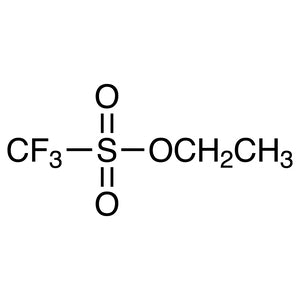
EthylTrifluoromethanesulfonate TCI T1191
Regular price From Rp 2.545.200,00Regular priceRp 1.779.750,00Sale price From Rp 2.545.200,00 -
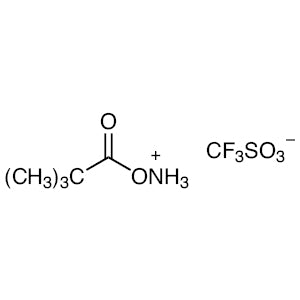
O-PivaloylhydroxylammoniumTrifluoromethanesulfonate TCI P2856
Regular price Rp 2.306.850,00Regular priceRp 1.628.550,00Sale price Rp 2.306.850,00