TCI P2856 O-Pivaloylhydroxylammonium Trifluoromethanesulfonate (CAS 1293990-73-4) is the triflate salt of O-pivaloylhydroxylamine, often abbreviated in the literature as PivONH3OTf. It belongs to the class of electrophilic amination reagents. These are sources of the amino group (NH2) that react as electrophiles, which is the opposite of ordinary amines, which act as nucleophiles. The pivaloyl group on the oxygen atom serves as a leaving group, so the nitrogen atom can be transferred to organic substrates, mainly with the help of metal catalysts. This offers a direct route to unprotected primary amines in the synthetic chemistry laboratory.
Chemists value this reagent because it installs a free NH2 group directly, with no extra protecting groups such as Boc or phthalimide. Skipping those groups removes synthetic steps and reduces the waste produced by protection and deprotection sequences. As a triflate salt, the reagent is a solid, which makes it easier to handle than the free hydroxylamine. The synthetic chemistry literature reports its use in iron-catalysed reactions. Iron is inexpensive and relatively environmentally benign, so the reagent is attractive for researchers who want more sustainable methods to introduce nitrogen.
In Indonesian laboratories, this reagent is mostly relevant to university organic chemistry research groups, pharmaceutical and medicinal chemistry research, and research institutes working on new synthetic methods. It suits projects that need primary amine building blocks, where shorter routes save time and material. It is listed under non-heterocyclic building blocks, so it fits naturally into synthesis planning alongside other reagents used to build nitrogen-containing target molecules. Teams studying catalysis with base metals such as iron may also find it useful for methodology development and reproducing published procedures.
TCI brochures (PDF)
- C-N Bond Formation Reactions 2025-08-07 · p. 5
Related TCI products
- TCI B1648 18303-04-3 N-(tert-Butoxycarbonyl)-p-toluenesulfonamide
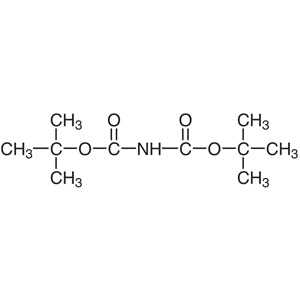
- TCI I0497 51779-32-9 Di-tert-butyl Iminodicarboxylate
- TCI B4780 85006-25-3 N,O-Bis(tert-butoxycarbonyl)hydroxylamine
- TCI B4589 39684-28-1 O-(tert-Butyl)hydroxylamine Hydrochloride
- TCI B1700 57497-39-9 N-(tert-Butyl)hydroxylamine Hydrochloride
- TCI H1581 5470-11-1 Hydroxylamine Hydrochloride
- Iron-catalysed aminohydroxylation of alkenes: the reagent delivers an electrophilic NH2 group across the double bond, giving unprotected amino alcohol products without separate protection steps.
- Iron-catalysed aminochlorination of alkenes: in the literature, it serves as the nitrogen source for adding amino and chloro groups to alkenes under inexpensive base-metal catalysis.
- Iron-catalysed aziridination of alkenes: its electrophilic nitrogen transfer gives a direct route to NH aziridines, which are useful strained intermediates for further synthetic transformations.
- Amination of aromatic compounds: it has been reported as an aminating agent for arenes, giving direct access to primary aromatic amines that are important building blocks.
- Developing shorter synthetic routes to primary amines: it introduces a free NH2 group without Boc or phthalimide protection, which cuts steps and reduces waste in research synthesis.
| Brand | TCI (product code P2856) |
|---|---|
| CAS number | 1293990-73-4 |
| Molecular formula | — |
| Purity | — |
| Category | Chemistry > Building Blocks > Non-Heterocyclic Building Blocks |
| Pack sizes | please refer to the available variants on the product page |
| Physical form | solid (triflate salt) |
| Storage | keep tightly closed in a cool, dry place and follow the manufacturer's label and Safety Data Sheet |
Keep this reagent in its original, tightly sealed container in a cool, dry, well-ventilated place, away from moisture, heat sources and incompatible materials such as strong bases and reducing agents. Always follow the specific storage conditions printed on the TCI label and in the Safety Data Sheet. Handle the solid in a fume hood while wearing a lab coat, chemical-resistant gloves and safety glasses. Avoid breathing dust and avoid contact with skin or eyes. Weigh out only the amount you need, reseal the container promptly after use, and dispose of residues according to institutional chemical waste procedures.
—
Produk Terkait
-
N-(tert-Butoxycarbonyl)-p-toluenesulfonamide TCI B1648
Regular price From Rp 2.173.500,00Regular priceRp 1.535.100,00Sale price From Rp 2.173.500,00 -
Di-tert-butylIminodicarboxylate TCI I0497
Regular price From Rp 1.298.850,00Regular priceRp 924.000,00Sale price From Rp 1.298.850,00 -
N,O-Bis(tert-butoxycarbonyl)hydroxylamine TCI B4780
Regular price From Rp 1.431.150,00Regular priceRp 1.016.400,00Sale price From Rp 1.431.150,00 -
O-(tert-Butyl)hydroxylamineHydrochloride TCI B4589
Regular price From Rp 2.650.200,00Regular priceRp 1.869.000,00Sale price From Rp 2.650.200,00 -
N-(tert-Butyl)hydroxylamineHydrochloride TCI B1700
Regular price From Rp 1.378.650,00Regular priceRp 979.650,00Sale price From Rp 1.378.650,00 -
HydroxylamineHydrochloride TCI H1581
Regular price From Rp 477.750,00Regular priceRp 333.900,00Sale price From Rp 477.750,00 -
Hydroxylamine-O-sulfonicAcid TCI H0530
Regular price From Rp 1.590.750,00Regular priceRp 1.111.950,00Sale price From Rp 1.590.750,00 -
HydroxylamineSulfate TCI H0196
Regular price From Rp 477.750,00Regular priceRp 333.900,00Sale price From Rp 477.750,00