1,1-Bis(hydroxymethyl)cyclopropane is a chemical compound widely used in pharmaceutical research and development. It serves as a key building block in the synthesis of various pharmaceutical ingredients, playing a crucial role in the creation of complex molecular structures. This compound is essential for researchers working in drug discovery, as it contributes to the development of active pharmaceutical ingredients through chemical modifications and reactions. Its presence in laboratory settings supports the advancement of new therapeutic agents and the refinement of existing ones.
The unique chemical properties of 1,1-Bis(hydroxymethyl)cyclopropane make it a preferred choice in laboratory applications. Its stable cyclopropane ring structure provides a solid foundation for further chemical transformations, while the two hydroxymethyl groups offer reactivity with a wide range of reagents. These characteristics allow it to participate in diverse chemical reactions, making it highly versatile for synthetic pathways. Its ability to adapt to different reaction conditions and its compatibility with various functional groups enhance its utility in organic chemistry and pharmaceutical research.
In Indonesian laboratories, 1,1-Bis(hydroxymethyl)cyclopropane is commonly used in drug development studies and organic chemistry experiments. It is particularly valuable in early-stage research for constructing active pharmaceutical ingredients. Researchers also utilize it to investigate the reactivity and stability of new compounds, contributing to the broader understanding of chemical behavior. Its widespread application in both academic and industrial research settings underscores its importance in the scientific community.
Related TCI products
- TCI B5322 159622-10-3 (1R,2S)-1-[(tert-Butoxycarbonyl)amino]-2-vinylcyclopropanecarboxylic Acid
- TCI F1083 849217-48-7 1-[(4-Fluorophenyl)carbamoyl]cyclopropanecarboxylic Acid
- TCI T3765 277756-46-4 1-(Trifluoromethyl)cyclopropane-1-carboxylic Acid
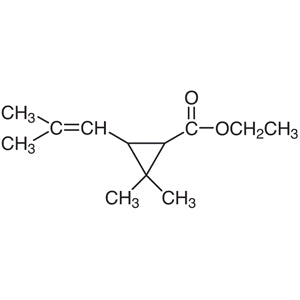
- TCI D2112 97-41-6 Ethyl 2,2-Dimethyl-3-(2-methyl-1-propenyl)cyclopropane-1-carboxylate
- TCI T2350 15641-58-4 2,2,3,3-Tetramethylcyclopropanecarboxylic Acid
- TCI T1721 4127-47-3 1,1,2,2-Tetramethylcyclopropane
- Pharmaceutical Development: This compound is ideal for synthesizing active pharmaceutical ingredients due to its reactivity and structural versatility.
- Organic Chemistry Research: Its stable cyclopropane ring and hydroxymethyl groups make it suitable for testing new reaction mechanisms and chemical transformations.
- Drug Discovery Studies: It is frequently used in the early stages of drug development to build complex molecular frameworks.
- Compound Stability Testing: The compound’s unique structure allows researchers to evaluate the stability and reactivity of new chemical entities.
- Structural Modification Experiments: Its ability to undergo various chemical reactions makes it a valuable tool for modifying existing molecular structures.
| Brand | TCI |
|---|---|
| CAS number | 39590-81-3 |
| Molecular formula | — |
| Purity | — |
| Category | Chemistry > Pharmaceutical Development and Drug Discovery Research Reagents > Building Blocks for Pharmaceutical Ingredients |
| Pack sizes | Available in various quantities as per standard laboratory requirements |
| Physical form | Liquid |
| Storage | Store in a cool, dry place away from direct sunlight and incompatible materials |
This compound should be stored in a cool, dry environment, away from direct sunlight and sources of heat. It is recommended to use airtight containers made of materials compatible with its chemical properties to prevent contamination and degradation. Due to its reactive nature, it should be handled with appropriate personal protective equipment, including gloves and safety goggles. In laboratory settings, it should be stored separately from strong oxidizing agents and incompatible substances to ensure safety. Regular monitoring of storage conditions is advised to maintain its integrity and effectiveness for research purposes.
—
Product Categories
Produk Terkait
-
(1R,2S)-1-[(tert-Butoxycarbonyl)amino]-2-vinylcyclopropanecarboxylicAcid TCI B5322
Regular price From Rp 689.850,00Regular priceRp 497.700,00Sale price From Rp 689.850,00 -
1-[(4-Fluorophenyl)carbamoyl]cyclopropanecarboxylicAcid TCI F1083
Regular price From Rp 742.350,00Regular priceRp 534.450,00Sale price From Rp 742.350,00 -
1-(Trifluoromethyl)cyclopropane-1-carboxylicAcid TCI T3765
Regular price From Rp 795.900,00Regular priceRp 572.250,00Sale price From Rp 795.900,00 -
Ethyl2,2-Dimethyl-3-(2-methyl-1-propenyl)cyclopropane-1-carboxylate TCI D2112
Regular price From Rp 1.351.350,00Regular priceRp 960.750,00Sale price From Rp 1.351.350,00 -
2,2,3,3-TetramethylcyclopropanecarboxylicAcid TCI T2350
Regular price From Rp 1.192.800,00Regular priceRp 849.450,00Sale price From Rp 1.192.800,00 -
1,1,2,2-Tetramethylcyclopropane TCI T1721
Regular price Rp 3.180.450,00Regular priceRp 2.223.900,00Sale price Rp 3.180.450,00 -
1-[(tert-Butoxycarbonyl)amino]cyclopropanecarboxylicAcid TCI B3138
Regular price From Rp 3.207.750,00Regular priceRp 2.258.550,00Sale price From Rp 3.207.750,00 -
1-AminocyclopropanecarbonitrileHydrochloride TCI A2493
Regular price From Rp 2.411.850,00Regular priceRp 1.702.050,00Sale price From Rp 2.411.850,00