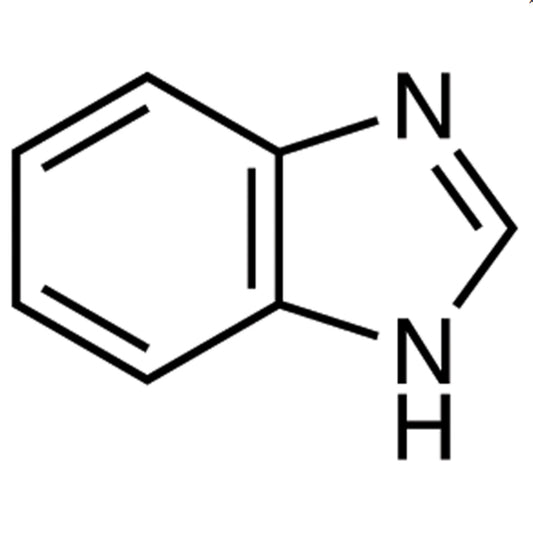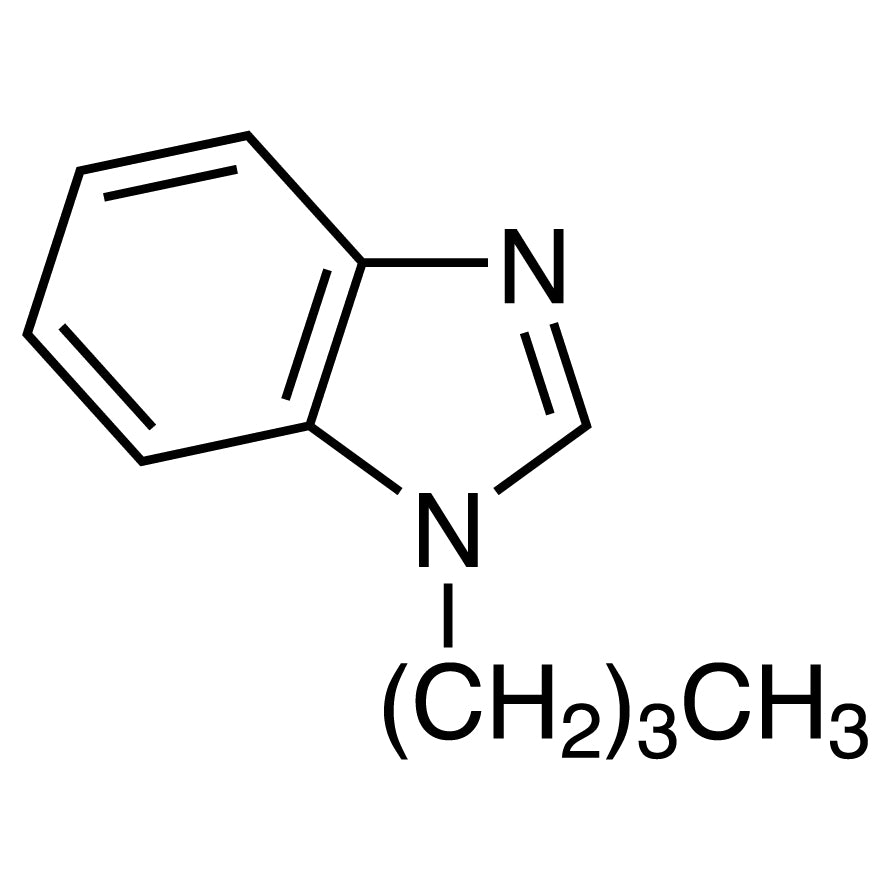
1-Butyl-1H-benzimidazole is a benzimidazole derivative in which one of the two nitrogen atoms has been alkylated with a butyl chain. Benzimidazole itself is a fused heterocyclic scaffold combining a benzene ring and an imidazole ring, a framework encountered widely in biologically active compounds and in coordination ligands. By installing a butyl chain at the N-1 position, this compound becomes a ready-to-use building block that removes the need for a selective alkylation step — a step that frequently produces product mixtures and complicates purification in the synthetic laboratory.
The property that makes this compound useful is the remaining pyridine-type nitrogen atom, which stays free and retains both nucleophilic character and the ability to coordinate metal ions. It is this nitrogen atom that can be further alkylated to form benzimidazolium salts, the direct precursors to N-heterocyclic carbene ligands and to ionic liquids. The butyl chain confers better solubility in organic solvents than the parent benzimidazole, while contributing lipophilic character that is useful when tuning the physicochemical properties of derivative compounds. A four-carbon chain length represents a common compromise between solubility and steric hindrance.
In Indonesian laboratories, this building block is typically encountered in university and institutional synthetic chemistry groups, in organometallic and catalysis research, and in materials work involving ionic liquids. Because it arrives with the N-1 alkylation already performed, it shortens multi-step routes and reduces the purification burden on laboratories where chromatography capacity and solvent supply are limiting factors. It is generally ordered as a research-scale reagent for bench synthesis rather than for production quantities.
Related TCI products
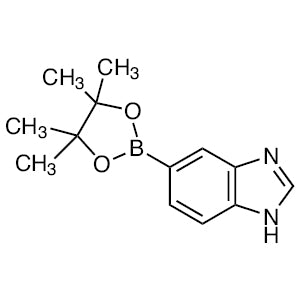
- TCI T3275 1007206-54-3 5-(4,4,5,5-Tetramethyl-1,3,2-dioxaborolan-2-yl)-1H-benzimidazole
- TCI B0054 51-17-2 Benzimidazole
- TCI P1599 1137-68-4 2-(2-Pyridyl)benzimidazole
- TCI M2582 26663-77-4 Methyl Benzimidazole-5-carboxylate
- TCI M0438 7152-24-1 2-(Methylthio)benzimidazole
- TCI H1736 2963-66-8 2-(2-Hydroxyphenyl)-1H-benzimidazole
- Benzimidazolium salt preparation — the free pyridine-type nitrogen is readily quaternised with alkyl halides, giving the imidazolium-type salts used as carbene precursors without any preceding selective alkylation step.
- N-heterocyclic carbene ligand synthesis — benzimidazolium salts derived from this compound are deprotonated to generate NHC ligands for transition metal catalysts used in coupling and metathesis chemistry.
- Ionic liquid research — the butyl chain is the classic chain length in ionic liquid design, balancing melting behaviour, viscosity and solubility, making this a convenient starting point for new salt families.
- Coordination chemistry and metal complex studies — the unalkylated nitrogen acts as a donor atom toward transition metal centres, allowing the compound to serve directly as a neutral monodentate ligand.
- Medicinal chemistry scaffold elaboration — the benzimidazole core appears in many bioactive structures, so this N-alkylated variant serves as an intermediate for building and screening derivative libraries.
| Brand | TCI |
|---|---|
| CAS number | 4886-30-0 |
| Molecular formula | — |
| Purity | — |
| Category | Chemistry > Building Blocks > Heterocyclic Building Blocks |
| Pack sizes | available in standard TCI research-scale packaging; please confirm the currently offered sizes when ordering |
| Physical form | — |
| Storage | keep in a cool, dry place in the tightly closed original container |
- Catalogue code: B6349
Store the container tightly closed in a cool, dry and well-ventilated area, away from direct sunlight, heat sources and incompatible chemicals such as strong oxidising agents and strong acids. The original supplier container is the preferred storage vessel; if transfer is required, use a clean, chemically compatible glass container with a secure closure and a clearly written label. Handle in a fume hood and wear standard laboratory personal protective equipment — safety glasses, gloves and a laboratory coat. Avoid generating dust, avoid inhalation and skin contact, and keep containers closed when not in active use. Consult the manufacturer's safety data sheet before first use, and dispose of residues and contaminated materials through the laboratory's chemical waste stream.
—
Produk Terkait
-
5-(4,4,5,5-Tetramethyl-1,3,2-dioxaborolan-2-yl)-1H-benzimidazole TCI T3275
Regular price Rp 2.173.500,00Regular priceRp 1.535.100,00Sale price Rp 2.173.500,00 -
Benzimidazole TCI B0054
Regular price From Rp 875.700,00Regular price -
2-(2-Pyridyl)benzimidazole TCI P1599
Regular price Rp 1.881.600,00Regular priceRp 1.331.400,00Sale price Rp 1.881.600,00 -
MethylBenzimidazole-5-carboxylate TCI M2582
Regular price Rp 2.227.050,00Regular priceRp 1.572.900,00Sale price Rp 2.227.050,00 -
2-(Methylthio)benzimidazole TCI M0438
Regular price From Rp 1.829.100,00Regular price -
2-(2-Hydroxyphenyl)-1H-benzimidazole TCI H1736
Regular price From Rp 2.571.450,00Regular price -
2-(Hydroxymethyl)benzimidazole TCI H1229
Regular price Rp 1.803.900,00Regular price -
2-(3-Hydroxypropyl)benzimidazole TCI H0988
Regular price Rp 1.298.850,00Regular price