TCI B6438 Barium Bromide is an inorganic salt made up of barium cations and bromide anions. It belongs to the main-group element chemicals and is listed under Catalysis and Inorganic Chemistry. In the laboratory, barium bromide is a water-soluble source of both barium ions and bromide ions. It is used to synthesize other barium compounds, to study the crystallography of halide salts, and in a range of inorganic chemistry experiments. Historically, barium bromide is known for its role in separating the element radium by fractional crystallization.
Chemists choose barium bromide mainly because it dissolves well in water, so solutions of controlled concentration are easy to prepare. In solution, barium ions precipitate readily with anions such as sulfate or carbonate. This makes metathesis reactions possible: the counter-anion is exchanged, and the barium is removed as a poorly soluble precipitate. As a bromide source, the salt can also be used in ion-exchange reactions and to prepare other bromide salts without adding unwanted alkali cations. Because it supplies two useful ions at once, a single reagent can serve several kinds of experiments.
In Indonesian laboratories, barium bromide is most useful to inorganic chemistry and materials research groups at universities, especially those that synthesize and characterize new inorganic compounds. Teaching laboratories can use it to demonstrate precipitation and metathesis reactions involving barium salts. Research teams studying halide crystal structures also find it a practical starting material. Its role in the historical separation of radium is a useful reference point when teaching classical inorganic chemistry.
TCI brochures (PDF)
- Metallic Salts 2025-11-06 · p. 4
- Synthesis of other barium compounds: the salt dissolves readily in water, so it supplies barium ions in solution that can then react to form the target barium products.
- Metathesis and precipitation reactions: barium ions precipitate easily with sulfate or carbonate, which lets chemists exchange counter-anions and separate barium as a poorly soluble solid.
- Preparation of other bromide salts: as a bromide source, it delivers bromide ions without adding alkali cations, which keeps the final product free of unwanted cation contamination.
- Crystallographic studies of halide salts: as a simple binary halide of a main-group element, it is a convenient model compound for studying how halide salts crystallize.
- Teaching classical inorganic chemistry: its historical role in separating radium by fractional crystallization makes it a good example for explaining separation techniques to students.
| Brand | TCI |
|---|---|
| CAS number | 10553-31-8 |
| Molecular formula | — |
| Purity | — |
| Category | Chemistry > Catalysis and Inorganic Chemistry > Main-group Elements |
| Pack sizes | available in the standard TCI pack sizes listed on the product page |
| Physical form | — |
| Storage | keep tightly closed in a cool, dry place, following the TCI label and Safety Data Sheet |
- Product code: B6438
Store barium bromide in its original tightly closed container in a cool, dry, well-ventilated area, away from moisture and direct sunlight. Glass or chemically resistant plastic containers with secure caps are suitable. Keep the salt away from sulfates, carbonates and other incompatible materials so it does not react or precipitate by accident. Soluble barium compounds call for careful handling. Wear gloves, safety glasses and a lab coat, do not breathe in the dust, and wash your hands thoroughly after use. Always check the TCI Safety Data Sheet for specific hazard information, and dispose of waste according to institutional and local regulations.
—
Produk Terkait
-
Barium(II)Bis(trifluoromethanesulfonyl)imide TCI B5171
Regular price From Rp 1.961.400,00Regular priceRp 1.387.050,00Sale price From Rp 1.961.400,00 -
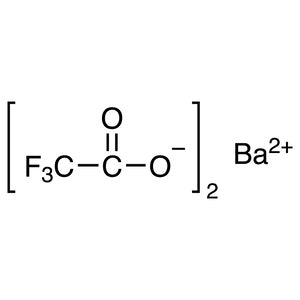
Barium(II)Trifluoroacetate TCI B6582
Regular price From Rp 2.121.000,00Regular priceRp 1.498.350,00Sale price From Rp 2.121.000,00 -
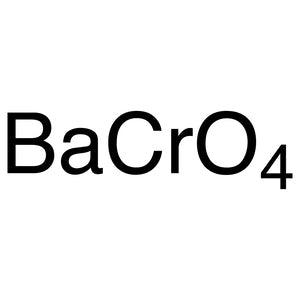
BariumChromate TCI B6568
Regular price Rp 848.400,00Regular priceRp 593.250,00Sale price Rp 848.400,00 -
BariumIodide TCI B6439
Regular price From Rp 2.677.500,00Regular priceRp 1.887.900,00Sale price From Rp 2.677.500,00 -
BariumCarbonate TCI B6426
Regular price From Rp 505.050,00Regular priceRp 352.800,00Sale price From Rp 505.050,00 -
BariumFluoride TCI B6333
Regular price From Rp 875.700,00Regular priceRp 612.150,00Sale price From Rp 875.700,00 -
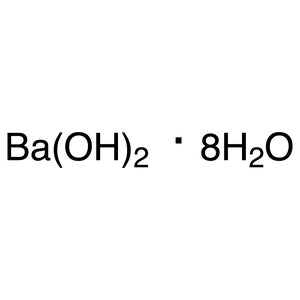
BariumHydroxideOctahydrate TCI B6673
Regular price Rp 689.850,00Regular priceRp 481.950,00Sale price Rp 689.850,00 -
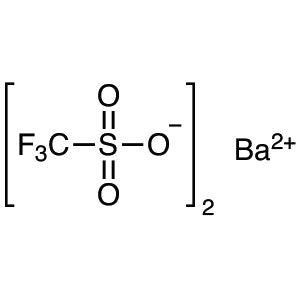
Barium(II)Trifluoromethanesulfonate TCI B6120
Regular price From Rp 2.016.000,00Regular priceRp 1.409.100,00Sale price From Rp 2.016.000,00