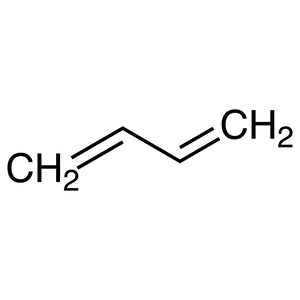
TCI 1,3-Butadiene (ca. 6% in Dichloromethane, ca. 1.5 mol/L) is a solution of 1,3-butadiene in dichloromethane. 1,3-Butadiene is the simplest conjugated diene. At room temperature it is a gas, so it is hard to measure and handle directly in the laboratory. This solution solves that problem: researchers can measure butadiene by volume with a pipette or syringe. Butadiene can then be used as a reagent in organic synthesis without special gas-handling equipment.
The stated concentration of about 1.5 mol/L makes stoichiometric calculations simple, because the moles of butadiene follow directly from the volume of solution taken. Dichloromethane was chosen as the solvent because it dissolves many organic compounds and is relatively inert across a wide range of reaction types. The conjugated diene system makes butadiene highly reactive in cycloaddition reactions, especially the Diels–Alder reaction, which forms six-membered rings efficiently. Butadiene is also an important monomer in polymer chemistry.
In Indonesian laboratories, not every facility has a system for handling compressed or liquefied gases. For university research groups, teaching laboratories and industrial R&D units, this ready-to-use solution offers a practical way to work with butadiene using standard glassware and volumetric tools. It suits organic synthesis projects, studies of cycloaddition chemistry, and small-scale polymer chemistry work where dosing butadiene accurately and repeatably matters as much as convenience and safe handling.
TCI brochures (PDF)
- Safely Handleable Volatile Solutions 2024-05-02 · p. 1
- Monomers 2025-05-28 · p. 14
Related TCI products
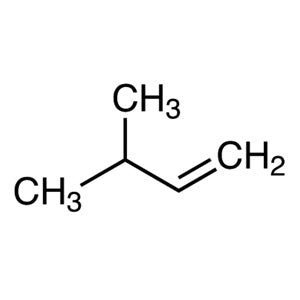
- TCI M2563 563-45-1 3-Methyl-1-butene (ca. 15% in Dichloromethane, ca. 2.5mol/L)
- TCI B6534 106-98-9 1-Butene (ca. 3% in Dichloromethane, ca. 0.7 mol/L)
- TCI B6533 106-99-0 1,3-Butadiene (ca. 5% in N,N-Dimethylformamide, ca. 0.9 mol/L)
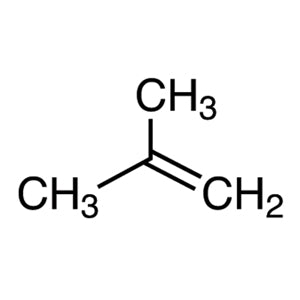
- TCI I0909 115-11-7 Isobutene (ca. 8% in Dichloromethane)
- TCI D1148 513-81-5 2,3-Dimethyl-1,3-butadiene (stabilized with BHT)
- TCI M2565 563-45-1 3-Methyl-1-butene (ca 125% in Tetrahydrofuran, ca 15mol/L)
- Diels–Alder reactions: the conjugated diene system of 1,3-butadiene reacts readily with dienophiles to form six-membered rings, and the solution form allows measured additions without a gas line.
- General organic synthesis: butadiene can be added as a reagent by pipette or syringe, so researchers can run reactions with it in ordinary glassware without special gas-handling equipment.
- Stoichiometry-controlled experiments: the stated concentration of about 1.5 mol/L lets chemists work out the moles of butadiene directly from the volume dispensed, which makes reaction planning easier.
- Small-scale polymer chemistry studies: butadiene is an important monomer in polymer chemistry, so this solution is useful for exploratory, small-scale studies in that field.
- Teaching and method development: handling a measured liquid solution instead of a gas makes it practical to demonstrate and develop conjugated diene chemistry in laboratories without gas infrastructure.
| Brand | TCI (product code B6532) |
|---|---|
| CAS number | 106-99-0 |
| Molecular formula | — |
| Purity | — |
| Category | Chemistry > Building Blocks > Non-Heterocyclic Building Blocks |
| Pack sizes | please refer to the available options on the product page |
| Physical form | solution of 1,3-butadiene in dichloromethane (ca. 6%, ca. 1.5 mol/L) |
| Storage | keep tightly sealed and follow the storage conditions on the TCI label and Safety Data Sheet |
Keep the container tightly closed in its original packaging. Store it in a cool, well-ventilated chemical storage area away from heat, sparks, open flames and direct sunlight. Both butadiene and dichloromethane are volatile, so open the container only when needed and reseal it promptly to keep the concentration stable. Dispense with a clean, dry pipette or syringe, and work in a fume hood. Wear chemical-resistant gloves, safety glasses and a laboratory coat. Do not breathe the vapors, and avoid contact with skin and eyes. Before use, read the TCI Safety Data Sheet for the exact storage temperature, compatibility and disposal requirements. Dispose of waste and empty containers according to local regulations for halogenated solvents.
—
Produk Terkait
-
3-Methyl-1-butene(ca.15%inDichloromethane,ca.2.5mol/L) TCI M2563
Regular price Rp 6.996.150,00Regular priceRp 4.891.950,00Sale price Rp 6.996.150,00 -
1-Butene(ca.3%inDichloromethane,ca.0.7mol/L) TCI B6534
Regular price From Rp 980.700,00Regular priceRp 685.650,00Sale price From Rp 980.700,00 -
1,3-Butadiene(ca.5%inN,N-Dimethylformamide,ca.0.9mol/L) TCI B6533
Regular price From Rp 1.405.950,00Regular priceRp 982.800,00Sale price From Rp 1.405.950,00 -
Isobutene(ca.8%inDichloromethane) TCI I0909
Regular price From Rp 1.060.500,00Regular priceRp 741.300,00Sale price From Rp 1.060.500,00 -
2,3-Dimethyl-1,3-butadiene(stabilizedwithBHT) TCI D1148
Regular price From Rp 2.094.750,00Regular priceRp 1.464.750,00Sale price From Rp 2.094.750,00 -
3-Methyl-1-butene(ca125%inTetrahydrofuran,ca15mol/L) TCI M2565
Regular price From Rp 1.538.250,00Regular priceRp 1.075.200,00Sale price From Rp 1.538.250,00 -
1-Butene(ca.8%inTetrahydrofuran,ca.1.3mol/L) TCI B6535
Regular price From Rp 980.700,00Regular priceRp 685.650,00Sale price From Rp 980.700,00 -
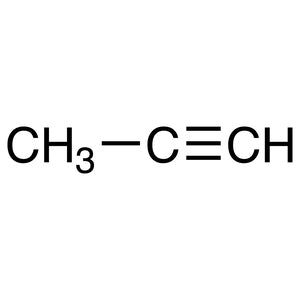
Propyne(ca2%inDichloromethane,ca07mol/L) TCI P3065
Regular price From Rp 1.087.800,00Regular priceRp 760.200,00Sale price From Rp 1.087.800,00