4-Chloro-2,5-dimethoxynitrobenzene from TCI, catalogue code C1244, is a substituted aromatic compound. Its benzene ring carries one nitro group, two methoxy groups and one chlorine atom. In synthetic laboratories it serves as a non-heterocyclic building block that gives chemists a ready-made, well-defined aromatic core for further transformations. It is best known as a precursor to substituted anilines. Reducing its nitro group gives 4-chloro-2,5-dimethoxyaniline, an important intermediate in the chemistry of dyes and organic pigments.
Researchers choose this compound because its substitution pattern is already complete and specific. Starting from it means they don't have to carry out nitration, chlorination or methylation steps themselves, each of which can produce mixtures of isomers that are hard to separate. The nitro group can be reduced selectively by several methods, such as catalytic hydrogenation or metal-mediated reduction, while the electron-rich methoxy groups and the chlorine atom stay intact. As a solid, the material is easy to weigh and transfer. Technical data such as purity are given on the TCI certificate of analysis.
In Indonesia, chemistry laboratories at universities and research units in the textile, ink and pigment industries can use this compound in research on dye and pigment synthesis. It suits academic projects that study substituted aromatic systems, reduction reactions and the preparation of aniline intermediates. Industrial research teams developing colourants can also use it as a defined starting material, which keeps synthetic routes shorter and their results easier to reproduce.
Related TCI products
- Preparation of substituted anilines: selectively reducing the nitro group gives 4-chloro-2,5-dimethoxyaniline while the methoxy groups and the chlorine atom on the ring are preserved.
- Dye and organic pigment research: the aniline made from this compound is an important intermediate in colourant chemistry, so the compound is a useful starting point for synthesis studies.
- Studies of nitro-group reduction methods: the compound lets researchers compare catalytic hydrogenation with metal-mediated reduction on a substrate that carries other sensitive substituents.
- Multistep synthesis using a non-heterocyclic building block: its fixed substitution pattern removes the need for nitration, chlorination or methylation steps that can give isomer mixtures.
- Teaching and academic research on aromatic chemistry: university laboratories can use it to show how substituents on a benzene ring behave during selective functional-group transformations.
| Brand | TCI (catalogue code C1244) |
|---|---|
| CAS number | 6940-53-0 |
| Molecular formula | — |
| Purity | — |
| Category | Chemistry > Building Blocks > Non-Heterocyclic Building Blocks |
| Pack sizes | as offered in the TCI catalogue for this product |
| Physical form | solid |
| Storage | follow the conditions on the TCI label and certificate of analysis |
Store this compound in its original, tightly closed container in a cool, dry, well-ventilated area, away from heat, direct sunlight and incompatible materials such as strong reducing agents and strong oxidisers. Follow any storage temperature stated on the TCI label. Keep the container labelled and close it properly after each use. Handle the solid in a fume hood or a well-ventilated area to avoid inhaling dust. Wear standard personal protective equipment, including gloves, safety glasses and a lab coat. Avoid contact with skin and eyes. Read the TCI safety data sheet before use, and dispose of residues and waste according to local laboratory and environmental regulations.
—
Produk Terkait
-
1-Bromo-2-chloro-4-nitrobenzene TCI B5348
Regular price From Rp 1.298.850,00Regular priceRp 908.250,00Sale price From Rp 1.298.850,00 -
4-Bromo-1-chloro-2-nitrobenzene TCI B4374
Regular price From Rp 1.246.350,00Regular priceRp 871.500,00Sale price From Rp 1.246.350,00 -
2-Bromo-6-chloro-4-nitroaniline TCI B1771
Regular price Rp 477.750,00Regular priceRp 333.900,00Sale price Rp 477.750,00 -
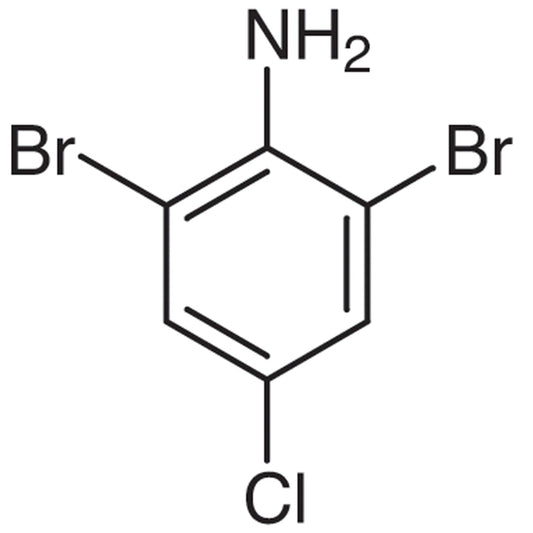
4-Chloro-2,6-dibromoaniline TCI B1516
Regular price Rp 2.068.500,00Regular priceRp 1.445.850,00Sale price Rp 2.068.500,00 -
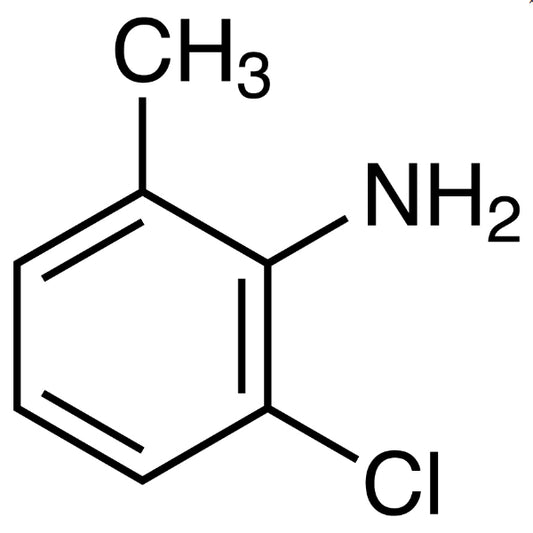
2-Chloro-6-methylaniline TCI A1959
Regular price From Rp 1.431.150,00Regular priceRp 1.000.650,00Sale price From Rp 1.431.150,00 -
2-Amino-2'-chloro-5-nitrobenzophenone TCI A1754
Regular price From Rp 1.881.600,00Regular priceRp 1.331.400,00Sale price From Rp 1.881.600,00 -
4-Chloro-3-methylaniline TCI A1610
Regular price Rp 1.565.550,00Regular priceRp 1.094.100,00Sale price Rp 1.565.550,00 -
2-Chloro-4-methylaniline TCI A1437
Regular price From Rp 1.193.850,00Regular priceRp 834.750,00Sale price From Rp 1.193.850,00