2-Cyanopyrimidine from TCI, product code C1518, is an aromatic heterocyclic compound made of a pyrimidine ring with a nitrile (cyano) group at the 2-position. The pyrimidine ring is one of the most important scaffolds in medicinal chemistry because it forms the core of the nucleotide bases and appears in many drug molecules. In synthesis laboratories, this compound serves as a heterocyclic building block for introducing a pyrimidine unit into target molecules. Its nitrile group can also be converted into a range of other functional groups, which widens its value in multi-step synthetic routes.
The main reason chemists choose this compound is how versatile its nitrile group is. The nitrile can be hydrolysed to an amide or a carboxylic acid, reduced to an amine, converted into an amidine, or reacted with azides to form a tetrazole. Because it is attached to an electron-poor pyrimidine ring, the cyano group tends to react readily with nucleophiles, which can make these transformations easier to carry out. The ring nitrogen atoms can also coordinate to metals, so the compound and its derivatives are useful in coordination chemistry. For purity data, refer to the TCI certificate of analysis supplied with each lot.
For medicinal chemistry, pharmaceutical, and materials chemistry laboratories in Indonesia, 2-Cyanopyrimidine is a practical starting point for building libraries of heterocyclic compounds. University research groups can use it in synthetic methodology projects and in teaching advanced organic transformations. Pharmaceutical development teams can use it to prepare pyrimidine-containing intermediates and analogues. Materials and coordination chemistry groups can use it to prepare nitrogen-donor ligands and metal complexes for further study.
- Heterocyclic building block synthesis: introduces a pyrimidine unit into target molecules, giving direct access to a scaffold that is central to nucleotide chemistry and to many drug molecules.
- Nitrile hydrolysis to amides and carboxylic acids: the cyano group at the 2-position can be hydrolysed to give pyrimidine amides or carboxylic acids for further coupling and derivatisation work.
- Reduction to amines and conversion to amidines: the nitrile can be reduced to a primary amine or converted into an amidine, giving useful nitrogen-containing groups for medicinal chemistry analogue series.
- Tetrazole formation with azides: the nitrile reacts with azides to form tetrazole rings, a common motif in drug design, and the electron-poor pyrimidine ring helps make the cyano group more reactive.
- Coordination chemistry and ligand design: the ring nitrogen atoms can coordinate to metals, so the compound and its derivatives are useful for preparing ligands and studying metal complexes in materials research.
| Brand | TCI (product code C1518) |
|---|---|
| CAS number | 14080-23-0 |
| Molecular formula | — |
| Purity | — |
| Category | Chemistry > Building Blocks > Heterocyclic Building Blocks |
| Pack sizes | as offered in the TCI catalogue listing for this product |
| Physical form | refer to the TCI product documentation and Safety Data Sheet |
| Storage | follow the storage conditions on the TCI label and Safety Data Sheet |
Store 2-Cyanopyrimidine in its original tightly closed container in a cool, dry, well-ventilated area, away from moisture, heat sources, and incompatible materials such as strong acids, strong bases, and strong oxidising agents. Always follow the storage conditions on the TCI label and Safety Data Sheet. If you transfer the material, use clean, dry, chemically compatible glass containers with secure closures and clear labels. Handle the compound in a fume hood and wear standard personal protective equipment, including safety glasses, chemical-resistant gloves, and a laboratory coat. Avoid inhaling dust or vapour, avoid contact with skin and eyes, and dispose of waste according to institutional and local regulations.
—
Produk Terkait
-
2,4,5,6-TetraaminopyrimidineSulfate TCI T1462
Regular price Rp 1.590.750,00Regular priceRp 1.127.700,00Sale price Rp 1.590.750,00 -
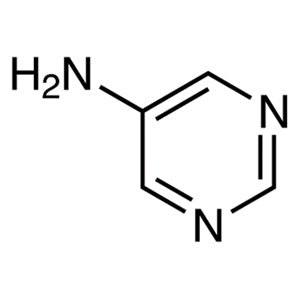
5-Aminopyrimidine TCI A2589
Regular price Rp 2.544.150,00Regular priceRp 1.794.450,00Sale price Rp 2.544.150,00 -
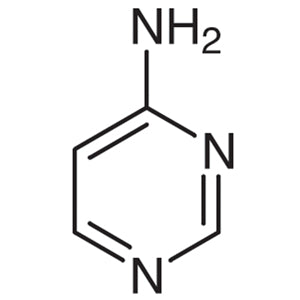
4-Aminopyrimidine TCI A2251
Regular price Rp 4.001.550,00Regular priceRp 2.814.000,00Sale price Rp 4.001.550,00 -
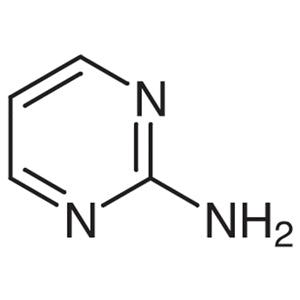
2-Aminopyrimidine TCI A0412
Regular price Rp 1.220.100,00Regular priceRp 868.350,00Sale price Rp 1.220.100,00 -
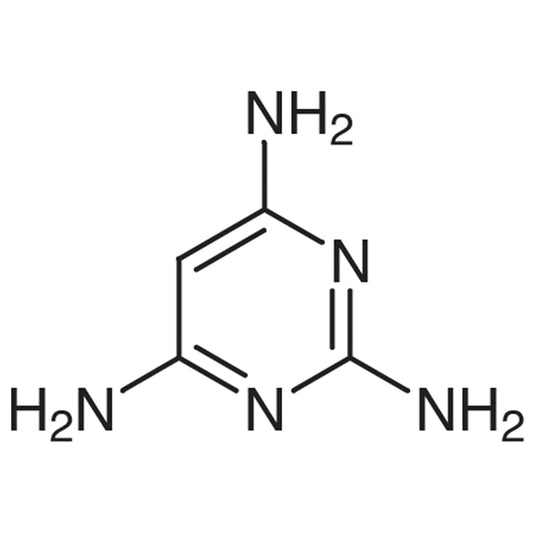
2,4,6-Triaminopyrimidine TCI T0834
Regular price From Rp 980.700,00Regular priceRp 701.400,00Sale price From Rp 980.700,00 -
2-Hydrazinopyrimidine TCI H1906
Regular price From Rp 900.900,00Regular priceRp 645.750,00Sale price From Rp 900.900,00 -
4,5-Diaminopyrimidine TCI D3858
Regular price Rp 4.240.950,00Regular priceRp 2.980.950,00Sale price Rp 4.240.950,00 -
4,6-Diaminopyrimidine TCI D3648
Regular price From Rp 1.934.100,00Regular priceRp 1.368.150,00Sale price From Rp 1.934.100,00