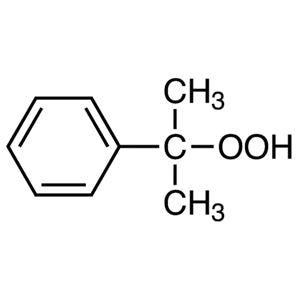
TCI C2223 Cumene Hydroperoxide (contains ca. 20% aromatic hydrocarbon) is an oxidising reagent from the organic hydroperoxide class that occupies an important position in modern synthetic chemistry. The compound is widely recognised as a key intermediate in the cumene process for the production of phenol and acetone, and equally as an efficient source of free radicals in polymerisation reactions. In the laboratory, cumene hydroperoxide is used to introduce oxygen atoms into organic substrates, to initiate radical chain reactions, and to study the mechanism of the Hock rearrangement. The approximately 20% aromatic hydrocarbon content acts as a diluent that makes handling of the material more controlled.
The property that leads chemists to select this reagent is its ability to generate alkoxy and hydroxy radicals at relatively moderate temperatures, which makes it well suited as an initiator for redox systems together with transition metal salts or amines. As a tertiary hydroperoxide, cumene hydroperoxide is more stable than primary or secondary hydroperoxides, yet remains sufficiently reactive to act as an oxygen donor in metal-catalysed epoxidation of olefins and in the oxidation of sulfides to sulfoxides. This balance between storage stability and controlled reactivity allows reaction conditions to be adjusted without sacrificing conversion, and the diluted form supports more predictable dosing on a laboratory scale.
In Indonesian laboratories, this reagent is typically found in university and institutional research groups working on organic synthesis, polymer chemistry, and reaction mechanism studies, as well as in industrial laboratories concerned with phenol and acetone chemistry. It is generally used in fume-hood work at bench scale, where small, carefully measured portions are taken for initiator screening, oxidation trials, and method development. Supplied by AMI Scientific under the TCI brand, it fits routine synthetic and analytical workflows.
TCI brochures (PDF)
- Oxidizing Agents 2025-06-11 · p. 6
- Biomaterials Research Reagents 2025-02-19 · p. 24
Related TCI products
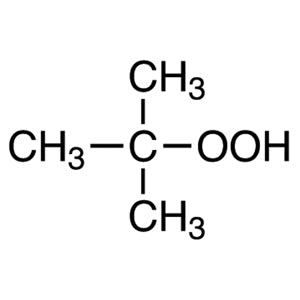
- TCI B3153 75-91-2 tert-Butyl Hydroperoxide (70% in Water)
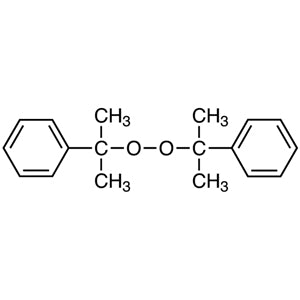
- TCI D4894 80-43-3 Dicumyl Peroxide (contains ca. 60% CaCO3)
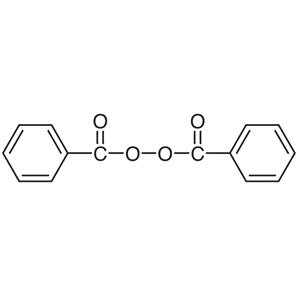
- TCI B3152 94-36-0 Benzoyl Peroxide (wetted with ca. 25% Water)
- TCI A3012 27776-21-2 2,2'-Azobis[2-(2-imidazolin-2-yl)propane] Dihydrochloride
- TCI A2098 7727-54-0 Ammonium Peroxodisulfate [for Electrophoresis]
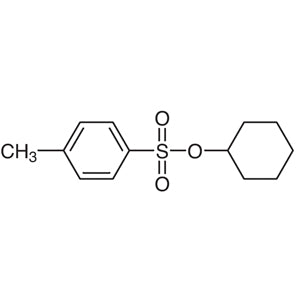
- TCI C2363 953-91-3 Cyclohexyl p-Toluenesulfonate
- Phenol and acetone chemistry studies: the reagent is the key intermediate of the cumene process, allowing laboratories to reproduce and examine the Hock rearrangement pathway on a bench scale.
- Radical polymerisation initiation: it decomposes into alkoxy and hydroxy radicals at moderate temperatures, providing an efficient and controllable free-radical source for initiating polymerisation chain reactions.
- Redox initiator systems: combined with transition metal salts or amines, it forms redox couples that generate radicals under milder conditions than thermal initiation alone would require.
- Metal-catalysed epoxidation of olefins: as a tertiary hydroperoxide it serves as an oxygen donor, transferring oxygen to alkene substrates in the presence of suitable metal catalysts.
- Oxidation of sulfides to sulfoxides: its balance of stability and reactivity makes it a practical oxygen-transfer reagent for converting sulfide substrates into the corresponding sulfoxides.
| Brand | TCI (Tokyo Chemical Industry) |
|---|---|
| CAS number | 80-15-9 |
| Molecular formula | — |
| Purity | — |
| Category | Chemistry > Synthetic Reagents > Oxidation [Synthetic Reagents] |
| Pack sizes | available in the pack sizes listed on this product page |
| Physical form | — |
| Storage | store according to the conditions stated on the manufacturer's label and safety data sheet |
- Catalogue number: C2223
- Composition: cumene hydroperoxide containing ca. 20% aromatic hydrocarbon as diluent
Cumene hydroperoxide is an organic hydroperoxide and must be handled as a reactive oxidising material. Store the container tightly closed in a cool, well-ventilated area away from heat, direct sunlight, ignition sources, reducing agents, transition metal salts, and combustible materials, following the conditions given on the manufacturer's label and safety data sheet. Keep the reagent in its original supplier container and avoid transferring it into unsuitable vessels or contaminating the stock with foreign material, since contamination can accelerate decomposition. All handling, weighing, and dispensing should be carried out in a functioning fume hood using appropriate personal protective equipment, including safety goggles, chemical-resistant gloves, and a laboratory coat. Take only the quantity required for the experiment, do not return unused material to the original container, and consult the safety data sheet before use and for spill and disposal procedures.
—
Product Categories
Produk Terkait
-
tert-ButylHydroperoxide(70%inWater) TCI B3153
Regular price Rp 1.220.100,00Regular price -
DicumylPeroxide(containsca.60%CaCO3) TCI D4894
Regular price From Rp 903.000,00Regular price -
BenzoylPeroxide(wettedwithca.25%Water) TCI B3152
Regular price Rp 530.250,00Regular price -
2,2'-Azobis[2-(2-imidazolin-2-yl)propane]Dihydrochloride TCI A3012
Regular price From Rp 1.035.300,00Regular price -
AmmoniumPeroxodisulfate[forElectrophoresis] TCI A2098
Regular price From Rp 505.050,00Regular price -
Cyclohexylp-Toluenesulfonate TCI C2363
Regular price From Rp 1.961.400,00Regular price -
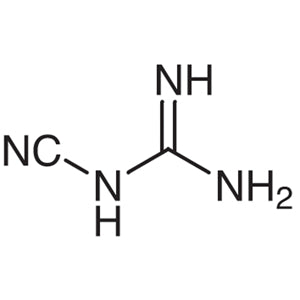
Dicyandiamide TCI C0454
Regular price From Rp 505.050,00Regular price -
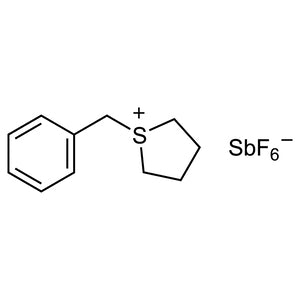
BenzyltetrahydrothiopheniumHexafluoroantimonate TCI B6753
Regular price From Rp 2.094.750,00Regular price
![27776-21-2 2,2'-Azobis[2-(2-imidazolin-2-yl)propane] Dihydrochloride - AMI Scientific](http://amiscientific.com/cdn/shop/files/TCI2510A3012.jpg?v=1767083705&width=533)
![7727-54-0 Ammonium Peroxodisulfate [for Electrophoresis] - AMI Scientific](http://amiscientific.com/cdn/shop/files/TCI2510A2098.jpg?v=1767082325&width=533)