![1-[4-(9H-Carbazol-9-yl)phenyl]ethanone (CAS 142116-85-6) - TCI C3470 - AMI Scientific](http://amiscientific.com/cdn/shop/files/TCI2510C3470.jpg?v=1768817097&width=1946)
![1-[4-(9H-Carbazol-9-yl)phenyl]ethanone (CAS 142116-85-6) - TCI C3470 - AMI Scientific](http://amiscientific.com/cdn/shop/files/TCI2510C3470.jpg?v=1768817097&width=1445)
TCI C3470, 1-[4-(9H-Carbazol-9-yl)phenyl]ethanone, is a specialized chemical compound used in advanced materials research, particularly in the development of organic semiconductor materials. This compound plays a crucial role in laboratory settings where the synthesis of complex molecular structures is required. Its unique molecular architecture, combining a carbazole group with a phenyl ring, makes it a valuable building block for creating materials with tailored optical and electronic properties. Due to its structural complexity, it is often used in the design of high-performance organic materials that are essential for modern electronic and optoelectronic applications.
The compound is prized for its chemical stability and compatibility with a wide range of reagents under controlled conditions. Its molecular structure allows for the formation of strong chemical bonds, which is essential for applications requiring long-term material integrity. Additionally, its solubility in various organic solvents facilitates ease of handling and processing in laboratory environments. These properties make it a preferred choice for researchers working on advanced material synthesis and functional material development.
In Indonesian laboratories, this compound is widely used by researchers and academic institutions for material science projects, especially in the development of organic semiconductors. It is also employed in applied research areas such as organic light-emitting diodes (OLEDs) and photovoltaic technologies. Its versatility and performance make it an essential component in the toolkit of materials scientists in Indonesia.
TCI brochures (PDF)
- Building Blocks for Organic Semiconductor 2026-03-24 · p. 20
Related TCI products
- TCI B4960 226958-06-1 2,7-Bis(9H-carbazol-9-yl)-9,9-dimethylfluorene
- TCI N1098 1133057-98-3 [9-(Naphthalen-2-yl)-9H-carbazol-3-yl]boronic Acid (contains varying amounts of Anhydride)
- TCI D5567 894791-43-6 N,9-Diphenyl-9H-carbazol-3-amine
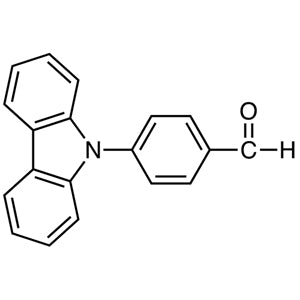
- TCI C3481 110677-45-7 4-(9H-Carbazol-9-yl)benzaldehyde
- TCI C3353 858131-73-4 [4'-(Carbazol-9-yl)-4-biphenylyl]boronic Acid (contains varying amounts of Anhydride)
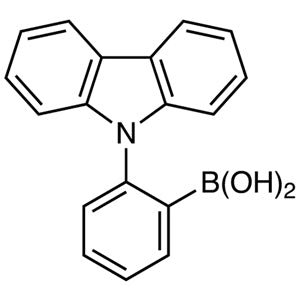
- TCI C3352 1189047-28-6 2-(9H-Carbazol-9-yl)phenylboronic Acid (contains varying amounts of Anhydride)
- Organic Semiconductor Development: This compound is ideal for creating organic semiconductors due to its unique molecular structure that enhances electronic properties.
- OLED Research: It is used in the fabrication of organic light-emitting diodes because of its ability to form stable and efficient light-emitting materials.
- Photovoltaic Material Synthesis: The compound supports the development of photovoltaic materials by contributing to charge transport and light absorption properties.
- Material Characterization Studies: Its well-defined structure makes it suitable for detailed analysis in material characterization techniques.
- Advanced Functional Material Design: It is a key building block in the design of materials with tailored optical and electronic properties for specialized applications.
| Brand | TCI |
|---|---|
| CAS number | 142116-85-6 |
| Molecular formula | — |
| Purity | — |
| Category | Materials Science > Material Building Blocks > Small Molecule Semiconductor Building Blocks |
| Pack sizes | As available from supplier |
| Physical form | Solid (as per standard chemical form) |
| Storage | Store in a cool, dry place away from light and moisture |
This compound should be stored in a cool, dry environment, away from direct light and moisture to maintain its chemical integrity. It is recommended to use airtight containers made of materials that are chemically inert to prevent any unwanted reactions. In a laboratory setting, it should be handled with appropriate personal protective equipment, such as gloves and safety goggles, to ensure the safety of personnel. Due to its chemical stability, it does not require special refrigeration unless specified by the supplier. Proper labeling and storage conditions are essential to prevent contamination and ensure safe usage in research applications.
—
Produk Terkait
-
2,7-Bis(9H-carbazol-9-yl)-9,9-dimethylfluorene TCI B4960
Regular price From Rp 1.538.250,00Regular price -
[9-(Naphthalen-2-yl)-9H-carbazol-3-yl]boronicAcid(containsvaryingamountsofAnhydride) TCI N1098
Regular price Rp 4.028.850,00Regular price -
N,9-Diphenyl-9H-carbazol-3-amine TCI D5567
Regular price From Rp 2.359.350,00Regular price -
4-(9H-Carbazol-9-yl)benzaldehyde TCI C3481
Regular price From Rp 3.155.250,00Regular price -
[4'-(Carbazol-9-yl)-4-biphenylyl]boronicAcid(containsvaryingamountsofAnhydride) TCI C3353
Regular price From Rp 955.500,00Regular price -
2-(9H-Carbazol-9-yl)phenylboronicAcid(containsvaryingamountsofAnhydride) TCI C3352
Regular price Rp 4.743.900,00Regular price -
4-(9H-Carbazol-9-yl)aniline TCI C3082
Regular price Rp 10.812.900,00Regular price -
3-(9H-Carbazol-9-yl)phenylboronicAcid(containsvaryingamountsofAnhydride) TCI C2967
Regular price From Rp 1.246.350,00Regular price

![1133057-98-3 [9-(Naphthalen-2-yl)-9H-carbazol-3-yl]boronic Acid (contains varying amounts of Anhydride) - AMI Scientific](http://amiscientific.com/cdn/shop/files/TCI2510N1098.jpg?v=1769143156&width=533)

![[4'-(Carbazol-9-yl)-4-biphenylyl]boronic Acid (contains varying amounts of Anhydride) (CAS 858131-73-4) - TCI C3353 - AMI Scientific](http://amiscientific.com/cdn/shop/files/TCI2510C3353.jpg?v=1768204763&width=533)