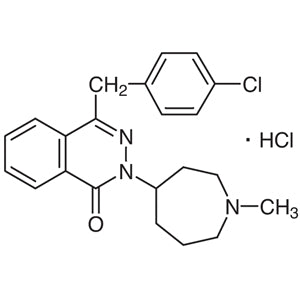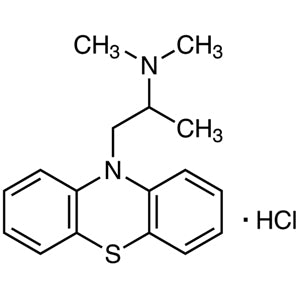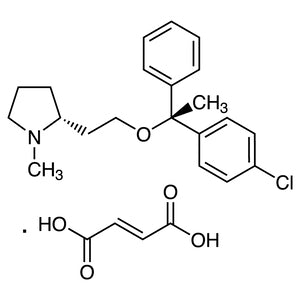
Clemastine Fumarate TCI C3816 is a chemical compound widely utilized in pharmaceutical research and biochemical studies. As a key reagent in experimental settings, it plays a crucial role in evaluating the pharmacological effects of antihistamine drugs. Its primary function is to interact with H1 receptors, making it an essential tool for understanding allergic responses and neurological disorders. This compound is commonly found in laboratories conducting research on drug mechanisms, receptor interactions, and therapeutic applications. Its versatility and stability make it a reliable choice for various analytical methods in life science research.
The chemical properties of Clemastine Fumarate contribute to its popularity among researchers. It exhibits good solubility in organic solvents, which facilitates its use in chromatographic and spectroscopic analyses. Its chemical stability under controlled conditions ensures consistent results in experimental studies. Additionally, its relatively safe handling profile, especially at low concentrations, makes it suitable for long-term research projects. These characteristics allow it to be integrated into diverse experimental protocols without compromising the integrity of the results.
In Indonesian laboratories, Clemastine Fumarate is frequently used in scientific research related to pharmacology, biochemistry, and drug development. It supports studies on allergic reactions, neurological conditions, and drug interactions. Its availability and reliability make it a preferred choice for researchers aiming to conduct accurate and reproducible experiments. The compound's role in both basic and applied research underscores its importance in the scientific community.
TCI brochures (PDF)
- Immune System, Inflammation, Allergy Research Reagents 2025-05-26 · p. 4
- Immunology Research Reagents 2026-06-03 · p. 6
- Pharmaceutical Ingredients for Research and Experimental Use 2026-03-09 · p. 35
- Used in pharmacological studies to assess the effects of antihistamine drugs on H1 receptors and their impact on allergic responses.
- Applied in biochemical research to investigate the mechanisms of drug action and receptor interactions in the nervous system.
- Employed in drug development projects to evaluate the efficacy and safety of new compounds in experimental models.
- Utilized in neuropharmacological experiments to study the influence of antihistamines on neurological disorders and cognitive functions.
- Integrated into analytical methods such as HPLC and spectroscopy for the identification and quantification of active pharmaceutical ingredients.
| Brand | TCI |
|---|---|
| CAS number | 14976-57-9 |
| Molecular formula | — |
| Purity | — |
| Category | Life Science > Biochemicals and Reagents > Pharmaceutical Research Reagents |
| Pack sizes | As listed on product page |
| Physical form | Powder |
| Storage | Store in a cool, dry place away from direct sunlight |
Clemastine Fumarate should be stored in a cool, dry environment to maintain its chemical stability. It is recommended to keep it in a tightly sealed container to prevent moisture absorption. Proper ventilation is essential when handling the compound to minimize exposure. Due to its relatively low toxicity, it is considered safe for use in laboratory settings, but standard safety protocols should still be followed. Avoid contact with skin and eyes, and use appropriate personal protective equipment when handling. The compound should not be stored near incompatible materials to ensure long-term stability and safety in the laboratory.
—
Product Categories
- Biochemicals and ReagentsPharmaceutical Research Reagents (for Experimental Use)Anti-allergic Ingredients (for Research and Experimental Use)
- Biochemicals and Reagents
- Cell BiologyImmune System, Inflammation, Allergy ResearchHistamine Receptor Antagonists
- Pharmaceutical Development and Drug Discovery ResearchPharmaceutical Research Reagents (for Experimental Use)Anti-allergic Ingredients (for Research and Experimental Use)
Produk Terkait
-
KetotifenFumarate TCI K0048
Regular price Rp 2.889.600,00Regular priceRp 2.035.950,00Sale price Rp 2.889.600,00 -
AzelastineHydrochloride TCI A2340
Regular price From Rp 1.353.450,00Regular price -
PromethazineHydrochloride TCI P2029
Regular price Rp 1.563.450,00Regular priceRp 1.108.800,00Sale price Rp 1.563.450,00 -
OlopatadineHydrochloride TCI O0361
Regular price Rp 10.758.300,00Regular priceRp 7.539.000,00Sale price Rp 10.758.300,00 -
LevocetirizineDihydrochloride TCI L0264
Regular price Rp 1.246.350,00Regular priceRp 887.250,00Sale price Rp 1.246.350,00 -
Desloratadine TCI D3787
Regular price From Rp 1.298.850,00Regular price -
Chlorcyclizine TCI C3867
Regular price Rp 5.910.450,00Regular price -
FormoterolFumarate TCI F0881
Regular price From Rp 3.710.700,00Regular price