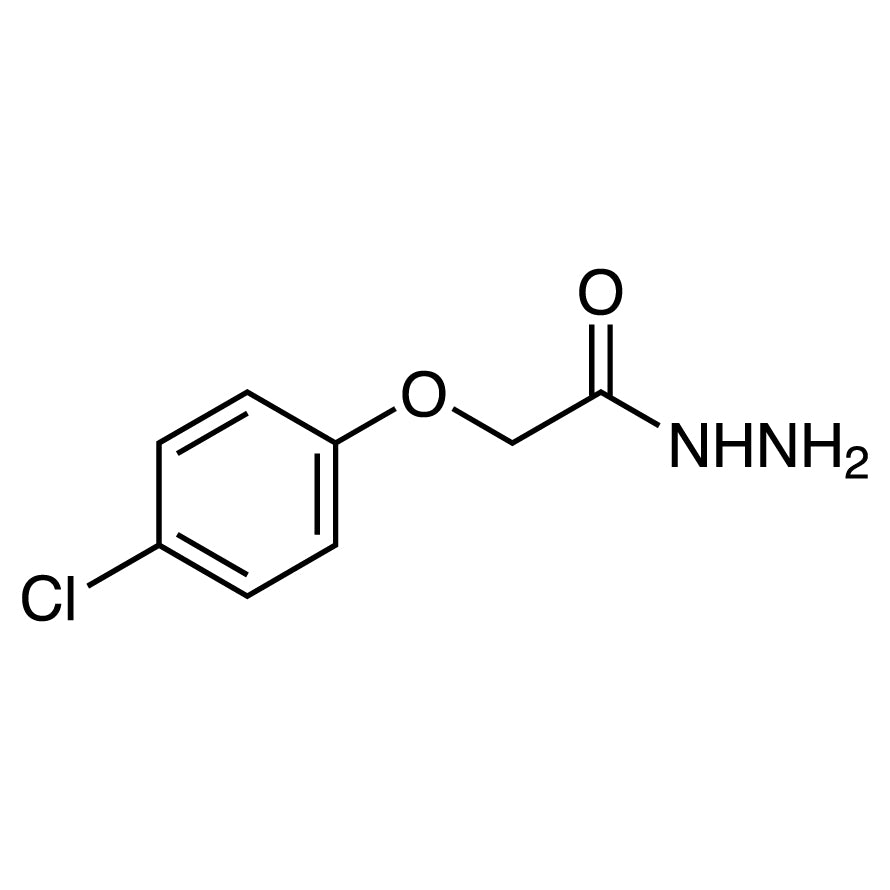
2-(4-Chlorophenoxy)acetohydrazide is a chemical compound widely used in laboratory settings for its versatile applications in chemical and pharmacological research. This compound serves as a key reagent in various synthetic processes, particularly in the development of bioactive molecules. Its molecular structure combines a hydrazide group with an acetyl chain and a chlorophenyl group, making it a valuable tool in organic chemistry. The compound's reactivity and functional group diversity enable it to participate in multiple reaction types, including substitution and hydrolysis reactions, which are essential in drug discovery and chemical synthesis.
The compound's reactivity is enhanced by the presence of chlorine in its molecular structure, which increases its ability to engage in chemical reactions under specific conditions. It is particularly effective in environments that require high reactivity, such as in the synthesis of pharmaceutical compounds or in analytical procedures. However, its sensitivity to moisture and air necessitates careful handling and storage. This sensitivity also means that it must be used in controlled environments to maintain its chemical integrity and effectiveness.
In Indonesian laboratories, 2-(4-Chlorophenoxy)acetohydrazide is commonly used in pharmacological and organic chemistry research. Its availability and reliability make it a preferred choice for researchers working on drug development, chemical synthesis, and analytical testing. The compound's unique properties support its use in a variety of scientific applications, contributing to the advancement of chemical and biological research in Indonesia.
Related TCI products
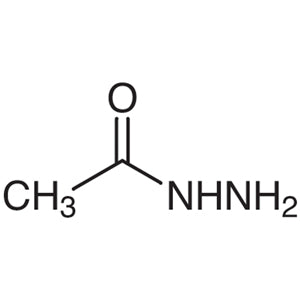
- TCI A0789 1068-57-1 Acetohydrazide
- TCI O0518 1917-97-1 Octan-2-yl (2,4-Dichlorophenoxy)acetate
- TCI F1351 405-79-8 2-(4-Fluorophenoxy)acetic Acid
- TCI F0537 137736-06-2 4-(4-Fluorophenoxy)benzaldehyde
- TCI F0532 215589-24-5 4-(4-Fluorophenoxy)benzonitrile
- TCI F0410 347867-75-8 5-(4-Fluorophenoxy)valeric Acid
- Pharmacological research utilizes this compound for the synthesis of bioactive molecules due to its reactivity and structural versatility.
- Organic chemistry experiments benefit from its ability to participate in substitution and hydrolysis reactions, making it a valuable reagent.
- Analytical chemistry applications leverage its chemical stability under controlled conditions for accurate testing and analysis.
- Drug development projects often incorporate this compound as a building block for creating new pharmaceutical compounds.
- Environmental studies may use it to investigate chemical interactions in complex systems, particularly in aqueous environments.
| Brand | TCI |
|---|---|
| CAS number | 2381-75-1 |
| Molecular formula | — |
| Purity | — |
| Category | TCI |
| Pack sizes | — |
| Physical form | — |
| Storage | Requires protection from moisture and air exposure |
This compound should be stored in a cool, dry place away from direct sunlight and sources of heat. It is recommended to use airtight containers to prevent exposure to moisture and air, which can degrade its chemical properties. Due to its sensitivity, it should be handled in a controlled laboratory environment with appropriate personal protective equipment. Regular monitoring of storage conditions is essential to maintain its stability and effectiveness. Proper labeling and storage practices help ensure the safety of laboratory personnel and the integrity of the compound during use.
—
Produk Terkait
-
Acetohydrazide TCI A0789
Regular price From Rp 2.121.000,00Regular price -
Octan-2-yl(2,4-Dichlorophenoxy)acetate TCI O0518
Regular price From Rp 2.227.050,00Regular price -
2-(4-Fluorophenoxy)aceticAcid TCI F1351
Regular price From Rp 2.359.350,00Regular price -
4-(4-Fluorophenoxy)benzaldehyde TCI F0537
Regular price From Rp 795.900,00Regular price -
4-(4-Fluorophenoxy)benzonitrile TCI F0532
Regular price From Rp 477.750,00Regular price -
5-(4-Fluorophenoxy)valericAcid TCI F0410
Regular price Rp 3.048.150,00Regular price -
m-(2-Fluorophenoxy)toluene TCI F0375
Regular price Rp 4.479.300,00Regular price -
m-(4-Fluorophenoxy)toluene TCI F0374
Regular price Rp 4.213.650,00Regular price