Cobalt (powder) from TCI is metallic cobalt supplied as a powder. Cobalt is a group 9 transition element known for its magnetic properties, its resistance to high temperatures, and its role in many catalytic systems. In the laboratory, cobalt powder is used as a starting material for synthesising cobalt compounds and complexes, as a catalyst precursor, and as a research material for metal alloys, magnetic materials, and electrode materials. The powder form makes it easy to weigh accurately and to mix evenly with other materials during sample preparation.
Researchers choose cobalt because it can exist in several oxidation states, mainly +2 and +3. This makes its compounds active in redox reactions and in catalysis. The metal is ferromagnetic and is an important component of heat-resistant alloys and permanent magnets. In energy technology, cobalt is a key element in lithium-ion battery cathode materials such as lithium cobalt oxide and NMC. For this reason, cobalt powder is often used as a starting material in battery materials research. As a TCI product, it also offers the consistency research laboratories expect from a well-established reagent brand.
In Indonesia, demand for cobalt research materials keeps growing as research into batteries, electric vehicles, and nickel-cobalt mineral processing expands. University laboratories, research institutions, and industrial R&D teams use cobalt powder to study cathode materials, develop catalysts, and investigate alloys and magnetic materials. It also supports teaching and research in inorganic chemistry, where cobalt compounds are classic examples of transition-metal chemistry, coordination complexes, and redox behaviour.
TCI brochures (PDF)
- Transition Metal Catalysts 2026-04-10 · p. 9
Related TCI products
- TCI T3554 28277-59-0 Tris(1,10-phenanthroline)cobalt(III) Tris(hexafluorophosphate)
- TCI T3553 31876-74-1 Tris(1,10-phenanthroline)cobalt(II) Bis(hexafluorophosphate)
- TCI B2681 14024-48-7 Bis(2,4-pentanedionato)cobalt(II)
- TCI T0746 16092-38-9 Bis(trifluoro-2,4-pentanedionato)cobalt(II)
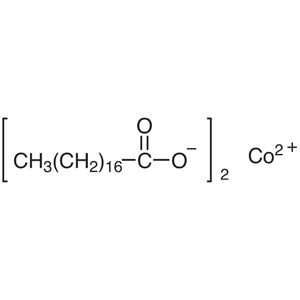
- TCI S0393 1002-88-6 Cobalt(II) Stearate
- TCI H0553 19648-83-0 Bis(hexafluoroacetylacetonato)cobalt(II)
- Synthesis of cobalt compounds and complexes: the metallic powder is a convenient starting material for preparing cobalt salts, oxides, and coordination complexes used in inorganic chemistry research.
- Catalyst precursor preparation: cobalt's ability to switch between the +2 and +3 oxidation states makes it valuable for developing catalysts for redox reactions and other catalytic processes.
- Lithium-ion battery materials research: cobalt is a key element in cathode materials such as lithium cobalt oxide and NMC, so the powder works as a starting material for cathode synthesis studies.
- Alloy and heat-resistant materials development: cobalt adds high-temperature resistance to alloys, so the powder suits laboratory studies of heat-resistant metallic formulations and their properties.
- Magnetic materials research: as a ferromagnetic metal used in permanent magnets, cobalt powder helps researchers prepare and characterise magnetic materials and composites at laboratory scale.
| Brand | TCI (product code C4049) |
|---|---|
| CAS number | 7440-48-4 |
| Molecular formula | — |
| Purity | — |
| Category | Chemistry > Catalysis and Inorganic Chemistry > Transition Elements |
| Pack sizes | available in the pack sizes offered by TCI; please confirm current options with AMI Scientific |
| Physical form | metal powder |
| Storage | keep tightly closed in a cool, dry, well-ventilated place |
Store cobalt powder in its original, tightly sealed container in a cool, dry, well-ventilated area, away from moisture, oxidising agents, acids, and sources of ignition. Fine metal powders can be reactive and may form airborne dust, so open and weigh the material in a fume hood or other ventilated area. Wear suitable protective gloves, safety glasses, and a lab coat, and use respiratory protection if dust may form. Avoid inhaling the powder and avoid contact with skin and eyes. Clean up spills carefully without creating dust, and follow the safety data sheet and local regulations for handling and disposal.
—
Produk Terkait
-
Tris(1,10-phenanthroline)cobalt(III)Tris(hexafluorophosphate) TCI T3554
Regular price From Rp 3.312.750,00Regular priceRp 2.332.050,00Sale price From Rp 3.312.750,00 -
Tris(1,10-phenanthroline)cobalt(II)Bis(hexafluorophosphate) TCI T3553
Regular price From Rp 3.021.900,00Regular priceRp 2.128.350,00Sale price From Rp 3.021.900,00 -
Bis(2,4-pentanedionato)cobalt(II) TCI B2681
Regular price Rp 1.696.800,00Regular priceRp 1.186.500,00Sale price Rp 1.696.800,00 -
Bis(trifluoro-2,4-pentanedionato)cobalt(II) TCI T0746
Regular price From Rp 2.597.700,00Regular priceRp 1.832.250,00Sale price From Rp 2.597.700,00 -
Cobalt(II)Stearate TCI S0393
Regular price Rp 557.550,00Regular priceRp 389.550,00Sale price Rp 557.550,00 -
Bis(hexafluoroacetylacetonato)cobalt(II) TCI H0553
Regular price Rp 4.266.150,00Regular priceRp 2.998.800,00Sale price Rp 4.266.150,00 -
Dichloro(dimethylglyoxime)(dimethylglyoximato)cobalt(III) TCI D5924
Regular price From Rp 1.881.600,00Regular priceRp 1.331.400,00Sale price From Rp 1.881.600,00 -
Cobalt(II)Iodide TCI C3901
Regular price From Rp 1.696.800,00Regular priceRp 1.202.250,00Sale price From Rp 1.696.800,00