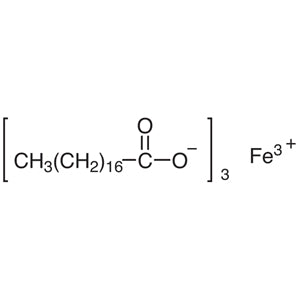
Cobalt(II) Stearate TCI S0393 is a chemical compound widely used in laboratory settings for its versatile applications in organic and inorganic synthesis. As a building block in chemical reactions, it plays a crucial role in catalytic processes and as a reagent for the formation of complex compounds. Its chemical stability allows it to be employed in various reaction conditions, making it a reliable component for controlled chemical transformations. This compound is particularly valued for its ability to participate in both reduction and oxidation reactions, depending on the experimental setup.
The compound's molecular structure consists of a cobalt(II) ion and stearic acid, which contributes to its high reactivity and compatibility with a wide range of molecules. These properties make it an ideal choice for laboratory applications requiring precise chemical interactions. Its solubility in organic solvents further enhances its usability, as it facilitates mixing and reaction processes in experimental setups. This solubility ensures that the compound can be easily incorporated into various synthetic protocols without compromising the integrity of the reaction.
In Indonesian laboratories, Cobalt(II) Stearate is extensively used in chemical research, particularly in the fields of organic synthesis, catalysis, and the development of new materials. Its role in reducing and oxidizing reactions makes it a valuable tool for researchers working on advanced chemical processes. It is also commonly found in studies related to inorganic materials, where its reactivity and stability contribute to the success of experimental outcomes.
TCI brochures (PDF)
- Lipids 2025-12-17 · p. 7
Related TCI products
- TCI S0256 555-36-2 Iron(III) Stearate
- TCI T3554 28277-59-0 Tris(1,10-phenanthroline)cobalt(III) Tris(hexafluorophosphate)
- TCI T3553 31876-74-1 Tris(1,10-phenanthroline)cobalt(II) Bis(hexafluorophosphate)
- TCI B2681 14024-48-7 Bis(2,4-pentanedionato)cobalt(II)
- TCI T0746 16092-38-9 Bis(trifluoro-2,4-pentanedionato)cobalt(II)
- TCI H0553 19648-83-0 Bis(hexafluoroacetylacetonato)cobalt(II)
- Organic synthesis reactions benefit from Cobalt(II) Stearate due to its catalytic properties and ability to facilitate complex molecular transformations.
- In inorganic chemistry, it is used as a reagent for the synthesis of metal-based compounds, contributing to the formation of stable coordination complexes.
- Catalytic processes in polymerization reactions often rely on Cobalt(II) Stearate for its ability to initiate and control reaction pathways.
- Material science research utilizes this compound for the development of new inorganic materials with specific functional properties.
- It is also employed in electrochemical studies to investigate the behavior of metal ions in different reaction environments.
| Brand | TCI |
|---|---|
| CAS number | 1002-88-6 |
| Molecular formula | — |
| Purity | — |
| Category | Chemistry > Building Blocks > Non-Heterocyclic Building Blocks |
| Pack sizes | Available in various quantities as per supplier standards |
| Physical form | Solid powder |
| Storage | Store in a cool, dry place away from moisture and direct sunlight |
Cobalt(II) Stearate should be stored in a cool, dry environment to maintain its chemical stability and prevent degradation. It is recommended to keep the compound in a sealed container to avoid exposure to moisture, which could affect its reactivity. Suitable storage containers include glass or high-density polyethylene (HDPE) bottles that are resistant to chemical reactions. In laboratory settings, it is important to handle the compound with appropriate personal protective equipment, such as gloves and safety goggles, to ensure safe handling. Avoid contact with skin and eyes, and ensure proper ventilation when working with the compound. Regular inspection of storage conditions is advised to maintain the integrity of the material and ensure its effectiveness in experimental applications.
—
Produk Terkait
-
Iron(III)Stearate TCI S0256
Regular price From Rp 1.298.850,00Regular priceRp 908.250,00Sale price From Rp 1.298.850,00 -
Tris(1,10-phenanthroline)cobalt(III)Tris(hexafluorophosphate) TCI T3554
Regular price From Rp 3.312.750,00Regular priceRp 2.332.050,00Sale price From Rp 3.312.750,00 -
Tris(1,10-phenanthroline)cobalt(II)Bis(hexafluorophosphate) TCI T3553
Regular price From Rp 3.021.900,00Regular priceRp 2.128.350,00Sale price From Rp 3.021.900,00 -
Bis(2,4-pentanedionato)cobalt(II) TCI B2681
Regular price Rp 1.696.800,00Regular priceRp 1.186.500,00Sale price Rp 1.696.800,00 -
Bis(trifluoro-2,4-pentanedionato)cobalt(II) TCI T0746
Regular price From Rp 2.597.700,00Regular priceRp 1.832.250,00Sale price From Rp 2.597.700,00 -
Bis(hexafluoroacetylacetonato)cobalt(II) TCI H0553
Regular price Rp 4.266.150,00Regular priceRp 2.998.800,00Sale price Rp 4.266.150,00 -
Dichloro(dimethylglyoxime)(dimethylglyoximato)cobalt(III) TCI D5924
Regular price From Rp 1.881.600,00Regular priceRp 1.331.400,00Sale price From Rp 1.881.600,00 -
Cobalt(powder) TCI C4049
Regular price From Rp 1.696.800,00Regular priceRp 1.186.500,00Sale price From Rp 1.696.800,00