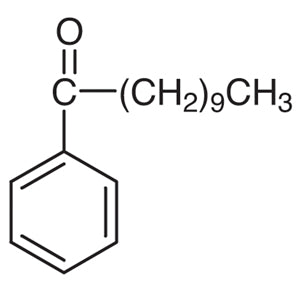
Decanophenone is an organic compound widely used as a building block in the synthesis of complex molecules. It plays a crucial role in chemical laboratories where researchers aim to create compounds with specific structural features. As a non-heterocyclic building block, it serves as a versatile intermediate in various synthetic pathways. Its ability to participate in substitution and condensation reactions makes it an essential tool for the development of aromatic and heterocyclic compounds.
The chemical properties of decanophenone make it a preferred choice for laboratory applications. It exhibits a stable molecular structure that allows for predictable chemical behavior under controlled conditions. Despite its stability, it remains highly reactive in specific chemical environments, enabling it to form a wide range of functional groups. Its relatively high boiling and melting points facilitate ease of handling during heating and cooling processes, which is vital in many synthetic procedures.
In Indonesian laboratories, decanophenone is commonly used in scientific research, particularly in the fields of organic chemistry and pharmaceutical development. It is frequently found in research settings where the synthesis of new compounds or the modification of existing ones is required. Its adaptability and reactivity make it a valuable resource for researchers seeking to explore chemical diversity and functionality.
- Organic synthesis applications benefit from decanophenone's ability to participate in substitution and condensation reactions, enabling the creation of aromatic and heterocyclic compounds.
- Pharmaceutical research utilizes decanophenone as a building block for the development of new drug molecules due to its reactivity and structural versatility.
- Chemical research in Indonesian laboratories often incorporates decanophenone for the synthesis of complex organic compounds with specific functional groups.
- Analytical chemistry uses decanophenone as a standard reference material for testing and validating synthetic processes in laboratory settings.
- Educational institutions employ decanophenone in teaching and research to demonstrate fundamental chemical reactions and synthetic techniques.
| Brand | TCI |
|---|---|
| CAS number | 6048-82-4 |
| Molecular formula | — |
| Purity | — |
| Category | Chemistry > Building Blocks > Non-Heterocyclic Building Blocks |
| Pack sizes | Available in various quantities as per supplier specifications |
| Physical form | Liquid |
| Storage | Store in a cool, dry place away from direct sunlight |
Decanophenone should be stored in a cool, dry environment to maintain its chemical stability. It is recommended to keep it in a tightly sealed container to prevent exposure to air and moisture. Due to its reactivity, it should be handled in a well-ventilated laboratory area to minimize potential hazards. Appropriate personal protective equipment, such as gloves and safety goggles, should be worn during handling. Avoid contact with incompatible materials to ensure safe storage and usage. Regular monitoring of storage conditions helps maintain the integrity of the compound for laboratory applications.
—
Produk Terkait
-
Undecanophenone TCI U0053
Regular price From Rp 2.597.700,00Regular price -
Tridecanophenone TCI T1087
Regular price Rp 1.405.950,00Regular price -
Tetradecanophenone TCI T0804
Regular price From Rp 1.538.250,00Regular price -
Pentadecanophenone TCI P1903
Regular price Rp 3.922.800,00Regular price -
Octadecanophenone TCI O0185
Regular price From Rp 1.510.950,00Regular price -
Nonadecanophenone TCI N0664
Regular price From Rp 1.590.750,00Regular price -
Dodecanophenone TCI L0018
Regular price From Rp 1.246.350,00Regular price -
Heptadecanophenone TCI H0780
Regular price From Rp 2.174.550,00Regular price