Tetradecanophenone is a chemical compound widely utilized in organic reactions and the synthesis of complex molecules. As a key building block in chemistry, it plays a crucial role in the formation of larger molecular structures, particularly in the synthesis of aromatic and heterocyclic compounds. Its versatility makes it an essential component in various synthetic pathways, enabling researchers to create a wide range of molecular architectures. This compound is frequently employed in organic chemistry research to expand the diversity of molecular structures available for drug development, industrial chemical production, and other chemical applications.
Tetradecanophenone is valued for its stable molecular structure and favorable reactivity, which make it an ideal choice for a variety of chemical reactions. It exhibits consistent chemical and physical properties, ensuring predictable behavior under different experimental conditions. Its high purity and availability in multiple packaging formats enhance its usability in laboratory settings. These characteristics allow it to be easily incorporated into both small-scale and larger research projects, supporting a wide range of chemical synthesis and analytical applications.
In Indonesian laboratories, Tetradecanophenone is commonly used by chemists, students, and academic institutions for research and development purposes. Its role in organic synthesis and molecular construction makes it a valuable resource for both educational and industrial applications. The compound’s reliability and adaptability contribute to its popularity in various scientific investigations, supporting the advancement of chemical knowledge and innovation in the region.
- Organic synthesis applications benefit from Tetradecanophenone's stability and reactivity, enabling the creation of complex molecular structures.
- It is ideal for Friedel-Crafts reactions due to its ability to participate in electrophilic aromatic substitution processes.
- In the development of pharmaceutical compounds, it serves as a key intermediate for synthesizing bioactive molecules.
- Its consistent properties make it suitable for use in analytical chemistry, supporting accurate and reproducible experimental results.
- Educational institutions use it to teach fundamental concepts in organic chemistry and molecular synthesis techniques.
| Brand | TCI |
|---|---|
| CAS number | 4497-05-6 |
| Molecular formula | — |
| Purity | — |
| Category | Chemistry > Building Blocks > Non-Heterocyclic Building Blocks |
| Pack sizes | Available in various quantities to suit different laboratory needs |
| Physical form | Liquid |
| Storage | Store in a cool, dry place away from direct sunlight |
Tetradecanophenone should be stored in a cool, dry environment to maintain its stability and prevent degradation. It is recommended to use airtight containers to minimize exposure to moisture and air, which can affect its purity. Proper ventilation is essential when handling this compound to ensure a safe working environment. Laboratory personnel should wear appropriate personal protective equipment, such as gloves and safety goggles, to avoid direct contact. The compound should be kept away from incompatible substances to prevent chemical reactions. Regular monitoring of storage conditions ensures the compound remains suitable for use in research and synthesis applications.
—
Produk Terkait
-
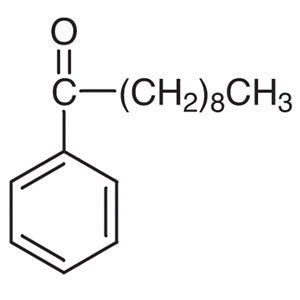
Decanophenone TCI D0026
Regular price From Rp 1.724.100,00Regular priceRp 1.205.400,00Sale price From Rp 1.724.100,00 -
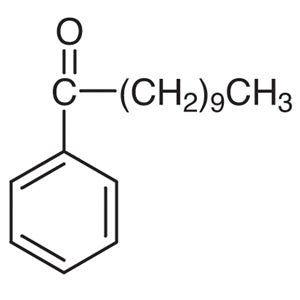
Undecanophenone TCI U0053
Regular price From Rp 2.597.700,00Regular priceRp 1.816.500,00Sale price From Rp 2.597.700,00 -
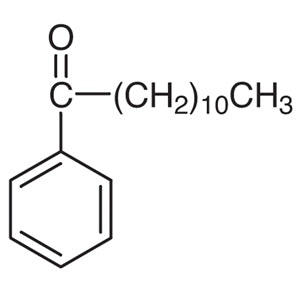
Dodecanophenone TCI L0018
Regular price From Rp 1.246.350,00Regular priceRp 871.500,00Sale price From Rp 1.246.350,00 -
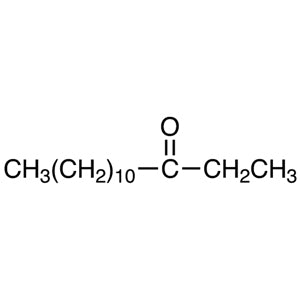
3-Tetradecanone TCI T1760
Regular price Rp 1.856.400,00Regular priceRp 1.297.800,00Sale price Rp 1.856.400,00 -
2-Tetradecanone TCI T1314
Regular price Rp 5.990.250,00Regular priceRp 4.188.450,00Sale price Rp 5.990.250,00 -
Octadecanophenone TCI O0185
Regular price From Rp 1.510.950,00Regular priceRp 1.056.300,00Sale price From Rp 1.510.950,00 -
Nonadecanophenone TCI N0664
Regular price From Rp 1.590.750,00Regular priceRp 1.111.950,00Sale price From Rp 1.590.750,00 -
Hexadecanophenone TCI H0590
Regular price From Rp 1.485.750,00Regular priceRp 1.038.450,00Sale price From Rp 1.485.750,00