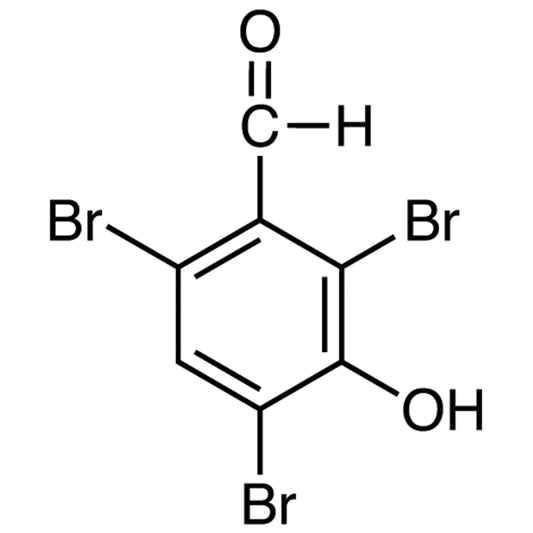
Alpha,3,5-Tribromo-2-hydroxytoluene is a chemical compound widely used in laboratory settings as a building block for organic synthesis. Its unique molecular structure, featuring bromine and hydroxyl groups, makes it a versatile reagent in various chemical reactions. This compound is commonly utilized in research and development processes to create more complex molecules, serving as a foundational element in synthetic pathways. Its role in the laboratory is critical for chemists seeking to explore new chemical transformations and develop novel compounds with specific functional properties.
The compound's chemical properties, including the presence of bromo and hydroxyl groups, contribute to its reactivity and utility in substitution and electrophilic reactions. These characteristics allow it to participate in a range of synthetic strategies, making it a preferred choice for chemists working on diverse projects. Its stable molecular structure ensures consistent performance, while its controlled reactivity allows for precise manipulation in experimental conditions. These factors make it a reliable and dependable material for laboratory use.
In Indonesian laboratories, Alpha,3,5-Tribromo-2-hydroxytoluene is frequently used in organic chemistry research, particularly in academic institutions and research centers. It is a key component in the synthesis of pharmaceuticals, industrial chemicals, and advanced materials. Its availability and chemical properties make it an essential reagent for researchers aiming to expand their synthetic capabilities and contribute to scientific advancements.
Related TCI products
- TCI T3392 2737-22-6 2,4,6-Tribromo-3-hydroxybenzaldehyde
- TCI B2772 2772-45-4 2,4-Bis(alpha,alpha-dimethylbenzyl)phenol
- TCI B1955 5391-88-8 4-Bromo-alpha-methylbenzyl Alcohol
- TCI B1482 136861-46-6 alpha,alpha'-Bis(4-methylbenzyloxy)-p-xylene
- TCI A2590 2883-98-9 alpha-Asarone
- TCI H1386 2480-86-6 4-Hydroxy-3-methoxy-alpha-methylbenzyl Alcohol
- Organic synthesis is a key application where this compound is used to create complex molecules through substitution and electrophilic reactions.
- Pharmaceutical research benefits from its use as a precursor in the development of new drugs and therapeutic agents.
- Industrial chemical production relies on this compound for the synthesis of various chemical intermediates and specialty products.
- Material science research utilizes it in the development of advanced polymers and functional materials.
- Academic research in Indonesian universities employs it to support teaching and experimental studies in organic chemistry.
| Brand | TCI |
|---|---|
| CAS number | 4186-54-3 |
| Molecular formula | — |
| Purity | — |
| Category | Chemistry > Building Blocks > Non-Heterocyclic Building Blocks |
| Pack sizes | Available in standard laboratory quantities |
| Physical form | Solid or liquid, depending on the specific product variant |
| Storage | Store in a cool, dry place away from light and incompatible materials |
This compound should be stored in a cool, dry environment, away from direct sunlight and sources of heat. It is recommended to use airtight containers to prevent exposure to moisture and air, which may affect its stability. Proper ventilation is essential when handling the material to minimize inhalation risks. Due to its chemical nature, it should be kept away from incompatible substances such as strong oxidizers or acids. Always follow standard laboratory safety protocols, including the use of personal protective equipment, to ensure safe handling and storage.
—
Produk Terkait
-
2,4,6-Tribromo-3-hydroxybenzaldehyde TCI T3392
Regular price From Rp 2.174.550,00Regular price -
2,4-Bis(alpha,alpha-dimethylbenzyl)phenol TCI B2772
Regular price From Rp 530.250,00Regular price -
4-Bromo-alpha-methylbenzylAlcohol TCI B1955
Regular price From Rp 875.700,00Regular price -
alpha,alpha'-Bis(4-methylbenzyloxy)-p-xylene TCI B1482
Regular price From Rp 2.254.350,00Regular price -
alpha-Asarone TCI A2590
Regular price From Rp 1.618.050,00Regular price -
4-Hydroxy-3-methoxy-alpha-methylbenzylAlcohol TCI H1386
Regular price From Rp 2.466.450,00Regular price -
2,4-Dichloro-alpha-methylbenzylAlcohol TCI D4508
Regular price From Rp 1.035.300,00Regular price -
4,4'-Dichloro-alpha-methylbenzhydrol TCI D2692
Regular price Rp 1.644.300,00Regular price