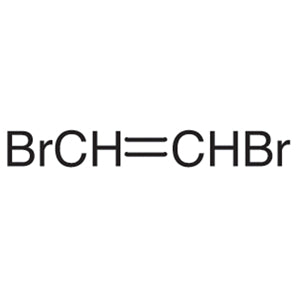
1,2-Dibromoethylene (cis- and trans- mixture) is a versatile chemical compound widely used in organic chemistry laboratories. It serves as a key building block in the synthesis of various organic compounds, particularly in substitution and addition reactions. This compound is essential for researchers aiming to create complex molecular structures or modify existing ones. Its reactivity makes it a valuable tool in the development of new chemical entities and functional materials. Due to its unique molecular structure, it is frequently used in chemical research and industrial applications.
The compound's reactivity stems from its molecular structure, which features two bromine atoms attached to adjacent carbon atoms. This configuration enhances its ability to participate in a wide range of chemical reactions, making it a preferred choice for synthetic chemists. Its versatility allows it to be used in multiple reaction pathways, including electrophilic additions and nucleophilic substitutions. The compound's ability to react with various reagents makes it a fundamental component in the synthesis of more complex organic molecules.
In Indonesian laboratories, 1,2-Dibromoethylene is commonly used in chemical research projects aimed at developing new compounds and modifying existing ones. It is a popular choice among researchers due to its effectiveness in synthetic processes and its role in creating complex molecular structures. Its presence in laboratory settings highlights its importance in both academic and industrial chemical applications.
Related TCI products
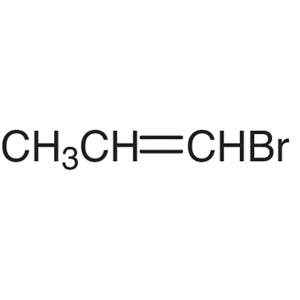
- TCI B1038 590-14-7 1-Bromo-1-propene (cis- and trans- mixture)
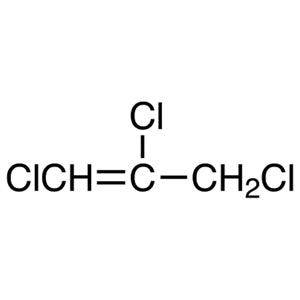
- TCI T0396 96-19-5 1,2,3-Trichloropropene (cis- and trans- mixture)
- TCI D0405 542-75-6 1,3-Dichloropropene (cis- and trans- mixture)
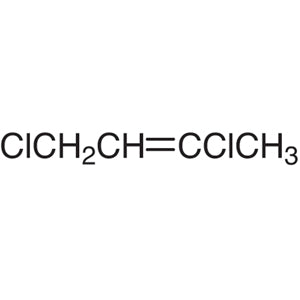
- TCI D0351 926-57-8 1,3-Dichloro-2-butene (cis- and trans- mixture)
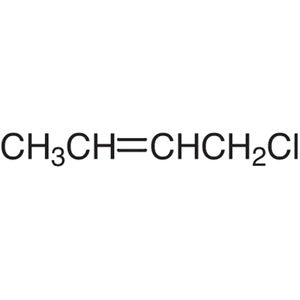
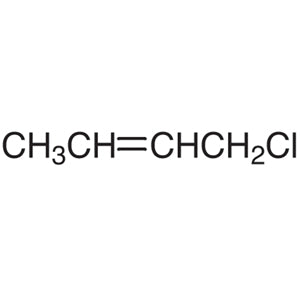
- TCI C1686 591-97-9 Crotyl Chloride (cis- and trans- mixture, contains 38% 3-Chloro-1-butene at maximum)
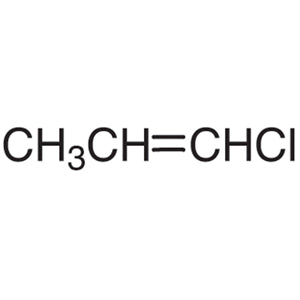
- TCI C0272 590-21-6 1-Chloro-1-propene (cis- and trans- mixture)
- Organic synthesis for creating complex molecular structures due to its reactivity and versatility in chemical reactions.
- Development of new chemical compounds through substitution and addition reactions in research settings.
- Modification of existing molecules in industrial and academic laboratories to produce novel materials.
- Use in electrophilic addition reactions to form various organic derivatives with different functional groups.
- Support for nucleophilic substitution reactions in the synthesis of functionalized organic compounds.
| Brand | TCI |
|---|---|
| CAS number | 540-49-8 |
| Molecular formula | — |
| Purity | — |
| Category | Chemistry > Building Blocks > Non-Heterocyclic Building Blocks |
| Pack sizes | As available from supplier |
| Physical form | Liquid |
| Storage | Store in a cool, dark place away from heat and direct sunlight |
This compound should be stored in a cool, dark place away from heat and direct sunlight to maintain its stability and reactivity. It is recommended to use suitable containers that are resistant to chemical reactions, such as glass or high-density polyethylene bottles. Due to its reactivity, it should be handled in a well-ventilated area to minimize exposure. Laboratory personnel should wear appropriate personal protective equipment, including gloves and safety goggles, when working with this compound. Proper disposal methods should be followed to ensure environmental safety and compliance with chemical regulations.
—
Produk Terkait
-
1-Bromo-1-propene(cis-andtrans-mixture) TCI B1038
Regular price From Rp 1.431.150,00Regular price -
1,2,3-Trichloropropene(cis-andtrans-mixture) TCI T0396
Regular price Rp 1.060.500,00Regular price -
1,3-Dichloropropene(cis-andtrans-mixture) TCI D0405
Regular price From Rp 664.650,00Regular price -
1,3-Dichloro-2-butene(cis-andtrans-mixture) TCI D0351
Regular price Rp 8.533.350,00Regular price -
CrotylChloride(cis-andtrans-mixture,contains38%3-Chloro-1-buteneatmaximum) TCI C1686
Regular price From Rp 689.850,00Regular price -
1-Chloro-1-propene(cis-andtrans-mixture) TCI C0272
Regular price Rp 4.743.900,00Regular price -
CrotylChloride(cis-andtrans-mixture) TCI C0145
Regular price From Rp 1.696.800,00Regular price -
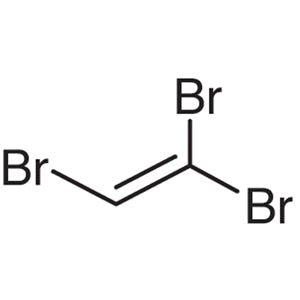
Tribromoethylene TCI T0794
Regular price From Rp 1.724.100,00Regular price