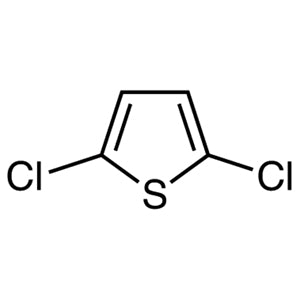
2,5-Dichlorothiophene is a chemical compound widely used as a building block in the synthesis of heterocyclic compounds. This compound features a thiophene ring with two chlorine atoms at positions 2 and 5, providing it with unique reactivity and structural versatility. Its role in laboratory settings is critical for the development of complex molecules with applications in pharmaceuticals, materials science, and chemical industries. As a fundamental component in synthetic chemistry, it enables researchers to create a wide range of functional derivatives through various reaction mechanisms.
The chemical properties of 2,5-Dichlorothiophene make it a preferred choice for laboratory use. Its stability under normal conditions allows for controlled handling, while its reactivity in specific environments facilitates substitution and cyclization reactions. The presence of chlorine atoms enhances its utility in synthetic pathways, offering opportunities for functional group modification. Additionally, its solubility in organic solvents simplifies the process of dissolving and working with the compound in various experimental setups. These characteristics make it an essential reagent for chemists working on complex molecular structures.
In Indonesian laboratories, 2,5-Dichlorothiophene is commonly used by researchers and students for the synthesis of heterocyclic compounds. It is a key component in the expanding needs of chemical laboratories, particularly in applied research and higher education. Its role in drug development and material innovation highlights its importance in both academic and industrial settings. The compound’s availability and reliability make it a standard item in many chemical research facilities across Indonesia.
Related TCI products
- TCI A1182 36157-40-1 3-Acetyl-2,5-dichlorothiophene
- TCI B2013 40032-73-3 3-Bromo-2-chlorothiophene
- TCI B1996 2873-18-9 2-Bromo-5-chlorothiophene
- TCI A1471 6310-09-4 2-Acetyl-5-chlorothiophene
- TCI M2942 35475-03-7 Methyl 5-Chlorothiophene-2-carboxylate
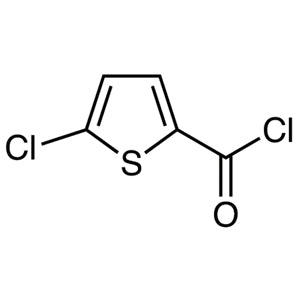
- TCI C2864 42518-98-9 5-Chlorothiophene-2-carbonyl Chloride
- Synthesis of heterocyclic compounds for pharmaceutical development due to its reactivity and structural versatility.
- Reactions involving substitution and cyclization as it provides a stable yet reactive platform for chemical modifications.
- Development of new materials through functional group manipulation due to the presence of chlorine atoms.
- Educational experiments in organic chemistry to demonstrate synthetic pathways and reaction mechanisms.
- Industrial applications in chemical manufacturing for the production of specialized compounds and intermediates.
| Brand | TCI |
|---|---|
| CAS number | 3172-52-9 |
| Molecular formula | — |
| Purity | — |
| Category | Chemistry > Building Blocks > Heterocyclic Building Blocks |
| Pack sizes | — |
| Physical form | — |
| Storage | Store in a cool, dry place away from light and incompatible substances. |
2,5-Dichlorothiophene should be stored in a cool, dry environment, away from direct sunlight and sources of heat. It is recommended to use airtight containers made of materials compatible with organic solvents to prevent contamination and evaporation. Due to its chemical nature, it should be kept separate from strong oxidizing agents and reactive metals. In laboratory settings, proper ventilation and personal protective equipment should be used when handling the compound. Regular monitoring of storage conditions ensures the compound remains stable and suitable for use in chemical experiments.
—
Produk Terkait
-
3-Acetyl-2,5-dichlorothiophene TCI A1182
Regular price From Rp 505.050,00Regular price -
3-Bromo-2-chlorothiophene TCI B2013
Regular price From Rp 1.353.450,00Regular price -
2-Bromo-5-chlorothiophene TCI B1996
Regular price From Rp 664.650,00Regular price -
2-Acetyl-5-chlorothiophene TCI A1471
Regular price From Rp 1.326.150,00Regular price -
Methyl5-Chlorothiophene-2-carboxylate TCI M2942
Regular price From Rp 1.510.950,00Regular price -
5-Chlorothiophene-2-carbonylChloride TCI C2864
Regular price From Rp 769.650,00Regular price -
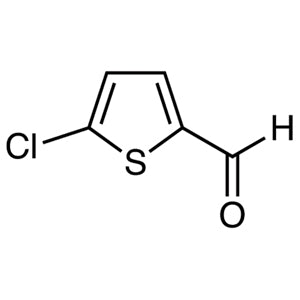
5-Chlorothiophene-2-carboxaldehyde TCI C1722
Regular price From Rp 795.900,00Regular price -
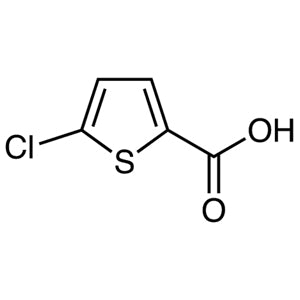
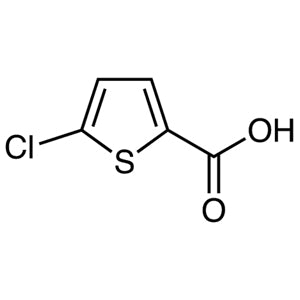
5-Chlorothiophene-2-carboxylicAcid TCI C1230
Regular price From Rp 477.750,00Regular price