2',5'-Dichloroacetanilide is an aromatic organic compound derived from acetanilide. Its benzene ring carries two chlorine atoms, and its amine group is protected as an acetyl amide. In the laboratory it is used as a non-heterocyclic building block, meaning a starting material or intermediate in multistep organic synthesis. This TCI product, catalogue code D0307, suits researchers who need a chlorinated aromatic framework with an amide group that can be modified further in later steps of a synthetic route.
The acetamide group protects the aromatic amine, so chemists can control the reactivity of the aniline nitrogen while running other reactions on the ring. Once those steps are complete, the acetyl group can be removed by hydrolysis to give the free amine, 2,5-dichloroaniline. The two chlorine substituents sit in fixed positions and give the molecule a distinctive substitution pattern. That makes the compound useful for studying steric and electronic effects in aromatic reactions. As a TCI-branded product, it is chosen by many laboratories for its consistency from one research project to the next.
In Indonesia, compounds like this are commonly found in university organic chemistry laboratories and research centres. Lecturers, graduate students and research staff use them for synthesis projects, theses and methodology studies that need a well-defined aromatic intermediate. Its role as a protected aniline also makes it a practical example when teaching protecting-group strategy and aromatic substitution. Laboratories that do routine synthetic work can keep it on hand as a reliable starting material.
- Multistep organic synthesis: the compound acts as a non-heterocyclic building block, providing a chlorinated aromatic framework that can be carried through several reaction steps toward a target molecule.
- Amine protection strategy: the acetamide group masks the reactive aniline nitrogen, so chemists can carry out reactions elsewhere on the ring without unwanted side reactions at the amine.
- Preparation of 2,5-dichloroaniline: hydrolysing the acetyl group gives the free amine, so this material is a convenient protected precursor to that aniline when it is needed later in a route.
- Studies of aromatic reactivity: the fixed positions of the two chlorine substituents give a distinctive substitution pattern for examining steric and electronic effects on aromatic reactions.
- Teaching and thesis research: university laboratories can use this well-defined compound to show protecting-group chemistry and substituted aromatic systems in student projects and advanced coursework.
| Brand | TCI (product code D0307) |
|---|---|
| CAS number | 2621-62-7 |
| Molecular formula | — |
| Purity | — |
| Category | Chemistry > Building Blocks > Non-Heterocyclic Building Blocks |
| Pack sizes | as offered by TCI for catalogue code D0307; please confirm the available sizes when you enquire |
| Physical form | see the TCI product documentation and Safety Data Sheet |
| Storage | follow the conditions on the TCI label and Safety Data Sheet |
Keep this compound in its original, tightly closed manufacturer's container, in a cool, dry, well-ventilated chemical store away from direct sunlight, heat sources and incompatible substances such as strong oxidising agents. Follow the storage conditions given on the TCI label and Safety Data Sheet. Handle it inside a fume hood or other well-ventilated area, and wear a laboratory coat, safety glasses and chemical-resistant gloves. Avoid inhaling dust and avoid contact with skin and eyes. Use clean, dry spatulas so the remaining material does not get contaminated, and close the container right after use. Label any secondary containers clearly, and dispose of waste as halogenated organic waste under your institution's rules and local regulations.
—
Produk Terkait
-
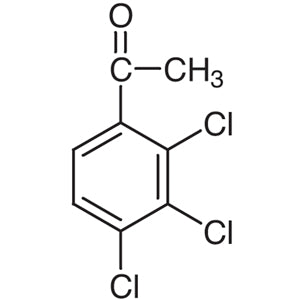
2',3',4'-Trichloroacetophenone TCI T2306
Regular price Rp 900.900,00Regular priceRp 645.750,00Sale price Rp 900.900,00 -
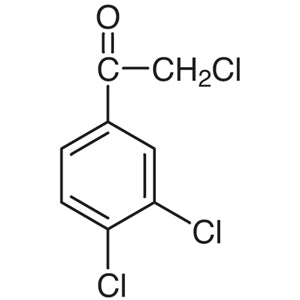
2,3',4'-Trichloroacetophenone TCI T1965
Regular price Rp 2.121.000,00Regular priceRp 1.498.350,00Sale price Rp 2.121.000,00 -
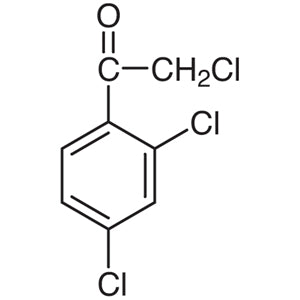
2,2',4'-Trichloroacetophenone TCI T1405
Regular price Rp 662.550,00Regular priceRp 478.800,00Sale price Rp 662.550,00 -
4'-Bromo-3'-chloroacetanilide TCI B3141
Regular price From Rp 822.150,00Regular priceRp 590.100,00Sale price From Rp 822.150,00 -
4'-Bromo-2'-chloroacetanilide TCI B2413
Regular price From Rp 875.700,00Regular priceRp 627.900,00Sale price From Rp 875.700,00 -
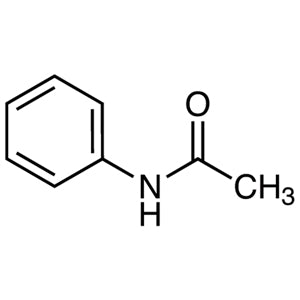
Acetanilide TCI A3272
Regular price Rp 1.192.800,00Regular priceRp 849.450,00Sale price Rp 1.192.800,00 -
3'-Amino-4'-chloroacetophenone TCI A3026
Regular price From Rp 610.050,00Regular priceRp 442.050,00Sale price From Rp 610.050,00 -
4'-Amino-3',5'-dichloroacetophenone TCI A1967
Regular price From Rp 1.167.600,00Regular priceRp 831.600,00Sale price From Rp 1.167.600,00