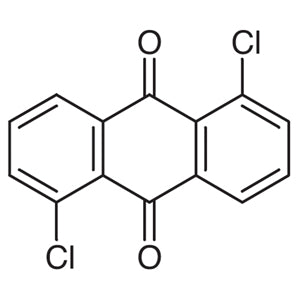
1,5-Dichloroanthraquinone is a chemical compound widely used as a building block in various chemical reactions. It is a key reagent in organic chemistry, particularly in synthetic processes where functional group manipulation is required. This compound is commonly found in laboratory settings where researchers aim to develop new organic compounds or modify existing ones. Its role as a versatile intermediate makes it essential for chemists working on complex molecular structures. Due to its stability and predictable reactivity, it is a reliable choice for both academic and industrial research.
The compound’s chemical properties, including its ability to participate in nucleophilic and electrophilic reactions, make it a preferred choice in organic synthesis. Its molecular structure, with two chlorine atoms attached at positions 1 and 5 of the anthraquinone ring, provides a unique platform for further chemical transformations. The controlled reactivity and stability under various conditions allow for precise control in synthetic pathways. These characteristics make it a valuable tool for researchers seeking to explore new chemical reactions and synthetic strategies.
In Indonesian laboratories, 1,5-Dichloroanthraquinone is frequently used in organic chemistry research, especially in academic institutions and research centers. Its application spans a wide range of synthetic processes, from basic undergraduate experiments to advanced research projects. The compound’s availability and reliability make it a staple in chemical laboratories across Indonesia, supporting both educational and scientific endeavors.
- Organic synthesis is a primary application where 1,5-Dichloroanthraquinone is used to create complex organic molecules through substitution and oxidation reactions.
- It is ideal for nucleophilic substitution reactions due to its stable molecular structure and predictable reactivity.
- In electrophilic reactions, the compound serves as a versatile electrophilic reagent, enabling the formation of diverse organic compounds.
- It is commonly used in academic research to teach and demonstrate fundamental chemical reaction mechanisms.
- The compound supports advanced research in chemical engineering and pharmaceutical development, where precise molecular manipulation is required.
| Brand | TCI |
|---|---|
| CAS number | 82-46-2 |
| Molecular formula | — |
| Purity | — |
| Category | Chemistry > Building Blocks > Non-Heterocyclic Building Blocks |
| Pack sizes | Available in various quantities as per standard laboratory supply |
| Physical form | Solid |
| Storage | Store in a cool, dry place away from moisture and direct sunlight |
1,5-Dichloroanthraquinone should be stored in a cool, dry environment to maintain its chemical stability. It is recommended to keep the compound in a sealed container to prevent exposure to moisture and air. Due to its chemical nature, it is important to handle it with appropriate personal protective equipment, such as gloves and safety goggles. The compound should be stored away from incompatible substances to avoid any potential chemical reactions. In a laboratory setting, it is essential to ensure proper ventilation when handling this material. Regular monitoring of storage conditions will help maintain the integrity of the compound for long-term use.
—
Produk Terkait
-
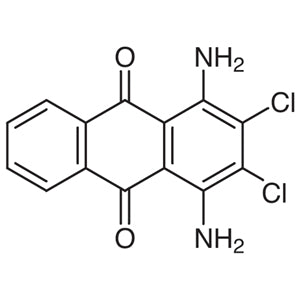
1,4-Diamino-2,3-dichloroanthraquinone TCI D2725
Regular price From Rp 584.850,00Regular price -
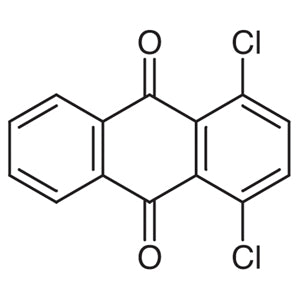
1,4-Dichloroanthraquinone TCI D2518
Regular price From Rp 4.664.100,00Regular price -
1,8-Dichloroanthraquinone TCI D0329
Regular price From Rp 2.016.000,00Regular price -
Anthraquinone TCI A0502
Regular price From Rp 477.750,00Regular price -
Anthraquinone-2-carbonylChloride TCI A0503
Regular price From Rp 3.180.450,00Regular price -
Anthraquinone-2-carboxylicAcid TCI A0504
Regular price From Rp 2.889.600,00Regular price -
1,4-Anthraquinone TCI A2686
Regular price From Rp 2.466.450,00Regular price -
1-(Methylamino)anthraquinone TCI M0255
Regular price From Rp 1.670.550,00Regular price