

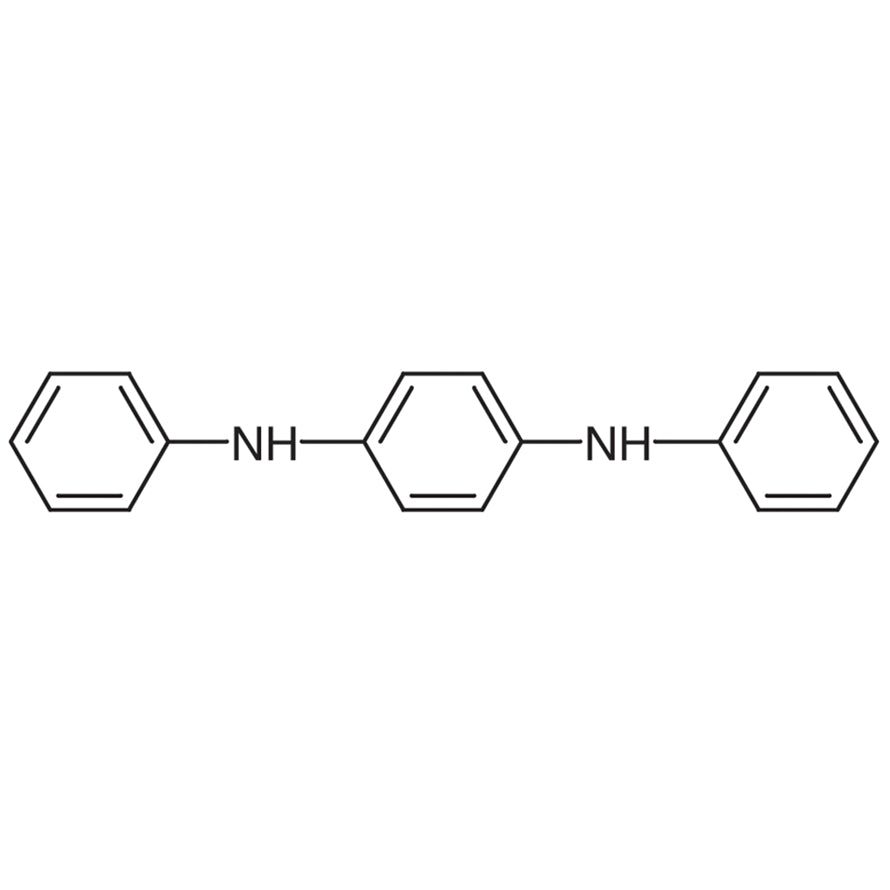
N,N’-Diphenyl-1,4-phenylenediamine (DPP) is an organic compound widely used in scientific research, particularly in the fields of materials chemistry and semiconductor technology. This compound is a key building block for the development of organic semiconductor materials, playing a crucial role in the synthesis of optoelectronic devices and chemical sensors. Its unique molecular structure, featuring two amino groups and two phenyl groups attached to a benzene ring, makes it highly versatile for chemical modifications. DPP is a fundamental material in modern laboratory settings, especially for researchers aiming to design advanced electronic and optical materials.
The chemical properties of DPP make it a preferred choice in laboratory applications. Its stable nature and controlled reactivity allow for precise chemical modifications, enabling the creation of complex molecular structures. The aromatic phenylene core and amino groups provide flexibility in functionalization, which is essential for tailoring the electronic and optical properties of the resulting materials. Additionally, DPP exhibits good thermal stability, making it suitable for use in high-temperature experimental conditions. These characteristics contribute to its popularity among researchers working in materials science and semiconductor technology.
In Indonesian laboratories, DPP is a critical component in the development of advanced materials for optoelectronic and sensing applications. It is commonly used in academic and industrial research settings where the synthesis of organic semiconductors is required. The compound’s reliability and performance make it an essential tool for scientists and engineers working on next-generation electronic devices and chemical sensors. Its availability through suppliers like AMI Scientific ensures that Indonesian researchers have access to this important material for their experimental work.
- Optoelectronic Device Fabrication: DPP is used to create organic semiconductors that are essential for light-emitting diodes and photovoltaic cells due to its ability to form stable molecular structures.
- Chemical Sensor Development: The compound’s reactivity and molecular structure make it ideal for designing sensors that detect various chemical compounds with high sensitivity.
- Semiconductor Material Synthesis: DPP serves as a building block for creating organic semiconductor materials that are used in advanced electronic applications.
- Molecular Modification Studies: Its flexible structure allows researchers to modify its properties for tailored applications in electronic and optical devices.
- High-Temperature Experimental Research: DPP’s thermal stability enables its use in experiments requiring elevated temperatures without compromising its chemical integrity.
| Brand | TCI |
|---|---|
| CAS number | 74-31-7 |
| Molecular formula | — |
| Purity | — |
| Category | Materials Science > Material Building Blocks > Small Molecule Semiconductor Building Blocks |
| Pack sizes | Available in various quantities as per supplier specifications |
| Physical form | Solid |
| Storage | Store in a cool, dry place away from direct sunlight |
DPP should be stored in a cool, dry environment to maintain its chemical stability and prevent degradation. It is recommended to keep the compound in a sealed container to minimize exposure to moisture and air. For long-term storage, a desiccator or a container with a drying agent may be used to ensure optimal conditions. Due to its chemical nature, it should be handled with appropriate personal protective equipment, such as gloves and safety goggles. Avoid contact with strong oxidizing agents or reactive materials to prevent unwanted chemical reactions. Proper labeling and storage in a designated chemical cabinet are essential for safe laboratory practices.
—
Produk Terkait
-
N,N'-Di-2-naphthyl-1,4-phenylenediamine TCI D0812
Regular price From Rp 452.550,00Regular price -
N,N,N'-Triphenyl-1,4-phenylenediamine TCI T3367
Regular price From Rp 1.724.100,00Regular price -
N-(1,3-Dimethylbutyl)-N'-phenyl-1,4-phenylenediamine TCI D3331
Regular price From Rp 530.250,00Regular price -
N,N'-Di-sec-butyl-1,4-phenylenediamine TCI D2268
Regular price From Rp 980.700,00Regular price -
2-(2-Hydroxy-4-methoxyphenyl)-4,6-diphenyl-1,3,5-triazine TCI H1531
Regular price From Rp 1.856.400,00Regular price -
N,9-Diphenyl-9H-carbazol-3-amine TCI D5567
Regular price From Rp 2.359.350,00Regular price -
2-(2,4-Dihydroxyphenyl)-4,6-diphenyl-1,3,5-triazine TCI D4819
Regular price From Rp 1.829.100,00Regular price -
N-Phenyl-1-naphthylamine TCI P0197
Regular price From Rp 452.550,00Regular price


