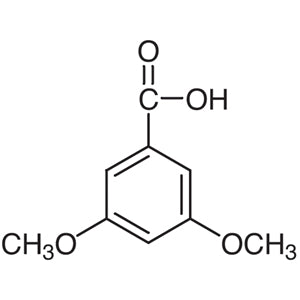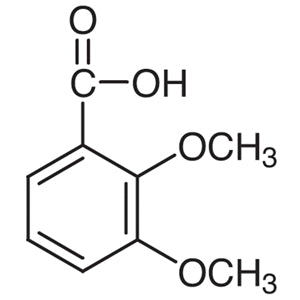
2,3-Dimethoxybenzoic Acid (DMBA), also known as TCI D0630, is a versatile organic compound widely used in laboratory settings for its ability to participate in various chemical reactions. This compound serves as a key building block in the synthesis of complex organic molecules, particularly those requiring functional group substitution on aromatic rings. Its role in chemical research is significant due to its reactivity and compatibility with multiple synthetic pathways. In Indonesian laboratories, DMBA is a fundamental reagent for both academic and industrial applications, supporting the development of new chemical compounds and pharmaceuticals.
The chemical properties of DMBA make it a preferred choice for chemists and researchers. Its stable molecular structure and controlled reactivity allow for efficient participation in reactions such as esterification, amidation, and electrophilic substitution. The presence of two methoxy groups at positions 2 and 3, along with a carboxylic acid group at position 1, enhances its reactivity and functional versatility. These characteristics enable it to be used in a wide range of chemical transformations, making it a valuable tool in synthetic chemistry.
In Indonesian laboratories, DMBA is commonly used in organic chemistry research, educational institutions, and chemical development projects. Its application spans across various fields, including pharmaceutical research, dye synthesis, and industrial chemical production. Due to its reliability and effectiveness, DMBA is a staple in both academic and industrial chemical laboratories in Indonesia, supporting innovation and scientific advancement.
Related TCI products
- TCI B5252 20731-48-0 3-Bromo-4,5-dimethoxybenzoic Acid
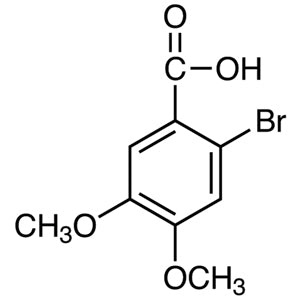
- TCI B3891 6286-46-0 2-Bromo-4,5-dimethoxybenzoic Acid
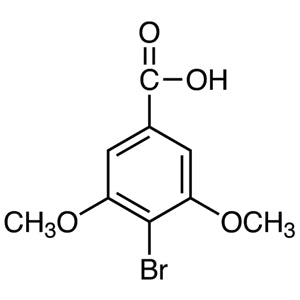
- TCI B2838 56518-42-4 4-Bromo-3,5-dimethoxybenzoic Acid
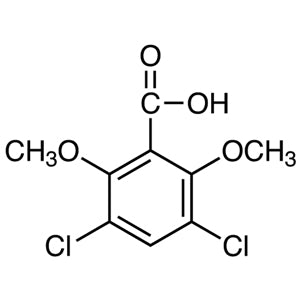
- TCI D4133 73219-91-7 3,5-Dichloro-2,6-dimethoxybenzoic Acid
- TCI D1959 1466-76-8 2,6-Dimethoxybenzoic Acid
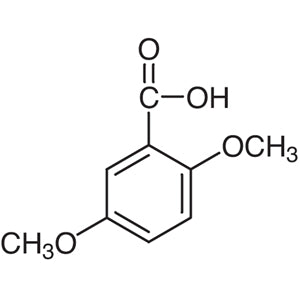
- TCI D1894 2785-98-0 2,5-Dimethoxybenzoic Acid
- Organic synthesis is a primary application for DMBA, as it enables the creation of complex aromatic compounds through substitution reactions.
- Pharmaceutical research benefits from DMBA due to its ability to participate in esterification and amidation reactions, which are essential in drug development.
- Dye and pigment synthesis relies on DMBA because of its reactivity in forming aromatic structures, which are crucial for color compounds.
- Educational institutions use DMBA for teaching organic chemistry concepts, providing students with hands-on experience in synthetic reactions.
- Industrial chemical production incorporates DMBA as a building block for creating specialty chemicals used in various manufacturing processes.
| Brand | TCI |
|---|---|
| CAS number | 1521-38-6 |
| Molecular formula | — |
| Purity | — |
| Category | Chemistry > Building Blocks > Non-Heterocyclic Building Blocks |
| Pack sizes | Available in various quantities as per supplier specifications |
| Physical form | Solid, typically in crystalline or powder form |
| Storage | Store in a cool, dry place away from moisture and direct sunlight |
DMBA should be stored in a cool, dry environment to maintain its chemical integrity and prevent degradation. It is recommended to keep the compound in a sealed container to minimize exposure to moisture and air. Due to its reactivity, it should be handled in a well-ventilated area, and appropriate personal protective equipment should be worn. Avoid contact with incompatible substances such as strong oxidizers or acids. Proper labeling and storage conditions ensure the safety and effectiveness of DMBA in laboratory settings. Regular inspection of storage conditions is advised to maintain optimal chemical stability and usability.
—
Produk Terkait
-
3-Bromo-4,5-dimethoxybenzoicAcid TCI B5252
Regular price From Rp 1.829.100,00Regular price -
2-Bromo-4,5-dimethoxybenzoicAcid TCI B3891
Regular price From Rp 1.087.800,00Regular price -
4-Bromo-3,5-dimethoxybenzoicAcid TCI B2838
Regular price From Rp 689.850,00Regular price -
3,5-Dichloro-2,6-dimethoxybenzoicAcid TCI D4133
Regular price Rp 1.565.550,00Regular price -
2,6-DimethoxybenzoicAcid TCI D1959
Regular price Rp 1.298.850,00Regular price -
2,5-DimethoxybenzoicAcid TCI D1894
Regular price From Rp 2.016.000,00Regular price -
2,4-DimethoxybenzoicAcid TCI D1675
Regular price From Rp 610.050,00Regular price -
3,5-DimethoxybenzoicAcid TCI D1534
Regular price From Rp 1.458.450,00Regular price