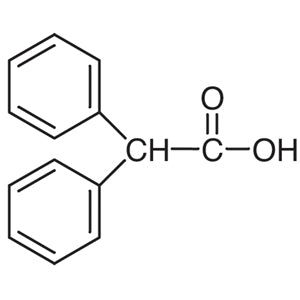
Diphenylacetic Acid (DPA), with CAS number 117-34-0, is an organic compound widely used in various chemical reactions, particularly in the synthesis of complex compounds. As a building block, it serves as a precursor in the creation of aromatic and heterocyclic compounds. In the laboratory, it is commonly used to construct more complex molecular structures, both in organic chemistry research and drug development. Its chemical stability and reactivity make it a versatile tool for chemists seeking to explore new synthetic pathways.
DPA is valued for its chemical stability and good reactivity, which facilitate chemical reactions under controlled conditions. Its molecular structure, consisting of a carboxylic acid group and two phenyl groups, gives it unique reactivity and versatility in organic synthesis. The high melting point of DPA ensures it remains stable during storage and use, making it suitable for laboratory environments that require thermal stability. These properties make it a reliable and efficient reagent for both academic and industrial applications.
In Indonesian laboratories, Diphenylacetic Acid is frequently used in pure and applied chemistry research. It is highly relevant for universities and research institutions focused on organic compound synthesis. Its availability in various packaging formats makes it convenient for use in experiments of different scales. The compound is a key component in the development of new chemical products and pharmaceutical research in the region.
- Organic synthesis applications benefit from DPA's reactivity and stability, enabling the creation of complex aromatic and heterocyclic compounds.
- Drug development research utilizes DPA as a building block for synthesizing pharmaceutical intermediates and active compounds.
- Academic research in chemistry relies on DPA for exploring new synthetic methods and molecular structures in both teaching and experimental settings.
- Industrial chemical production incorporates DPA to manufacture specialty chemicals and functional materials with desired properties.
- Analytical chemistry uses DPA as a reference standard for qualitative and quantitative analysis in various chemical assays.
| Brand | TCI |
|---|---|
| CAS number | 117-34-0 |
| Molecular formula | — |
| Purity | — |
| Category | Chemistry > Building Blocks > Non-Heterocyclic Building Blocks |
| Pack sizes | Available in various sizes to suit different experimental needs |
| Physical form | Solid |
| Storage | Store in a cool, dry place away from direct sunlight |
Diphenylacetic Acid should be stored in a cool, dry place, away from direct sunlight and sources of heat. It is recommended to use airtight containers to prevent moisture absorption and contamination. Due to its chemical stability, it does not require refrigeration but should be protected from environmental factors that may affect its integrity. In laboratory settings, it is important to handle the compound with appropriate personal protective equipment to ensure safety. Proper storage conditions help maintain its chemical properties and ensure its effectiveness in various applications.
—
Produk Terkait
-
DiphenylaceticAnhydride TCI D4075
Regular price Rp 3.180.450,00Regular price -
TriphenylaceticAcid TCI T1585
Regular price From Rp 3.630.900,00Regular price -
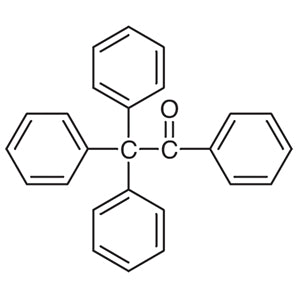
2,2,2-Triphenylacetophenone TCI T1207
Regular price From Rp 1.008.000,00Regular price -
4-BiphenylaceticAcid TCI B1278
Regular price From Rp 1.644.300,00Regular price -
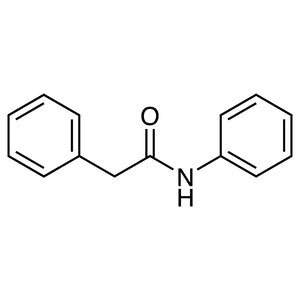
N,2-Diphenylacetamide TCI P3074
Regular price From Rp 2.386.650,00Regular price -
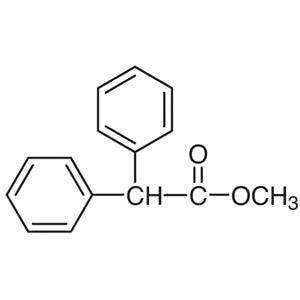
MethylDiphenylacetate TCI D2888
Regular price Rp 3.446.100,00Regular price -
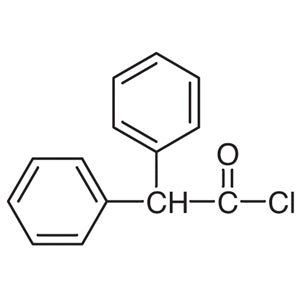
DiphenylacetylChloride TCI D2763
Regular price From Rp 1.140.300,00Regular price -
Diphenylacetaldehyde TCI D2492
Regular price From Rp 3.817.800,00Regular price