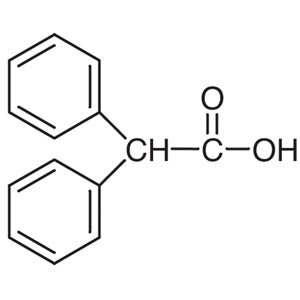
Diphenylacetaldehyde (DPA), with the CAS number 947-91-1, is an organic compound widely used in chemical synthesis, particularly in the production of heterocyclic compounds and complex aromatic substances. As a key building block in organic chemistry, DPA serves as a precursor in various chemical reactions that yield pharmaceuticals and industrial compounds. Its versatility makes it an essential reagent for researchers working in pharmacology and the synthesis of bioactive compounds.
DPA is valued for its stable molecular structure and high reactivity, which make it suitable for a range of chemical reactions such as aldol, condensation, and substitution reactions. Its consistent chemical and physical properties ensure ease of handling in laboratory settings, allowing for efficient processing and manipulation. This reliability is crucial for maintaining the accuracy and reproducibility of experimental results.
In Indonesian laboratories, Diphenylacetaldehyde is commonly used by chemists in higher education institutions and research organizations. It plays a significant role in organic chemistry research related to drug development, new material synthesis, and the creation of aromatic-based chemical compounds. Its application is particularly relevant in projects focused on pharmaceutical innovation and advanced chemical synthesis techniques.
Related TCI products
- Synthesis of heterocyclic compounds due to its reactivity and structural versatility in forming complex ring systems.
- Development of pharmaceuticals as a building block for creating bioactive molecules with therapeutic potential.
- Creation of aromatic-based chemical compounds because of its stable molecular structure and compatibility with various reaction conditions.
- Organic chemistry research in academic institutions for teaching and experimental purposes.
- Industrial chemical synthesis processes where high reactivity and predictable outcomes are required.
| Brand | TCI |
|---|---|
| CAS number | 947-91-1 |
| Molecular formula | — |
| Purity | — |
| Category | Chemistry > Building Blocks > Non-Heterocyclic Building Blocks |
| Pack sizes | Available in standard laboratory quantities |
| Physical form | Solid or liquid, depending on supplier packaging |
| Storage | Store in a cool, dry place away from direct sunlight and moisture |
Diphenylacetaldehyde should be stored in a cool, dry environment to maintain its stability and prevent degradation. It is recommended to use airtight containers to protect it from moisture and air exposure. Due to its chemical reactivity, it should be handled with appropriate personal protective equipment, such as gloves and safety goggles. Proper ventilation is essential when working with this compound to minimize inhalation risks. It should be kept away from incompatible substances to avoid potential chemical reactions. Regular inspection of storage conditions ensures the compound remains in optimal condition for laboratory use.
—
Produk Terkait
-
2-(p-Tolyl)acetaldehyde TCI T4311
Regular price From Rp 3.100.650,00Regular price -
TriphenylaceticAcid TCI T1585
Regular price From Rp 3.630.900,00Regular price -
(Benzyloxy)acetaldehyde(stabilizedwithBHT) TCI B2481
Regular price From Rp 1.510.950,00Regular price -
4-BiphenylaceticAcid TCI B1278
Regular price From Rp 1.644.300,00Regular price -
Phenylacetaldehyde(40-55%inDiethylPhthalate) TCI P0119
Regular price Rp 1.670.550,00Regular price -
DiphenylaceticAnhydride TCI D4075
Regular price Rp 3.180.450,00Regular price -
DiphenylaceticAcid TCI D0869
Regular price From Rp 717.150,00Regular price -
AcetaldehydeAmmoniaTrimer TCI A0201
Regular price From Rp 769.650,00Regular price