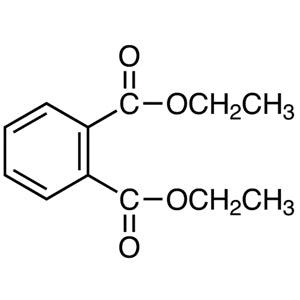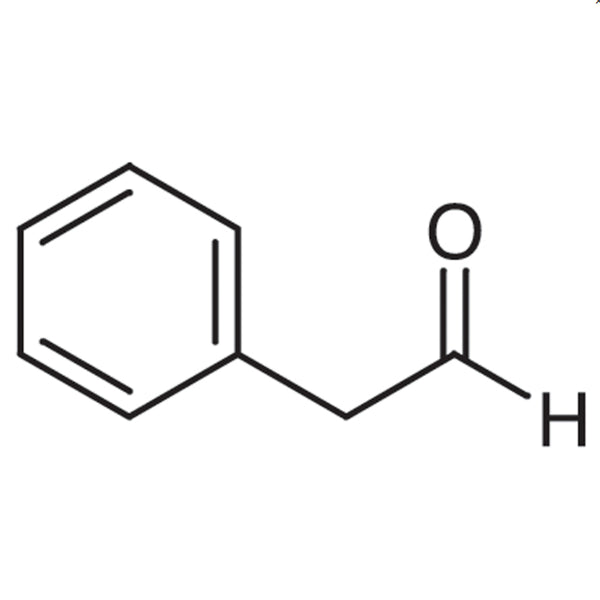
Phenylacetaldehyde (40-55% in Diethyl Phthalate), with CAS number 122-78-1, is an organic compound widely used in various chemical experiments and molecular synthesis. This material serves as a crucial building block in the creation of aromatic compounds and their derivatives. Its versatility makes it an essential component in the chemical laboratory, where it is frequently employed to produce complex molecules through substitution or oxidation reactions. Due to its stable yet reactive nature, it can participate in reactions with a variety of reagents such as bases, acids, and alkali metals, making it a valuable tool for synthetic chemists.
The chemical properties of Phenylacetaldehyde make it a preferred choice for laboratory use. Its solubility in Diethyl Phthalate allows for better control of reactivity, simplifying mixing and handling processes. The presence of Diethyl Phthalate in the formulation also enhances its stability, reducing the risk of unwanted side reactions. These characteristics contribute to its effectiveness in both research and industrial settings, offering a balance between reactivity and safety. This combination of properties ensures that it remains a reliable and efficient reagent for chemical synthesis.
In Indonesian laboratories, Phenylacetaldehyde is highly relevant for organic chemistry research, pharmaceutical development, and industrial chemical production. It is commonly used in academic and research institutions across the country, where it supports experiments requiring reactive yet stable building blocks. Its widespread application in these settings underscores its importance as a fundamental reagent in the chemical sciences.
- Organic chemistry research utilizes Phenylacetaldehyde for synthesizing aromatic compounds and derivatives due to its reactivity and stability.
- Pharmaceutical development benefits from its use in creating complex molecular structures required for drug synthesis.
- Industrial chemical production relies on its ability to participate in various chemical reactions, making it essential for manufacturing processes.
- Academic institutions use it in teaching and experimental settings to demonstrate key chemical reactions and synthetic pathways.
- Environmental analysis may incorporate it in the study of organic pollutants and their transformation in different chemical environments.
| Brand | TCI |
|---|---|
| CAS number | 122-78-1 |
| Molecular formula | — |
| Purity | — |
| Category | Chemistry > Building Blocks > Non-Heterocyclic Building Blocks |
| Pack sizes | — |
| Physical form | Liquid |
| Storage | Store in a cool, dry place away from direct sunlight and incompatible materials |
Phenylacetaldehyde should be stored in a cool, dry environment, away from direct sunlight and sources of heat. It is recommended to use sealed, airtight containers made of materials that are chemically inert to prevent contamination and degradation. Due to its reactivity, it should be kept away from strong oxidizing agents, acids, and bases to avoid unintended chemical reactions. Proper ventilation is essential when handling this material to minimize exposure to vapors. Laboratory personnel should wear appropriate personal protective equipment, including gloves, goggles, and a lab coat, to ensure safety during handling and use.
—
Produk Terkait
-
DiethylPhthalate TCI P0296
Regular price From Rp 477.750,00Regular price -
2-(p-Tolyl)acetaldehyde TCI T4311
Regular price From Rp 3.100.650,00Regular price -
(Benzyloxy)acetaldehyde(stabilizedwithBHT) TCI B2481
Regular price From Rp 1.510.950,00Regular price -
Diphenylacetaldehyde TCI D2492
Regular price From Rp 3.817.800,00Regular price -
MonohexylPhthalate TCI P1313
Regular price Rp 3.155.250,00Regular price -
MonobenzylPhthalate TCI P1191
Regular price Rp 3.232.950,00Regular price -
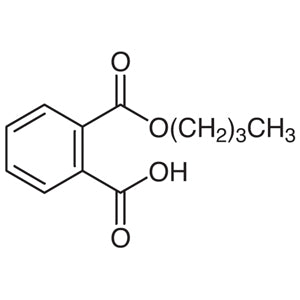
MonobutylPhthalate TCI P1132
Regular price From Rp 903.000,00Regular price -
Bis(2-methoxyethyl)Phthalate TCI P0965
Regular price From Rp 530.250,00Regular price