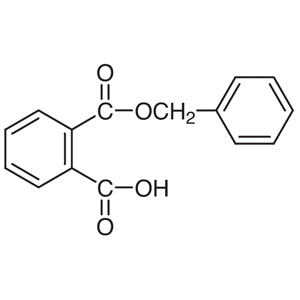
Monobenzyl Phthalate is a chemical compound widely used in laboratory experiments for its versatility and chemical stability. It belongs to the category of non-heterocyclic building blocks, making it a valuable resource for chemists engaged in synthetic processes. This compound is commonly used as a starting material in reactions that require a phthalate structure as part of the final molecule. Its role in chemical synthesis is crucial, particularly in the development of complex organic compounds. Due to its predictable chemical behavior, Monobenzyl Phthalate is a reliable choice for researchers aiming to achieve consistent results in their experiments.
Monobenzyl Phthalate is known for its stable chemical properties, which allow it to participate in various reactions such as esterification, condensation, and substitution. Its molecular structure is well-defined, ensuring high chemical consistency and ease of identification in laboratory settings. The compound is also non-volatile, which minimizes the risk of evaporation during storage and use, enhancing its safety and reliability. These characteristics make it a preferred choice for laboratories that require precision and accuracy in their chemical processes. Its stability and reactivity contribute to its widespread use in both research and educational environments.
In Indonesian laboratories, Monobenzyl Phthalate is frequently used in chemical research, particularly in organic synthesis and analytical chemistry. It is also a common component in educational projects and research initiatives that require a reliable and consistent chemical building block. Its presence in these settings underscores its importance as a fundamental material for both teaching and advanced scientific investigation.
Related TCI products
- Organic synthesis experiments benefit from Monobenzyl Phthalate due to its stable structure and reactivity, enabling the creation of complex organic compounds with high precision.
- Analytical chemistry applications rely on this compound for its predictable behavior and ease of identification, making it ideal for standardization and calibration processes.
- Educational laboratory settings use Monobenzyl Phthalate to teach fundamental chemical reactions and synthesis techniques, providing students with hands-on experience.
- Research projects in chemical development often incorporate this compound as a building block for the synthesis of new materials and pharmaceutical compounds.
- Industrial chemical processes may utilize Monobenzyl Phthalate for its reliability and consistency in large-scale chemical manufacturing and production.
| Brand | TCI |
|---|---|
| CAS number | 2528-16-7 |
| Molecular formula | — |
| Purity | — |
| Category | Chemistry > Building Blocks > Non-Heterocyclic Building Blocks |
| Pack sizes | Available in standard laboratory quantities |
| Physical form | Solid, crystalline appearance |
| Storage | Store in a cool, dry place away from direct sunlight |
Monobenzyl Phthalate should be stored in a cool, dry environment to maintain its chemical stability and prevent degradation. It is recommended to use airtight containers to minimize exposure to moisture and air, which could affect its integrity. Since it is non-volatile, it does not require special containment for evaporation, but proper sealing is still advised. Laboratory personnel should handle the compound with care, using appropriate personal protective equipment such as gloves and safety goggles. It is important to ensure that the compound is kept away from incompatible substances and stored in a designated chemical storage area. Regular inspection of storage conditions will help maintain the quality and usability of the material for long-term laboratory use.
—
Produk Terkait
-
MonohexylPhthalate TCI P1313
Regular price Rp 3.155.250,00Regular price -
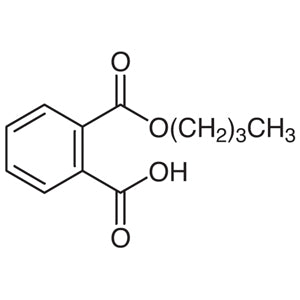
MonobutylPhthalate TCI P1132
Regular price From Rp 903.000,00Regular price -
Bis(2-methoxyethyl)Phthalate TCI P0965
Regular price From Rp 530.250,00Regular price -
Bis(cis-3,3,5-trimethylcyclohexyl)Phthalate TCI P0946
Regular price From Rp 1.749.300,00Regular price -
MonobutylPhthalateCopper(II)Salt TCI P0676
Regular price Rp 3.817.800,00Regular price -
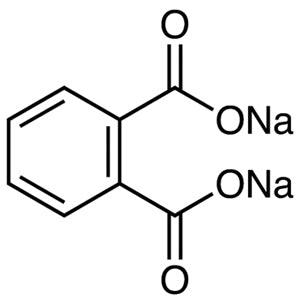
DisodiumPhthalate TCI P0400
Regular price From Rp 743.400,00Regular price -
PotassiumHydrogenPhthalate TCI P0309
Regular price From Rp 477.750,00Regular price -
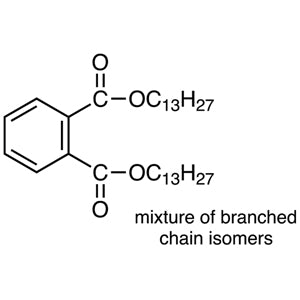
DitridecylPhthalate(mixtureofbranchedchainisomers) TCI P0307
Regular price Rp 477.750,00Regular price