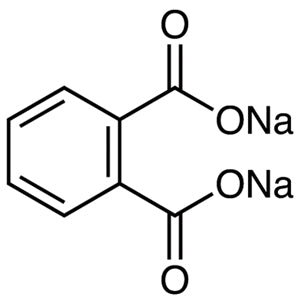
Disodium phthalate is a chemical compound widely used in various laboratory experiments. As one of the fundamental building blocks in chemistry, it plays a crucial role in both qualitative and quantitative analysis. Its stable chemical structure allows it to function as a reagent in numerous chemical reactions. In the laboratory, disodium phthalate is commonly used as a standard material for titration processes, making it an essential component in analytical procedures. Its versatility and reliability make it a preferred choice for researchers and technicians.
The key properties that make disodium phthalate a preferred choice include its high chemical stability and excellent solubility in water. These characteristics ensure that it remains effective under various experimental conditions. Additionally, its ability to act as a pH indicator due to its color change when reacting with acids or bases adds to its utility in analytical work. The compound is also resistant to degradation, which enhances its shelf life and reduces the risk of contamination. These features make it ideal for use in both synthetic and analytical applications.
In Indonesian laboratories, disodium phthalate is routinely used in chemical research, environmental analysis, and water quality testing. Its relevance extends to educational institutions where it is employed in teaching and practical training. The compound's stability and reliability make it a valuable resource for both academic and industrial research. Its widespread use underscores its importance in the field of analytical chemistry.
Related TCI products
- Chemical research where disodium phthalate is used as a standard for titration due to its stable chemical properties and known purity.
- Environmental analysis for determining pH levels and assessing water quality because of its color-changing characteristics when reacting with acids or bases.
- Educational laboratories where it serves as a teaching tool for students to understand pH indicators and titration techniques.
- Quality control processes in industrial settings where accurate and reliable chemical standards are required for consistency.
- Analytical chemistry applications where it is employed as a reference material for quantitative and qualitative analysis in various experimental setups.
| Brand | TCI |
|---|---|
| CAS number | 15968-01-1 |
| Molecular formula | — |
| Purity | — |
| Category | Chemistry > Building Blocks > Non-Heterocyclic Building Blocks |
| Pack sizes | Available in various quantities as per standard laboratory supply options |
| Physical form | Solid powder |
| Storage | Store in a cool, dry place away from direct sunlight and moisture |
Disodium phthalate should be stored in a cool, dry place, away from direct sunlight and moisture to maintain its chemical stability. It is recommended to use airtight containers to prevent exposure to humidity and contaminants. Since it is a solid powder, it should be handled with care to avoid inhalation or skin contact. In laboratory settings, it is important to ensure proper ventilation and use of personal protective equipment when handling this compound. Regular inspection of storage conditions is advised to ensure the material remains in optimal condition for use. Proper storage not only extends the shelf life of the compound but also ensures its effectiveness in experimental procedures.
—
Produk Terkait
-
MonohexylPhthalate TCI P1313
Regular price Rp 3.155.250,00Regular price -
MonobenzylPhthalate TCI P1191
Regular price Rp 3.232.950,00Regular price -
MonobutylPhthalate TCI P1132
Regular price From Rp 903.000,00Regular price -
Bis(2-methoxyethyl)Phthalate TCI P0965
Regular price From Rp 530.250,00Regular price -
Bis(cis-3,3,5-trimethylcyclohexyl)Phthalate TCI P0946
Regular price From Rp 1.749.300,00Regular price -
MonobutylPhthalateCopper(II)Salt TCI P0676
Regular price Rp 3.817.800,00Regular price -
PotassiumHydrogenPhthalate TCI P0309
Regular price From Rp 477.750,00Regular price -
DitridecylPhthalate(mixtureofbranchedchainisomers) TCI P0307
Regular price Rp 477.750,00Regular price