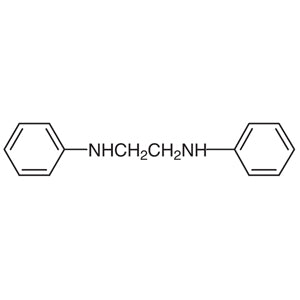
N,N’-Diphenylethylenediamine (DPED) is a chemical compound widely used as a foundational building block in the synthesis of complex organic molecules. It serves as a versatile reagent in laboratory settings, enabling the creation of dyes, pigments, and industrial chemicals through various chemical reactions. Its molecular structure consists of two phenyl groups connected by ethylenediamine, which imparts high reactivity and functional group compatibility. This makes DPED an essential component in synthetic chemistry, where its ability to participate in substitution and condensation reactions is highly valued.
DPED is preferred due to its stable chemical properties and ease of modification through chemical reactions. Its ability to form bonds with other functional groups allows for extensive applications in the synthesis of diverse compounds. The compound exhibits relatively high melting and boiling points, making it suitable for use in laboratory environments that require stable temperature conditions. These characteristics ensure that DPED remains a reliable and effective reagent in both academic and industrial research settings.
In Indonesian laboratories, DPED is extensively used in chemical research and industrial applications. It is commonly found in educational institutions and research organizations where it supports the development of new materials and chemical processes. Its versatility and reactivity make it a key reagent in the synthesis of complex compounds, contributing to advancements in various scientific fields.
TCI brochures (PDF)
- Ligands 2025-12-01 · p. 9
Related TCI products
- TCI D2638 4062-60-6 N,N'-Di-tert-butylethylenediamine
- TCI D3930 951-87-1 meso-1,2-Diphenylethylenediamine
- TCI D2519 16635-95-3 (+/-)-1,2-Diphenylethylenediamine
- TCI D2176 35132-20-8 (1R,2R)-(+)-1,2-Diphenylethylenediamine
- TCI D2175 29841-69-8 (1S,2S)-(-)-1,2-Diphenylethylenediamine
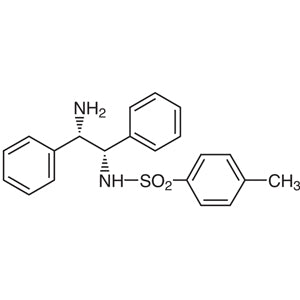
- TCI A1699 167316-27-0 (S,S)-N-(2-Amino-1,2-diphenylethyl)-p-toluenesulfonamide
- Organic synthesis applications benefit from DPED’s ability to participate in substitution and condensation reactions, making it ideal for creating complex molecules.
- Dye and pigment production relies on DPED’s reactivity and structural versatility, enabling the synthesis of a wide range of colored compounds.
- Industrial chemical manufacturing utilizes DPED as a precursor for developing functional materials and specialty chemicals.
- Research laboratories use DPED to explore new synthetic pathways and develop novel chemical compounds with specific properties.
- Educational institutions incorporate DPED into teaching and experimental protocols to train students in advanced organic chemistry techniques.
| Brand | TCI |
|---|---|
| CAS number | 150-61-8 |
| Molecular formula | — |
| Purity | — |
| Category | Chemistry > Building Blocks > Non-Heterocyclic Building Blocks |
| Pack sizes | Available in various quantities as per supplier specifications |
| Physical form | Solid |
| Storage | Store in a cool, dry place away from direct sunlight |
DPED should be stored in a cool, dry environment to maintain its chemical stability and prevent degradation. It is recommended to use airtight containers to minimize exposure to moisture and air, which could affect its reactivity. Due to its chemical nature, it should be handled in a well-ventilated area to avoid inhalation of vapors. Proper personal protective equipment, such as gloves and safety goggles, should be worn during handling. Avoid contact with incompatible materials, and ensure that storage areas are secure to prevent accidental spills or exposure. Regular monitoring of storage conditions ensures the compound remains suitable for laboratory use.
—
Produk Terkait
-
N,N'-Di-tert-butylethylenediamine TCI D2638
Regular price From Rp 1.353.450,00Regular price -
meso-1,2-Diphenylethylenediamine TCI D3930
Regular price From Rp 1.908.900,00Regular price -
(+/-)-1,2-Diphenylethylenediamine TCI D2519
Regular price Rp 5.300.400,00Regular price -
(1R,2R)-(+)-1,2-Diphenylethylenediamine TCI D2176
Regular price From Rp 1.405.950,00Regular price -
(1S,2S)-(-)-1,2-Diphenylethylenediamine TCI D2175
Regular price From Rp 1.035.300,00Regular price -
(S,S)-N-(2-Amino-1,2-diphenylethyl)-p-toluenesulfonamide TCI A1699
Regular price Rp 1.220.100,00Regular price -
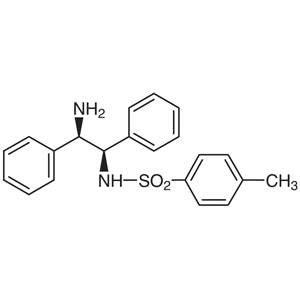
(R,R)-N-(2-Amino-1,2-diphenylethyl)-p-toluenesulfonamide TCI A1548
Regular price Rp 2.466.450,00Regular price -
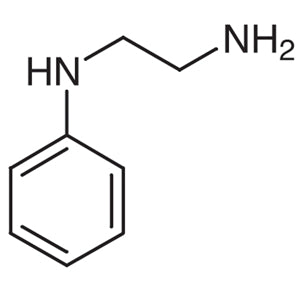
N-Phenylethylenediamine TCI P1101
Regular price From Rp 4.320.750,00Regular price