N-(2,4-Dinitrophenyl)-DL-threonine is a chemical compound widely used in laboratory experiments across chemical and biochemical research fields. As a key reagent in peptide chemistry, it plays a crucial role in various synthetic and analytical processes. Its unique structure enables it to participate in multiple chemical reactions, making it an essential tool for researchers aiming to study molecular interactions and reactivity. This compound is particularly valuable in experiments that require precise control over chemical transformations and molecular behavior.
The compound's chemical properties make it a preferred choice for laboratory applications. It exhibits stability under controlled conditions, which is vital for maintaining the integrity of experimental results. However, it is sensitive to moisture and light, necessitating careful handling and storage. These characteristics make it ideal for use in environments where temperature and humidity are regulated. Its high purity ensures reliable outcomes in experiments that demand accuracy and reproducibility.
In Indonesian laboratories, this compound is commonly used in biochemical, pharmacological, and materials science research. It is frequently employed in studies aimed at understanding reaction mechanisms and developing new analytical techniques. Many research institutions and universities in Indonesia rely on this compound for experiments that contribute to scientific advancements in various fields of study.
- Biochemical research utilizes this compound as a substrate for studying enzyme activity and molecular interactions due to its reactive nature and structural specificity.
- Pharmacological studies benefit from its use in drug development, where it helps in analyzing the behavior of biomolecules and their interactions with potential therapeutic agents.
- Materials science experiments incorporate it to investigate the chemical properties of synthetic polymers and their reactivity under different conditions.
- Analytical chemistry applications rely on its stability and reactivity for developing and validating new analytical methods and detection techniques.
- Educational institutions use it in advanced laboratory courses to teach students about peptide chemistry and molecular reactivity in controlled environments.
| Brand | TCI |
|---|---|
| CAS number | 14401-07-1 |
| Molecular formula | — |
| Purity | — |
| Category | Chemistry > Chemical Biology > Peptide Chemistry |
| Pack sizes | Available in various quantities as per supplier specifications |
| Physical form | Solid powder |
| Storage | Requires storage in a cool, dry place away from light |
This compound should be stored in a cool, dry environment to prevent degradation due to moisture and light exposure. It is recommended to use airtight containers to maintain its chemical stability and prevent contamination. Laboratory personnel should handle it with care, using appropriate personal protective equipment to ensure safety. The compound is sensitive to environmental factors, so maintaining consistent storage conditions is essential for preserving its quality. Regular monitoring of storage conditions helps ensure that the compound remains suitable for use in experiments requiring high precision and reliability.
—
Produk Terkait
-
BromfenacSodiumSesquihydrate TCI B5971
Regular price Rp 3.870.300,00Regular price -
5-Chloro-2-methoxyaniline TCI C0118
Regular price From Rp 1.115.100,00Regular price -
H-Tyr(3-Cl)-OH TCI C3770
Regular price From Rp 2.386.650,00Regular price -
3,5-Dibromo-L-tyrosine TCI D0213
Regular price Rp 1.405.950,00Regular price -
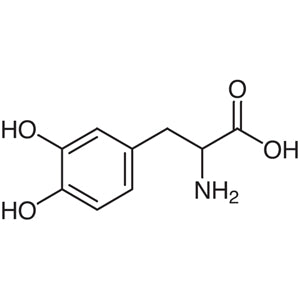
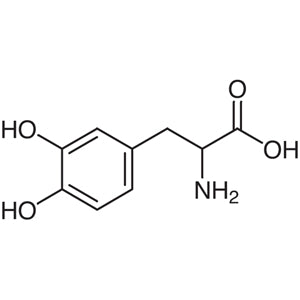
3-(3,4-Dihydroxyphenyl)-DL-alanine TCI D0599
Regular price Rp 1.140.300,00Regular price -
3-(3,4-Dihydroxyphenyl)-L-alanine TCI D0600
Regular price From Rp 717.150,00Regular price -
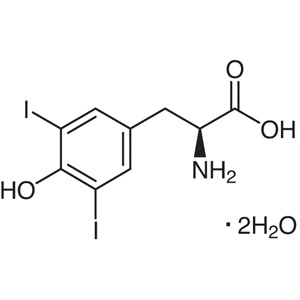
3,5-Diiodo-L-tyrosineDihydrate TCI D0612
Regular price From Rp 928.200,00Regular price