Diethyl Diallylmalonate from TCI is the diethyl ester of malonic acid with two allyl groups on its central carbon. It is a non-heterocyclic building block and is widely known in modern organic chemistry as a benchmark substrate for ring-closing metathesis (RCM). Laboratories use it to test and compare the performance of metathesis catalysts, to study metal-catalysed cycloisomerisation reactions, and to prepare malonate-based cyclic compounds that serve as synthetic intermediates.
The compound's appeal comes from its two terminal double bonds, which sit in an ideal position to form a five-membered ring. With Grubbs-type or Hoveyda–Grubbs catalysts, it undergoes RCM to give diethyl cyclopent-3-ene-1,1-dicarboxylate and releases ethylene. The reaction is clean and easy to follow by TLC, GC, or NMR, so researchers often choose it as the standard reaction when they develop new catalysts. After the ring has formed, the two ester groups can be hydrolysed or decarboxylated, which lets chemists carry the cyclic product further along a synthetic route.
In Indonesia, this material suits catalysis and organometallic chemistry laboratories at universities and research institutes that develop or evaluate homogeneous catalysts. Graduate research groups can use it as a reliable reference reaction when they screen new ligands or catalyst systems. Teaching laboratories that introduce advanced organic synthesis can also use it to demonstrate olefin metathesis and ring formation with results that are easy to monitor and interpret.
TCI brochures (PDF)
- Biomaterials Research Reagents 2025-02-19 · p. 16
- Monomers 2025-05-28 · p. 18
Related TCI products
- Benchmarking metathesis catalysts: its clean conversion to a five-membered ring makes it a standard substrate for comparing the activity of Grubbs-type and Hoveyda–Grubbs catalysts under the same conditions.
- Ring-closing metathesis studies: the two terminal allyl groups are positioned ideally for RCM, so researchers can study reaction conditions, solvents, and catalyst loading with a well-understood model system.
- Metal-catalysed cycloisomerisation research: the diallyl framework lets chemists investigate how different metal catalysts rearrange or cyclise dienes, which supports mechanistic work in organometallic chemistry.
- Preparation of cyclic malonate intermediates: RCM gives diethyl cyclopent-3-ene-1,1-dicarboxylate, a useful cyclic intermediate that can be carried forward into further synthetic steps.
- Post-cyclisation ester transformations: after the ring forms, the two ester groups can be hydrolysed or decarboxylated, letting researchers reach a wider range of functionalised cyclopentene derivatives.
| Brand | TCI |
|---|---|
| CAS number | 3195-24-2 |
| Molecular formula | — |
| Purity | — |
| Category | Chemistry > Building Blocks > Non-Heterocyclic Building Blocks |
| Pack sizes | as offered by TCI for product D1183; please confirm the available sizes when ordering |
| Physical form | refer to the TCI specification sheet and Safety Data Sheet for this lot |
| Storage | — |
- Product code: D1183
Store Diethyl Diallylmalonate in its original, tightly closed manufacturer container in a cool, dry, well-ventilated area, away from heat, ignition sources, and strong oxidising agents. Follow the storage temperature on the TCI label and Safety Data Sheet. Handle the material in a fume hood and wear standard laboratory protective equipment, including safety glasses, chemical-resistant gloves, and a lab coat. Avoid contact with skin and eyes and avoid breathing vapours. Reseal the container promptly after use to limit exposure to moisture and air, label any transferred portions clearly, and dispose of waste according to local regulations and your institution's chemical waste procedures.
—
Product Categories
- Polymer/Macromolecule ReagentsMonomersDivinyl Monomers and Diallyl Monomers
- Biomaterials/Biocompatible Materials Research ReagentsMonomers and Macromonomers [Biomaterials/Biocompatible Materials Research Reagents]Divinyl Monomers and Diallyl Monomers [Biomaterials/Biocompatible Materials Research Reagents]
Produk Terkait
-
DiethylAllylmalonate TCI A0231
Regular price From Rp 2.121.000,00Regular priceRp 1.498.350,00Sale price From Rp 2.121.000,00 -
DimethylAllylmalonate TCI P3187
Regular price Rp 1.220.100,00Regular priceRp 868.350,00Sale price Rp 1.220.100,00 -
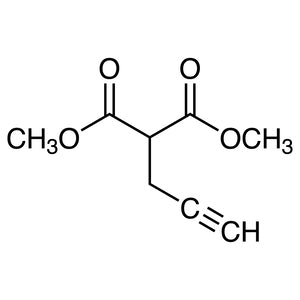
Dimethyl2-Propyn-1-ylmalonate TCI D6072
Regular price From Rp 1.167.600,00Regular priceRp 831.600,00Sale price From Rp 1.167.600,00 -
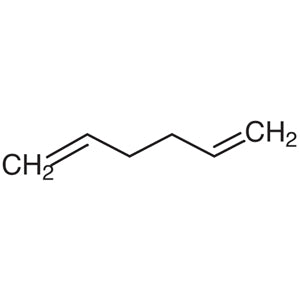
1,5-Hexadiene TCI H0084
Regular price From Rp 848.400,00Regular priceRp 593.250,00Sale price From Rp 848.400,00 -
3,9-Divinyl-2,4,8,10-tetraoxaspiro[5.5]undecane TCI D1027
Regular price From Rp 2.730.000,00Regular priceRp 1.924.650,00Sale price From Rp 2.730.000,00 -
2,4,6-Trimethyl-2,4,6-trivinylcyclotrisiloxane TCI T3745
Regular price From Rp 689.850,00Regular priceRp 497.700,00Sale price From Rp 689.850,00 -
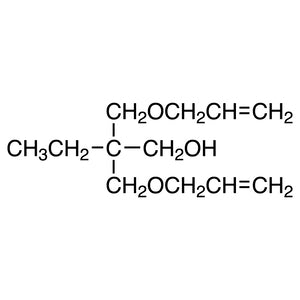
2,2-Bis(allyloxymethyl)-1-butanol(containsMono-andTri-substitutedProduct) TCI B3003
Regular price From Rp 689.850,00Regular priceRp 481.950,00Sale price From Rp 689.850,00 -
DivinylAdipate(stabilizedwithMEHQ) TCI A1188
Regular price From Rp 2.730.000,00Regular priceRp 1.908.900,00Sale price From Rp 2.730.000,00