2,2-Bis(allyloxymethyl)-1-butanol is a chemical compound widely used in various chemical reactions, particularly in the synthesis of polymers and macromolecular compounds. This material plays a crucial role in laboratory settings as a monomer or precursor for the formation of complex chemical structures. Its ability to participate in polymerization and crosslinking reactions makes it an essential component in the development of advanced materials. Due to its reactivity and versatility, it is frequently utilized in chemical research and industrial applications.
The compound's high reactivity and molecular complexity make it a preferred choice for researchers. Its ability to bond with various functional groups allows it to be used in a wide range of chemical transformations. The presence of both mono- and tri-substituted products adds to its functional diversity, enabling it to be tailored for specific applications. These properties make it an ideal candidate for polymer synthesis and the creation of specialized resins and materials.
In Indonesian laboratories, 2,2-Bis(allyloxymethyl)-1-butanol is commonly used in material science, organic chemistry, and polymer technology research. It supports the development of new products and scientific studies that contribute to the growth of the local chemical industry. Many research institutions and universities rely on this compound for experimental work and innovation in chemical processes.
TCI brochures (PDF)
- Biomaterials Research Reagents 2025-02-19 · p. 16
- Monomers 2025-05-28 · p. 17
Related TCI products
- TCI D0958 1321-74-0 Divinylbenzene (m- and p- mixture) (contains Ethylvinylbenzene, Diethylbenzene) (stabilized with TBC)
- TCI T3745 3901-77-7 2,4,6-Trimethyl-2,4,6-trivinylcyclotrisiloxane
- TCI B0932 2482-57-7 1-Bromo-2-butanol (contains ca. 30% 2-Bromo-1-butanol)
- TCI A1188 4074-90-2 Divinyl Adipate (stabilized with MEHQ)
- TCI A0824 2998-04-1 Diallyl Adipate
- TCI P0264 1623-19-4 Triallyl Phosphate
- Polymer synthesis for the development of thermoplastic composite materials due to its ability to form long-chain structures.
- Organic chemistry research for creating complex molecular structures through crosslinking and polymerization reactions.
- Material science applications in the production of advanced resins and synthetic polymers with tailored properties.
- Industrial chemical development for the formulation of specialized compounds used in various manufacturing processes.
- Academic research in polymer technology to explore new chemical structures and material properties.
| Brand | TCI |
|---|---|
| CAS number | 682-09-7 |
| Molecular formula | — |
| Purity | — |
| Category | Materials Science > Polymer/Macromolecule Reagents > Monomers |
| Pack sizes | Available in standard laboratory quantities |
| Physical form | Liquid |
| Storage | Store in a cool, dry place away from direct sunlight |
This compound should be stored in a cool, dry place, away from direct sunlight and sources of heat. It is recommended to use airtight containers made of materials compatible with its chemical properties, such as glass or high-density polyethylene. Due to its reactivity, it should be handled with appropriate personal protective equipment, including gloves and safety goggles. Avoid exposure to air and moisture to maintain its chemical integrity. Ensure proper ventilation in the laboratory workspace to minimize inhalation risks. Always follow standard laboratory safety protocols when working with reactive chemicals.
—
Product Categories
- Polymer/Macromolecule ReagentsMonomersDivinyl Monomers and Diallyl Monomers
- Biomaterials/Biocompatible Materials Research ReagentsMonomers and Macromonomers [Biomaterials/Biocompatible Materials Research Reagents]Divinyl Monomers and Diallyl Monomers [Biomaterials/Biocompatible Materials Research Reagents]
Produk Terkait
-
Divinylbenzene(m-andp-mixture)(containsEthylvinylbenzene,Diethylbenzene)(stabilizedwithTBC) TCI D0958
Regular price From Rp 584.850,00Regular priceRp 408.450,00Sale price From Rp 584.850,00 -
2,4,6-Trimethyl-2,4,6-trivinylcyclotrisiloxane TCI T3745
Regular price From Rp 689.850,00Regular priceRp 497.700,00Sale price From Rp 689.850,00 -
1-Bromo-2-butanol(containsca.30%2-Bromo-1-butanol) TCI B0932
Regular price Rp 2.359.350,00Regular priceRp 1.649.550,00Sale price Rp 2.359.350,00 -
DivinylAdipate(stabilizedwithMEHQ) TCI A1188
Regular price From Rp 2.730.000,00Regular priceRp 1.908.900,00Sale price From Rp 2.730.000,00 -
DiallylAdipate TCI A0824
Regular price Rp 1.538.250,00Regular priceRp 1.075.200,00Sale price Rp 1.538.250,00 -
TriallylPhosphate TCI P0264
Regular price From Rp 4.929.750,00Regular priceRp 3.462.900,00Sale price From Rp 4.929.750,00 -
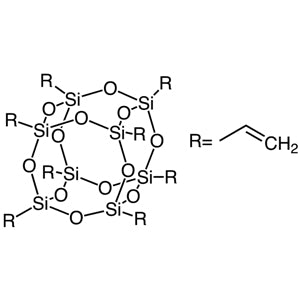
Octavinyloctasilasesquioxane TCI O0491
Regular price From Rp 1.908.900,00Regular priceRp 1.350.300,00Sale price From Rp 1.908.900,00 -
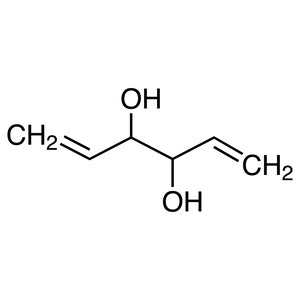
1,5-Hexadiene-3,4-diol(stabilizedwithHQ) TCI H0807
Regular price Rp 4.954.950,00Regular priceRp 3.480.750,00Sale price Rp 4.954.950,00