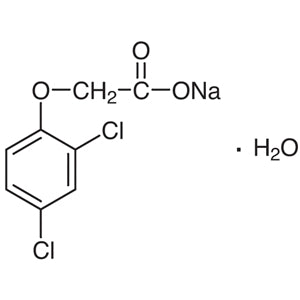
TCI D1319 Sodium 2,4-Dichlorophenoxyacetate Monohydrate is the hydrated sodium salt form of 2,4-dichlorophenoxyacetic acid, a synthetic auxin compound that is very well known in plant science. This compound, identified by CAS number 7084-86-8, acts as a plant growth regulator that mimics the action of natural auxin hormones in plant tissue. For that reason it is widely used in tissue culture research, plant physiology work, and studies of cell nutrition and growth. The sodium salt form makes the material considerably more soluble in water than the free acid form, so preparing stock solutions for culture media becomes far more practical and much faster in routine laboratory work.
The properties that make this material a preferred choice are its good water solubility, its stability as a hydrated crystalline solid, and its strong auxin activity even at low concentrations. Because it is supplied as a salt, the material is easy to weigh out, dissolves readily without requiring an additional base or an organic solvent, and mixes homogeneously into aqueous media. This combination removes several preparation steps that the free acid would otherwise demand, which shortens media preparation time and reduces the number of points at which handling error can be introduced into an experiment.
In Indonesian laboratories this compound fits naturally into plant tissue culture and plant physiology programmes. Compounds of this class are recognised as highly effective at inducing callus formation and at driving somatic embryogenesis in many plant species, including cereal groups that are difficult to induce with other auxins. It is therefore a practical reagent for university plant science laboratories, agricultural research institutes, and any facility running propagation, regeneration, or cell growth and nutrition studies.
TCI brochures (PDF)
- Synthetic Auxin and Selective Binding to Modified Receptor 2025-05-26 · p. 2
- Plant Hormones 2025-01-30 · p. 1
- Agrochemical Ingredients for Research and Experimental Use 2026-01-08 · p. 2
- Plant Research Reagents 2026-02-24 · p. 10
- Reagents for Biological Research 2025-03-11 · p. 55
Related TCI products
- TCI O0518 1917-97-1 Octan-2-yl (2,4-Dichlorophenoxy)acetate
- TCI D6084 1928-38-7 Methyl (2,4-Dichlorophenoxy)acetate
- TCI D1942 120-36-5 2-(2,4-Dichlorophenoxy)propionic Acid
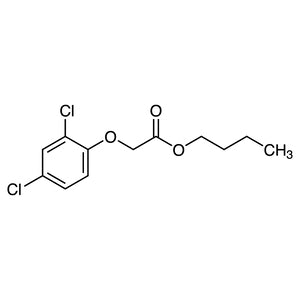
- TCI B6492 94-80-4 Butyl 2-(2,4-Dichlorophenoxy)acetate
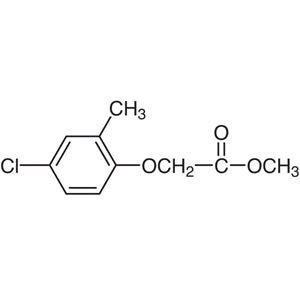
- TCI C0598 2436-73-9 Methyl 4-Chloro-2-methylphenoxyacetate
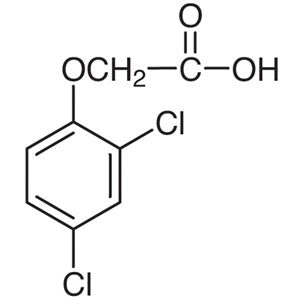
- TCI D0396 94-75-7 2,4-Dichlorophenoxyacetic Acid
- Plant tissue culture media preparation — the sodium salt dissolves directly in water, so auxin stock solutions can be prepared and added to culture media quickly and reproducibly.
- Callus induction studies — compounds of this class are known to be highly effective at inducing callus formation across a wide range of plant species in vitro.
- Somatic embryogenesis research — the strong auxin activity of this compound supports embryogenesis protocols, including cereal groups that respond poorly to other auxin regulators.
- Plant physiology investigations — as a synthetic auxin that mimics natural hormone action, it allows controlled study of growth regulator responses in plant tissue.
- Cell growth and nutrition research — its activity at low concentrations makes it suitable for nutrition research work examining how growth regulators influence cell development.
| Brand | TCI |
|---|---|
| CAS number | 7084-86-8 |
| Molecular formula | — |
| Purity | — |
| Category | Life Science > Cell Biology > Nutrition Research |
| Pack sizes | please refer to the available TCI catalogue packaging options for this product code |
| Physical form | hydrated crystalline solid |
| Storage | store as a dry crystalline solid under the conditions stated on the manufacturer's label |
- Chemical form: sodium salt monohydrate of 2,4-dichlorophenoxyacetic acid
Store the material in its original tightly closed container, kept dry and protected from moisture so that the hydrated crystalline solid retains its stability. Glass or chemically compatible plastic containers with secure closures are suitable for both the solid and any prepared aqueous stock solutions, which should be clearly labelled with contents and preparation date. Handle the powder in a well-ventilated area or fume hood, using gloves, a laboratory coat, and eye protection, and avoid raising dust during weighing. As with any plant growth regulator, avoid skin contact and inhalation, keep the container closed when not in use, and follow institutional chemical waste procedures for disposal of residues and rinse solutions.
—
Produk Terkait
-
Octan-2-yl(2,4-Dichlorophenoxy)acetate TCI O0518
Regular price From Rp 2.227.050,00Regular price -
Methyl(2,4-Dichlorophenoxy)acetate TCI D6084
Regular price From Rp 2.306.850,00Regular price -
2-(2,4-Dichlorophenoxy)propionicAcid TCI D1942
Regular price Rp 3.155.250,00Regular price -
Butyl2-(2,4-Dichlorophenoxy)acetate TCI B6492
Regular price Rp 2.969.400,00Regular price -
Methyl4-Chloro-2-methylphenoxyacetate TCI C0598
Regular price From Rp 477.750,00Regular price -
2,4-DichlorophenoxyaceticAcid TCI D0396
Regular price From Rp 664.650,00Regular price -
2-(4-Chlorophenoxy)propanoicAcid TCI C3880
Regular price Rp 2.359.350,00Regular price -
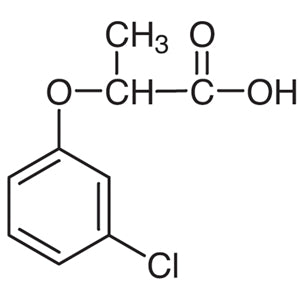
2-(3-Chlorophenoxy)propionicAcid TCI C1094
Regular price Rp 1.458.450,00Regular price