TCI D1326 1,9-Decadiyne is a straight-chain ten-carbon hydrocarbon carrying a terminal alkyne group at each end of the chain. As a non-heterocyclic building block, this compound acts as a symmetrical bifunctional linker that allows researchers to join two molecular fragments through the reactions characteristic of terminal alkynes. In the laboratory, this liquid compound is widely used in modern synthetic chemistry because the terminal alkyne is an exceptionally versatile functional group: it can be deprotonated to form an acetylide, take part in transition-metal-catalysed cross-coupling reactions, and undergo the azide–alkyne cycloaddition that forms the backbone of click chemistry.
The property that makes this compound a preferred choice is the symmetry of its two reactive ends, separated by a flexible methylene chain six carbons long. That spacing is long enough to give geometric freedom when assembling two molecular units, yet compact enough to avoid excessive chain entanglement. Because it is a liquid, the compound is easy to pipette and to measure directly by volume, which is practical for small-scale reactions. Its hydrocarbon character means it is not soluble in water but mixes well with common organic solvents, so it integrates readily into standard reaction systems.
In Indonesian laboratories, 1,9-decadiyne is typically encountered in university research groups, materials chemistry laboratories, and synthetic chemistry facilities where bifunctional linkers are required. It is generally handled at the bench in small volumes, dispensed with a pipette or syringe into organic reaction mixtures, and used in exploratory synthesis, method development, and student research projects. Its role as a symmetrical connector makes it a convenient reagent for work on molecular architecture and functional material precursors.
- Click chemistry conjugation — the two terminal alkyne ends both undergo azide–alkyne cycloaddition, allowing a single molecule to bridge two azide-bearing fragments in one system.
- Transition-metal-catalysed cross-coupling — terminal alkynes are standard partners in metal-catalysed coupling reactions, and the symmetrical structure lets both ends be coupled under identical conditions.
- Acetylide formation and chain extension — deprotonation of either terminal alkyne gives a nucleophilic acetylide, useful for building larger carbon frameworks from a defined starting scaffold.
- Bifunctional linker synthesis — the flexible six-carbon methylene spacer provides geometric freedom for joining two molecular units without introducing unnecessary rigidity or entanglement.
- Small-scale exploratory synthesis — its liquid form allows direct volumetric dispensing by pipette or syringe, which suits method development and trial reactions run at modest scale.
| Brand | TCI |
|---|---|
| CAS number | 1720-38-3 |
| Molecular formula | — |
| Purity | — |
| Category | Chemistry > Building Blocks > Non-Heterocyclic Building Blocks |
| Pack sizes | available in the standard catalogue packaging offered by the manufacturer; please confirm the pack size when ordering |
| Physical form | liquid |
| Storage | keep in a tightly closed container in a cool, dry, well-ventilated area away from ignition sources |
Store the container tightly closed in a cool, dry, well-ventilated place, away from heat, sparks, open flames, and other ignition sources, as this is a volatile organic hydrocarbon. Original manufacturer bottles or compatible tightly sealed glass containers are appropriate; keep them upright in a dedicated flammable-solvent cabinet where available. Handle the material in a fume hood, and wear safety glasses, chemical-resistant gloves, and a laboratory coat. Dispense by pipette or syringe to minimise vapour release, close the container immediately after use, and avoid contact with strong oxidising agents. Collect residues and contaminated materials as organic chemical waste in accordance with institutional disposal procedures, and consult the manufacturer's safety data sheet before first use.
—
Produk Terkait
-
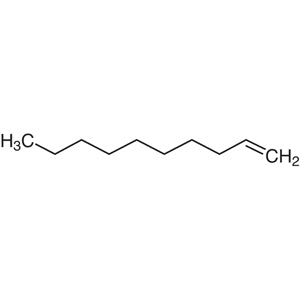
1-Decene TCI D0028
Regular price From Rp 505.050,00Regular price -
1-Decyne TCI D0037
Regular price From Rp 875.700,00Regular price -
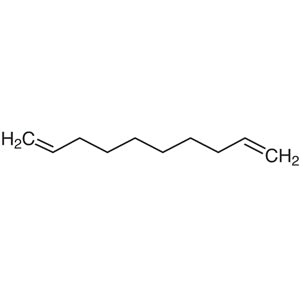
1,9-Decadiene TCI D0245
Regular price From Rp 1.378.650,00Regular price -
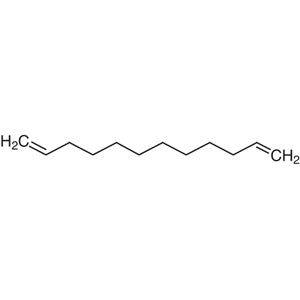
1,11-Dodecadiene TCI D0283
Regular price From Rp 3.949.050,00Regular price -
2,3-Dimethyl-2-butene TCI D0693
Regular price From Rp 1.829.100,00Regular price -
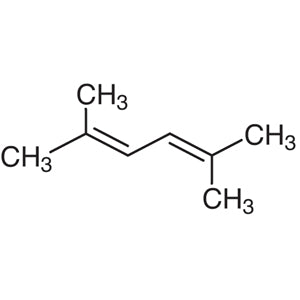
2,5-Dimethyl-2,4-hexadiene(stabilizedwithBHT) TCI D0735
Regular price From Rp 903.000,00Regular price -
1-Dodecene TCI D0974
Regular price From Rp 505.050,00Regular price -
1-Dodecyne TCI D0997
Regular price From Rp 1.008.000,00Regular price