


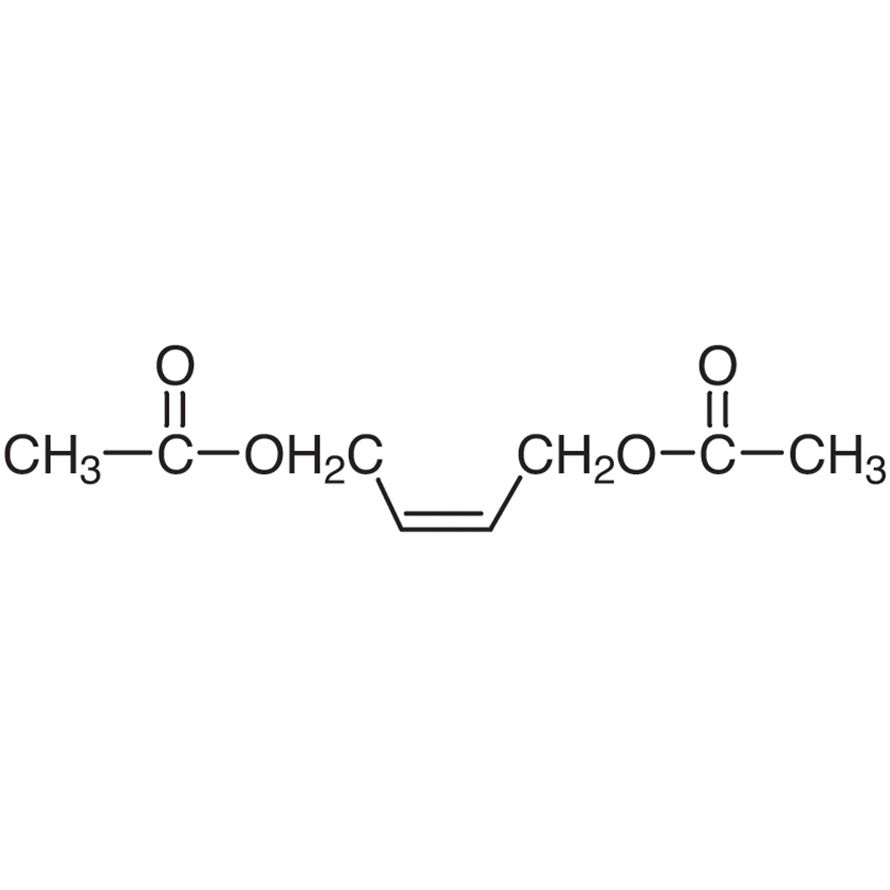
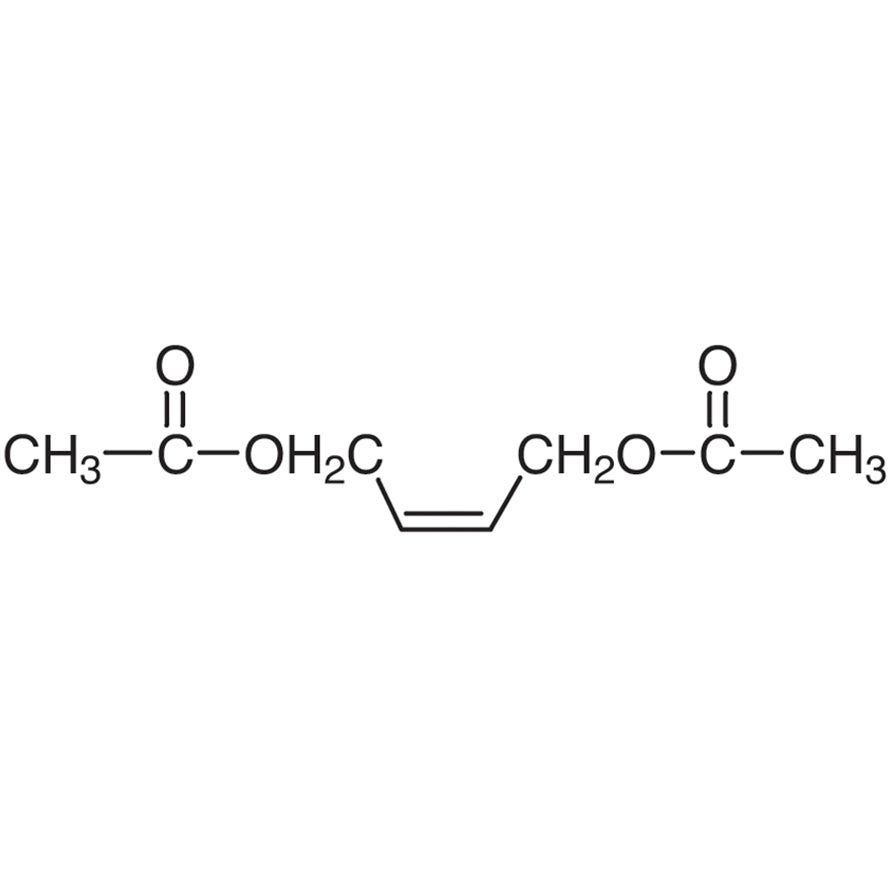
TCI D1358 cis-1,4-Diacetoxy-2-butene is the acetate diester of 2-butene-1,4-diol, carrying a defined cis double-bond geometry. The compound is classified as a non-heterocyclic building block: a four-carbon construction unit that simultaneously bears an alkene and two acetoxy groups acting as potential leaving groups. In organic synthesis laboratories, this molecule serves as a starting framework for building allylic systems, particularly in transition-metal-catalysed allylic substitution reactions that require a symmetrical substrate with unambiguous stereochemistry.
The properties that make it a frequent choice are the combination of a locked cis geometry and two acetoxy groups of equivalent reactivity. Its molecular symmetry simplifies product analysis, because nucleophilic attack at either terminus delivers the same skeleton, while the cis double bond preserves the spatial orientation needed to form five-membered rings as well as controlled chains. Its liquid form makes volumetric measurement and stepwise addition into a reaction mixture straightforward. The acetate groups are also relatively easy to hydrolyse or exchange, so the compound can be refunctionalised into the corresponding diol.
In Indonesian laboratories, this building block is typically used in university and institutional organic synthesis groups working on allylic chemistry, stereocontrolled ring formation, and multi-step preparation of intermediates. Its liquid handling profile fits routine bench work with micropipettes and syringes, and its symmetrical structure reduces the interpretive burden during product characterisation — a practical advantage for teaching laboratories and research groups running method development on a modest scale.
Related TCI products
- Transition-metal-catalysed allylic substitution — the two equivalent acetoxy leaving groups on a symmetrical backbone make regiochemical outcomes predictable and simplify interpretation of the resulting product mixture.
- Construction of five-membered ring systems — the locked cis double-bond geometry holds the two chain termini in the spatial orientation required for efficient ring closure.
- Preparation of functionalised four-carbon chains — the defined alkene plus two reactive termini allow controlled chain elaboration in stepwise organic synthesis sequences.
- Conversion to 2-butene-1,4-diol derivatives — the acetate groups hydrolyse or exchange relatively easily, letting the compound be refunctionalised into diol-based intermediates on demand.
- Stereochemically defined substrate for method development — the unambiguous cis geometry provides a reliable reference substrate when evaluating new catalytic or synthetic protocols.
| Brand | TCI |
|---|---|
| CAS number | 25260-60-0 |
| Molecular formula | — |
| Purity | — |
| Category | Chemistry > Building Blocks > Non-Heterocyclic Building Blocks |
| Pack sizes | available in the pack sizes listed on the product page |
| Physical form | liquid |
| Storage | store according to the manufacturer's instructions on the container label |
- Product code: D1358
Store the container tightly closed in a cool, dry, well-ventilated area away from direct sunlight, heat sources, and incompatible reagents, following the storage conditions stated on the manufacturer's label. Keep the material in its original supplier container or an equivalent chemically compatible closed vessel to limit exposure to moisture and air. Handle inside a fume hood, and wear appropriate personal protective equipment including safety glasses, gloves, and a laboratory coat. Because the product is a liquid, use clean syringes or pipettes for transfer and reseal the container promptly after dispensing. Consult the manufacturer's safety data sheet before use, and dispose of residues and contaminated materials in accordance with applicable chemical waste procedures.
—
Produk Terkait
-
1,4-Diacetoxy-2-butyne TCI B2087
Regular price Rp 3.155.250,00Regular price -
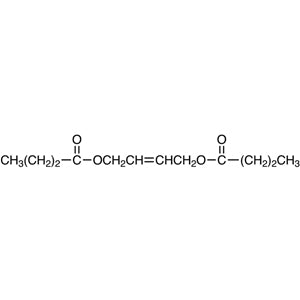
1,4-Bis(butyryloxy)-2-butene TCI B3580
Regular price From Rp 689.850,00Regular price -
N,N,N',N'-Tetramethyl-2-butene-1,4-diamine TCI T1436
Regular price Rp 3.710.700,00Regular price -
trans-2-Butene-1,4-diol TCI B3384
Regular price From Rp 2.757.300,00Regular price -
2-Bromo-2-butene(stabilizedwithCopperchip) TCI B1412
Regular price From Rp 1.724.100,00Regular price -
4-Bromo-1-butene TCI B0920
Regular price From Rp 2.094.750,00Regular price -
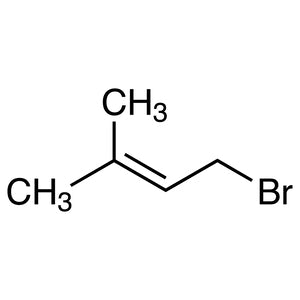
1-Bromo-3-methyl-2-butene(stabilizedwithSilverchip) TCI B0844
Regular price From Rp 769.650,00Regular price -
Bromoform(stabilizedwith2-Methyl-2-butene)[forSpectrophotometry] TCI B0806
Regular price Rp 6.333.600,00Regular price



![75-25-2 Bromoform (stabilized with 2-Methyl-2-butene) [for Spectrophotometry] - AMI Scientific](http://amiscientific.com/cdn/shop/files/TCI2510B0806.jpg?v=1767086115&width=533)