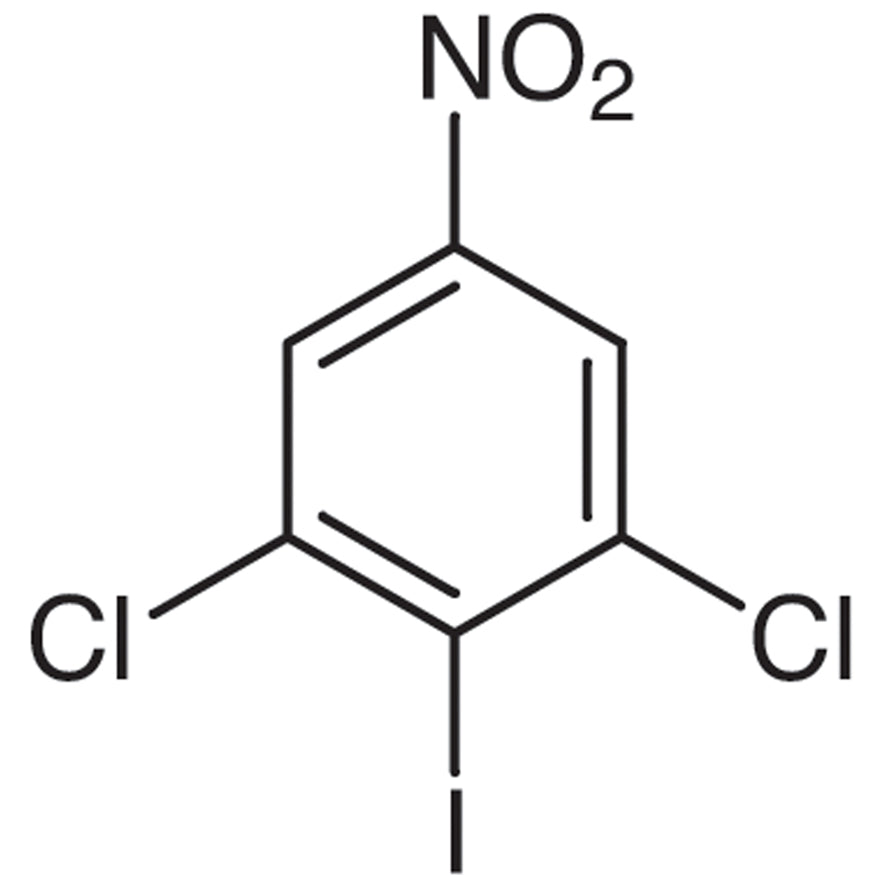
1,3-Dichloro-2-iodo-5-nitrobenzene is an organic chemical compound widely used as a building block in the synthesis of complex molecules. This compound plays a crucial role in various chemical reactions within the laboratory, particularly in the development of heterocyclic compounds and complex molecular structures. Its versatility makes it an essential reagent for chemists engaged in synthetic chemistry and research. Due to its functional groups, including chloro, iodine, and nitro substituents, it is highly reactive and can participate in multiple types of chemical transformations.
The compound’s reactivity stems from its aromatic ring structure and the presence of electron-withdrawing nitro and halogen groups. These properties make it an ideal candidate for electrophilic, nucleophilic, and substitution reactions. Its stability under controlled conditions ensures that it remains effective for extended periods, making it a reliable choice for laboratory use. The combination of these functional groups allows for a wide range of chemical modifications, enhancing its utility in synthetic pathways.
In Indonesian laboratories, 1,3-Dichloro-2-iodo-5-nitrobenzene is commonly used in organic chemistry research, pharmaceutical development, and analytical chemistry. It is a key component in experiments aimed at synthesizing new compounds, understanding reaction mechanisms, and exploring the properties of complex molecules. Its presence in research institutions and academic settings underscores its importance in advancing chemical knowledge and innovation in the region.
Related TCI products
- Organic synthesis experiments benefit from this compound due to its reactivity and ability to participate in multiple reaction types.
- Pharmaceutical research utilizes it as a starting material for the development of new drug compounds and therapeutic agents.
- Analytical chemistry applications rely on its stability and reactivity for the identification and quantification of complex molecules.
- Heterocyclic compound synthesis is enhanced by its functional groups, which enable the formation of diverse molecular structures.
- Research institutions use it to explore chemical reactivity and develop new synthetic methodologies in organic chemistry.
| Brand | TCI |
|---|---|
| CAS number | 62778-19-2 |
| Molecular formula | — |
| Purity | — |
| Category | Chemistry > Building Blocks > Non-Heterocyclic Building Blocks |
| Pack sizes | Available in various quantities as per supplier specifications |
| Physical form | Solid, crystalline appearance |
| Storage | Store in a cool, dry place away from light and incompatible materials |
This compound should be stored in a cool, dry environment, away from direct sunlight and sources of heat. It is recommended to use airtight containers made of materials such as glass or polyethylene to prevent contamination and maintain stability. Due to its reactivity, it should be handled with care, using appropriate personal protective equipment like gloves and safety goggles. It is important to keep it away from incompatible substances such as strong bases or reducing agents. Proper labeling and storage conditions ensure the compound remains safe and effective for use in laboratory settings.
—
Produk Terkait
-
1,3-Dichloro-2-nitrobenzene TCI D3449
Regular price Rp 2.518.950,00Regular price -
1,4-Dichloro-2-nitrobenzene TCI D0387
Regular price From Rp 505.050,00Regular price -
1-Bromo-2-chloro-4-nitrobenzene TCI B5348
Regular price From Rp 1.298.850,00Regular price -
1-Benzyloxy-4-nitrobenzene TCI B4706
Regular price Rp 5.300.400,00Regular price -
4-Bromo-1-chloro-2-nitrobenzene TCI B4374
Regular price From Rp 1.246.350,00Regular price -
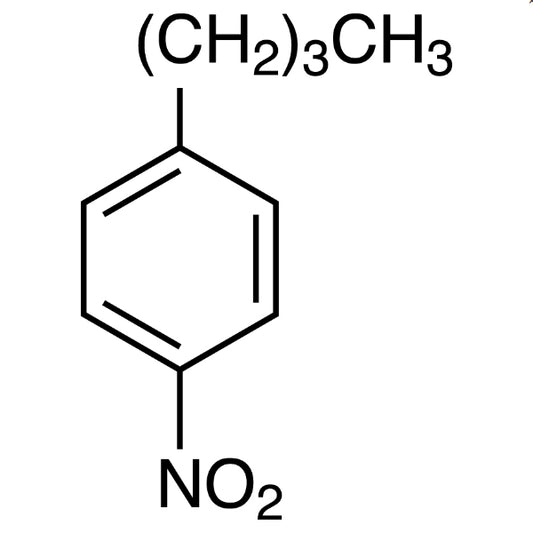
1-Butyl-4-nitrobenzene TCI B3092
Regular price From Rp 5.380.200,00Regular price -
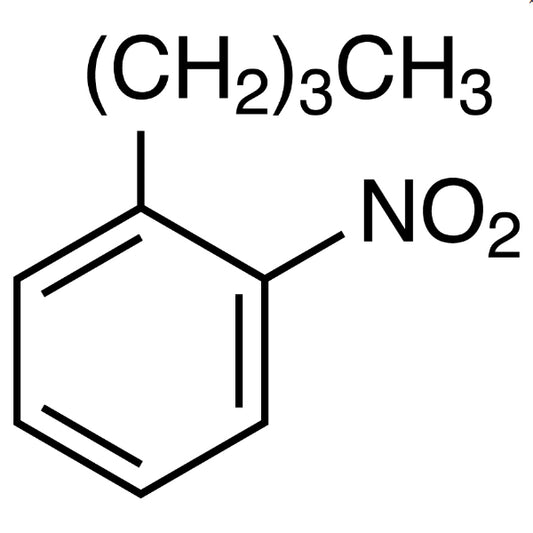
1-Butyl-2-nitrobenzene TCI B3091
Regular price From Rp 3.287.550,00Regular price -
1-Bromo-4-nitrobenzene TCI B0624
Regular price From Rp 1.908.900,00Regular price