

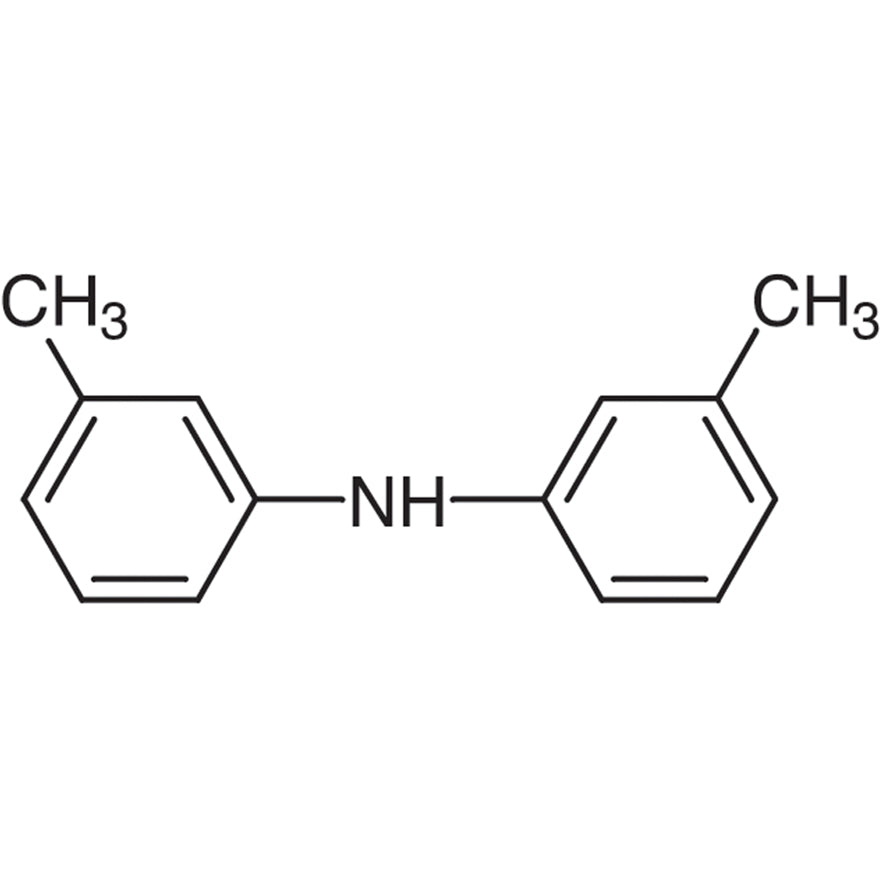
m,m'-Ditolylamine (CAS 626-13-1) is an organic compound widely used in scientific and industrial applications. As a key component in materials science, it plays a vital role in the development of organic semiconductors and conductive materials. This compound is essential for researchers working on molecular structures that require precise chemical properties. Its presence in laboratory settings supports the synthesis of complex compounds with unique electronic characteristics.
The chemical stability and controlled reactivity of m,m'-Ditolylamine make it a preferred choice for various experimental conditions. Its molecular structure allows for versatile applications in creating conductive layers and organic compounds with specific optical properties. The compound's ability to withstand less aggressive chemical reactions ensures its reliability in laboratory environments where precision and stability are critical.
In Indonesian laboratories, m,m'-Ditolylamine is commonly used in material and functional chemistry research. It is an essential part of the research needs for scientists developing new materials with advanced electronic and optical properties. Its consistent performance and well-documented behavior make it a trusted material for academic and industrial research.
TCI brochures (PDF)
- Building Blocks for Organic Semiconductor 2026-03-24 · p. 30
Related TCI products
- TCI D0950 620-93-9 p,p'-Ditolylamine
- TCI D2737 42906-19-4 4-(Di-p-tolylamino)benzaldehyde
- TCI T3007 72811-73-5 4-(m-Tolylamino)pyridine-3-sulfonamide
- TCI B4682 119586-44-6 4,4'-Bis[4-(di-p-tolylamino)styryl]biphenyl
- TCI B2080 55035-43-3 1,4-Bis[4-(di-p-tolylamino)styryl]benzene
- TCI T3367 19606-98-5 N,N,N'-Triphenyl-1,4-phenylenediamine
- Organic Semiconductor Development: m,m'-Ditolylamine is used to synthesize organic semiconductors due to its ability to form stable molecular structures with unique electronic properties.
- Conductive Material Research: This compound supports the creation of conductive layers, making it ideal for studies in electronic materials and nanotechnology.
- Functional Chemistry Studies: Its chemical stability and reactivity make it suitable for functional chemistry experiments, where precise control over molecular interactions is required.
- Optical Material Synthesis: The compound's molecular structure allows for the development of organic materials with specific optical characteristics, useful in photovoltaic and optoelectronic applications.
- Material Characterization Experiments: Its predictable behavior under various reaction conditions makes it a valuable tool for characterizing new materials in both academic and industrial settings.
| Brand | TCI |
|---|---|
| CAS number | 626-13-1 |
| Molecular formula | — |
| Purity | — |
| Category | Materials Science > Material Building Blocks > Small Molecule Semiconductor Building Blocks |
| Pack sizes | Available in various quantities as per supplier specifications |
| Physical form | Solid (as per standard product description) |
| Storage | Store in a cool, dry place away from direct sunlight and moisture |
m,m'-Ditolylamine should be stored in a cool, dry environment to maintain its chemical stability. It is recommended to keep the compound in a sealed container to prevent exposure to moisture and air. Suitable storage containers include glass or high-density polyethylene (HDPE) bottles with appropriate closures. General laboratory precautions include handling in a well-ventilated area and avoiding contact with incompatible substances. Due to its controlled reactivity, it is important to follow standard safety protocols when handling and using this compound in experimental settings. Proper labeling and storage conditions ensure the material remains safe and effective for use in research applications.
—
Produk Terkait
-
p,p'-Ditolylamine TCI D0950
Regular price From Rp 1.510.950,00Regular price -
4-(Di-p-tolylamino)benzaldehyde TCI D2737
Regular price From Rp 1.115.100,00Regular price -
4-(m-Tolylamino)pyridine-3-sulfonamide TCI T3007
Regular price Rp 2.332.050,00Regular price -
4,4'-Bis[4-(di-p-tolylamino)styryl]biphenyl TCI B4682
Regular price Rp 3.710.700,00Regular price -
1,4-Bis[4-(di-p-tolylamino)styryl]benzene TCI B2080
Regular price Rp 7.897.050,00Regular price -
N,N,N'-Triphenyl-1,4-phenylenediamine TCI T3367
Regular price From Rp 1.724.100,00Regular price -
N,N,N'-Triphenylbenzidine TCI T2891
Regular price From Rp 2.386.650,00Regular price -
N-(p-Tolyl)-1-naphthylamine TCI T2201
Regular price Rp 4.426.800,00Regular price


![119586-44-6 4,4'-Bis[4-(di-p-tolylamino)styryl]biphenyl - AMI Scientific](http://amiscientific.com/cdn/shop/files/TCI2510B4682.jpg?v=1771059000&width=533)
![55035-43-3 1,4-Bis[4-(di-p-tolylamino)styryl]benzene - AMI Scientific](http://amiscientific.com/cdn/shop/files/TCI2510B2080.jpg?v=1768815299&width=533)


