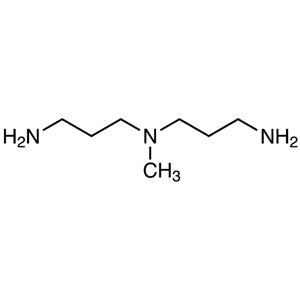
2,2-Dimethyl-1,3-propanediamine is a chemical compound widely used in various chemical reactions, particularly in the synthesis of polymers and organic compounds. As a key reagent in materials science, it serves as a building block for monomer production, playing a crucial role in the development of advanced materials. Its presence in chemical and materials laboratories underscores its importance as an essential component in the creation of complex molecular structures. This compound is commonly utilized in research settings where the synthesis of new materials or functional chemicals is required.
The compound is valued for its chemical stability and high reactivity, which enable it to participate in a wide range of chemical transformations. Its molecular structure, featuring two amine groups, makes it an effective cross-linking agent or reactive component in polymerization reactions. These properties make it a preferred choice for researchers aiming to develop polymers with specific functional properties. The versatility of 2,2-Dimethyl-1,3-propanediamine allows it to be applied in diverse chemical processes, contributing to the advancement of both academic and industrial research.
In Indonesian laboratories, 2,2-Dimethyl-1,3-propanediamine is frequently used in material science, organic chemistry, and industrial chemistry research. It is an integral part of the synthesis of complex chemical compounds and polymer materials. Its availability in the local market ensures easy access for researchers and educational institutions. This compound supports a variety of laboratory applications, making it a reliable and essential reagent in the chemical and materials research community.
TCI brochures (PDF)
- Biomaterials Research Reagents 2025-02-19 · p. 18
Related TCI products
- TCI M1657 2400-78-4 2-Methyl-1,3-propanediamine
- TCI B1445 4741-99-5 N,N'-Bis(2-aminoethyl)-1,3-propanediamine
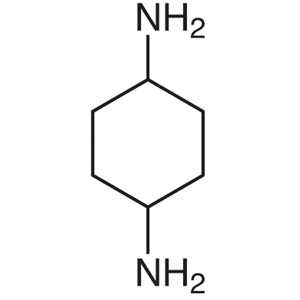
- TCI C0814 3114-70-3 1,4-Cyclohexanediamine (cis- and trans- mixture)
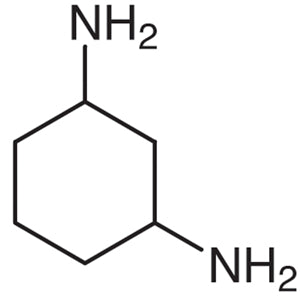
- TCI C0813 3385-21-5 1,3-Cyclohexanediamine (cis- and trans- mixture)
- TCI B3852 56602-77-8 Bis(aminomethyl)norbornane (mixture of isomers)
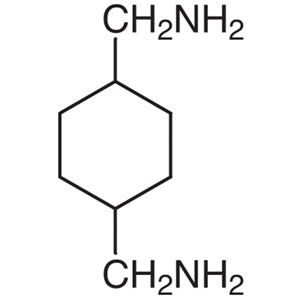
- TCI B1083 2549-93-1 1,4-Bis(aminomethyl)cyclohexane (cis- and trans- mixture)
- Polymer synthesis for the development of thermoplastic and thermosetting materials due to its ability to act as a cross-linking agent in polymerization reactions.
- Organic chemistry research for the creation of complex organic compounds through various synthetic pathways involving amine functionalities.
- Industrial chemistry applications in the production of specialty chemicals and functional polymers requiring controlled reactivity and molecular structure.
- Materials science experiments to design and test new materials with specific mechanical and chemical properties.
- Chemical process development for the optimization of reaction conditions and the synthesis of high-performance materials.
| Brand | TCI |
|---|---|
| CAS number | 7328-91-8 |
| Molecular formula | — |
| Purity | — |
| Category | Materials Science > Polymer/Macromolecule Reagents > Monomers |
| Pack sizes | Available in various quantities as per standard laboratory supply options |
| Physical form | Liquid |
| Storage | Store in a cool, dry place away from direct sunlight and incompatible materials |
This compound should be stored in a cool, dry environment, away from direct sunlight and sources of heat. It is recommended to use sealed containers made of materials compatible with its chemical nature to prevent contamination and evaporation. Proper ventilation is essential when handling the compound to minimize exposure to vapors. Due to its reactivity, it should be kept away from strong oxidizing agents and incompatible substances. Laboratory personnel should wear appropriate personal protective equipment, including gloves and safety goggles, when working with this material to ensure safe handling and reduce potential risks.
—
Product Categories
- Polymer/Macromolecule ReagentsMonomersDiamine Monomers
- Polymer/Macromolecule ReagentsPolyimide Raw MaterialsDiamines [Polyimide Raw Materials]
- Biomaterials/Biocompatible Materials Research ReagentsMonomers and Macromonomers [Biomaterials/Biocompatible Materials Research Reagents]Diamine Monomers [Biomaterials/Biocompatible Materials Research Reagents]
Produk Terkait
-
2-Methyl-1,3-propanediamine TCI M1657
Regular price From Rp 3.392.550,00Regular price -
N,N'-Bis(2-aminoethyl)-1,3-propanediamine TCI B1445
Regular price Rp 1.378.650,00Regular price -
1,4-Cyclohexanediamine(cis-andtrans-mixture) TCI C0814
Regular price From Rp 1.565.550,00Regular price -
1,3-Cyclohexanediamine(cis-andtrans-mixture) TCI C0813
Regular price From Rp 2.625.000,00Regular price -
Bis(aminomethyl)norbornane(mixtureofisomers) TCI B3852
Regular price From Rp 980.700,00Regular price -
1,4-Bis(aminomethyl)cyclohexane(cis-andtrans-mixture) TCI B1083
Regular price From Rp 1.881.600,00Regular price -
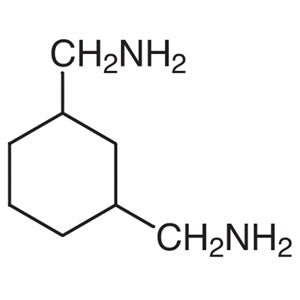
1,3-Bis(aminomethyl)cyclohexane(cis-andtrans-mixture) TCI B1005
Regular price From Rp 505.050,00Regular price -
3,3'-Diamino-N-methyldipropylamine TCI B0821
Regular price From Rp 477.750,00Regular price