

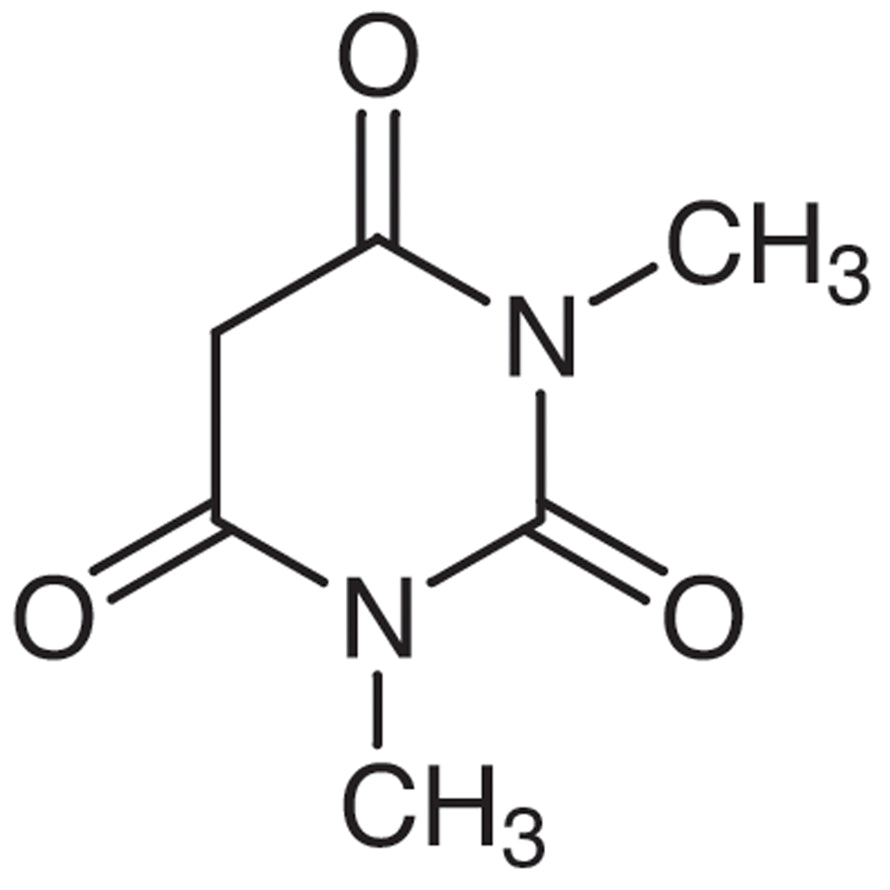
1,3-Dimethylbarbituric Acid is a chemical compound widely used as a building block in the synthesis of heterocyclic compounds. This compound plays a crucial role in chemical laboratories due to its structural similarity to barbiturates, which allows it to participate in various chemical reactions. Its versatility makes it an essential component in the development of bioactive molecules and pharmaceuticals. Due to its stability and controlled reactivity, it is a reliable choice for researchers aiming to create complex organic structures.
The compound’s chemical stability and predictable reactivity make it a preferred choice for laboratory applications. It maintains its integrity under normal conditions, ensuring consistent results in experiments. Its ability to form stable bonds with other functional groups enhances its utility in organic synthesis. Additionally, its availability in multiple packaging sizes supports both small-scale and large-scale research needs, making it adaptable to diverse laboratory settings.
In Indonesian laboratories, 1,3-Dimethylbarbituric Acid is extensively used in chemical research, pharmaceutical development, and analytical testing. It is a common reagent in academic and industrial settings, supporting studies in drug synthesis, chromatography, and material analysis. Its widespread use reflects its importance in advancing scientific research and innovation in the region.
Related TCI products
- TCI A2555 58713-03-4 5-Acetyl-1,3-dimethylbarbituric Acid
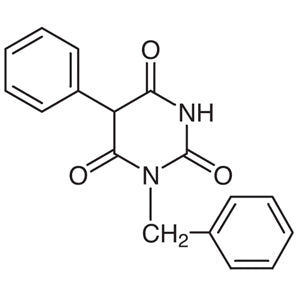
- TCI B2789 72846-00-5 1-Benzyl-5-phenylbarbituric Acid
- TCI D2815 35824-91-0 1,3-Dicyclohexylbarbituric Acid
- TCI I0310 496-76-4 Isobarbituric Acid
- TCI T2834 504-17-6 2-Thiobarbituric Acid [for Biochemical Research]
- TCI T0192 504-17-6 2-Thiobarbituric Acid
- Pharmaceutical research utilizes 1,3-Dimethylbarbituric Acid for the synthesis of bioactive compounds due to its structural versatility and reactivity.
- Organic synthesis applications benefit from its ability to form stable bonds with various functional groups, enabling the creation of complex molecules.
- Chromatographic analysis relies on this compound as a standard for identifying and quantifying compounds in complex mixtures.
- Academic research institutions use it as a key reagent in teaching and experimental protocols for students and researchers.
- Industrial laboratories incorporate it into the development of new materials and chemical products due to its stability and reactivity.
| Brand | TCI |
|---|---|
| CAS number | 769-42-6 |
| Molecular formula | — |
| Purity | — |
| Category | Chemistry > Building Blocks > Heterocyclic Building Blocks |
| Pack sizes | Available in multiple sizes to suit different laboratory needs |
| Physical form | Solid |
| Storage | Store in a cool, dry place away from direct sunlight |
This compound should be stored in a cool, dry place, away from direct sunlight and sources of heat. It is recommended to use airtight containers to prevent moisture absorption and maintain its chemical integrity. Due to its stability, it does not require refrigeration but should be kept in a secure location to avoid contamination. Laboratory personnel should handle it with appropriate care, using standard safety protocols to ensure safe handling and storage. Proper labeling and storage conditions help maintain the compound’s effectiveness and safety in laboratory environments.
—
Produk Terkait
-
5-Acetyl-1,3-dimethylbarbituricAcid TCI A2555
Regular price Rp 5.698.350,00Regular price -
1-Benzyl-5-phenylbarbituricAcid TCI B2789
Regular price Rp 1.803.900,00Regular price -
1,3-DicyclohexylbarbituricAcid TCI D2815
Regular price From Rp 3.232.950,00Regular price -
IsobarbituricAcid TCI I0310
Regular price Rp 2.439.150,00Regular price -
2-ThiobarbituricAcid[forBiochemicalResearch] TCI T2834
Regular price Rp 1.193.850,00Regular price -
2-ThiobarbituricAcid TCI T0192
Regular price From Rp 1.326.150,00Regular price -
BarbituricAcid TCI B0003
Regular price From Rp 505.050,00Regular price -
5-NitrobarbituricAcidTrihydrate TCI N0128
Regular price From Rp 1.749.300,00Regular price



![504-17-6 2-Thiobarbituric Acid [for Biochemical Research] - AMI Scientific](http://amiscientific.com/cdn/shop/files/TCI2510T2834.jpg?v=1767143442&width=533)


