2,2'-Dimethylbiphenyl is a chemical compound widely used as a foundational material in various chemical reactions. It serves as a building block in the synthesis of more complex compounds, making it essential in organic chemistry research. This compound is particularly valued for its structural versatility and its role in creating new molecular frameworks. In laboratory settings, it is frequently utilized for its predictable chemical behavior and stability, allowing researchers to design and execute experiments with confidence. Its non-polar nature and controlled reactivity make it a reliable choice for a wide range of chemical applications.
The compound's properties, including its non-polar character and high melting point, make it a preferred choice in laboratory environments. These characteristics facilitate efficient separation and purification processes, which are critical in analytical and synthetic chemistry. Its chemical inertness with common reagents also reduces the risk of unexpected reactions, ensuring safer and more controlled experimental conditions. This stability and predictability are key factors in its widespread use across different research fields, especially in the development of new chemical compounds and materials.
In Indonesian laboratories, 2,2'-Dimethylbiphenyl is commonly used in organic chemistry research, particularly in the synthesis of aromatic compounds and industrial chemicals. It is a staple in academic and research institutions across the country, supporting both experimental and technological advancements. Its reliability and versatility make it an essential component in the chemical research toolkit of Indonesian scientists and students.
- Organic synthesis applications benefit from 2,2'-Dimethylbiphenyl's structural versatility, allowing the creation of complex aromatic compounds with controlled reactivity.
- It is ideal for purification processes due to its high melting point and non-polar nature, which simplify separation techniques in analytical chemistry.
- In industrial chemical development, this compound is used as a building block for synthesizing materials with specific functional properties.
- Its chemical stability makes it suitable for long-term storage and use in research projects requiring consistent results over time.
- Indonesian laboratories use it extensively in teaching and research, providing students with hands-on experience in synthetic chemistry techniques.
| Brand | TCI |
|---|---|
| CAS number | 605-39-0 |
| Molecular formula | — |
| Purity | — |
| Category | Chemistry > Building Blocks > Non-Heterocyclic Building Blocks |
| Pack sizes | Available in various quantities as per standard laboratory supply |
| Physical form | Solid |
| Storage | Store in a cool, dry place away from direct sunlight |
2,2'-Dimethylbiphenyl should be stored in a cool, dry environment to maintain its chemical stability and prevent degradation. It is recommended to keep the compound in a sealed container to minimize exposure to moisture and air. Due to its non-polar nature, it is best stored in glass or high-density polyethylene containers to ensure compatibility and prevent contamination. In laboratory settings, it is important to handle the compound with care, using appropriate personal protective equipment to avoid direct contact. Regular monitoring of storage conditions is advised to ensure the compound remains suitable for use in chemical experiments and research.
—
Produk Terkait
-
3,3'-Dimethylbiphenyl TCI D1430
Regular price From Rp 2.650.200,00Regular price -
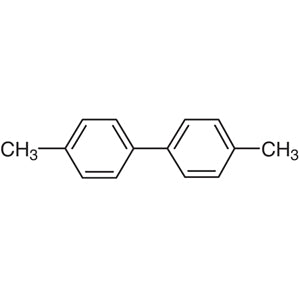
4,4'-Dimethylbiphenyl TCI D1234
Regular price From Rp 823.200,00Regular price -
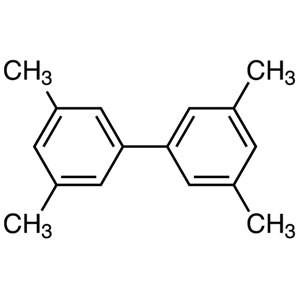
3,3',5,5'-Tetramethylbiphenyl TCI T2948
Regular price From Rp 2.597.700,00Regular price -
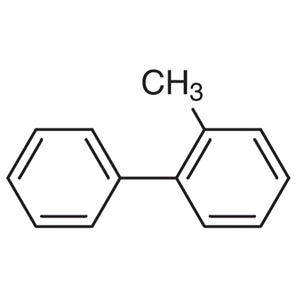
2-Methylbiphenyl TCI M1242
Regular price From Rp 1.405.950,00Regular price -
4-Methylbiphenyl TCI M0563
Regular price From Rp 1.060.500,00Regular price -
3-Methylbiphenyl TCI M0296
Regular price From Rp 1.431.150,00Regular price -
3-Ethylbiphenyl TCI E0568
Regular price Rp 5.857.950,00Regular price -
4-(3-Buten-1-yl)-4'-methylbiphenyl TCI B5872
Regular price Rp 2.094.750,00Regular price