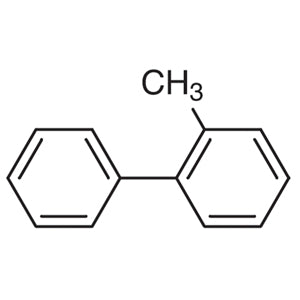
2-Methylbiphenyl is a chemical compound widely used as a building block in various chemical reactions, particularly in the synthesis of complex aromatic compounds. Its molecular structure consists of two benzene rings connected by a single carbon atom, with a methyl group attached to one of the rings. This unique structure makes it a valuable tool for chemists seeking to construct more complex molecular frameworks. In the laboratory, it serves as a foundational material for creating new compounds with specific functional properties. Its versatility allows it to be applied across multiple disciplines, including organic chemistry, pharmacology, and materials science.
The compound is prized for its stability and controlled reactivity, which make it suitable for a wide range of chemical processes. It does not easily degrade under normal conditions, which simplifies storage and long-term use. Additionally, its clear molecular structure facilitates identification and analysis during research. These properties make it a reliable choice for researchers aiming to maintain consistency and accuracy in their experiments. Its predictable behavior also reduces the risk of unexpected side reactions, enhancing the safety and efficiency of laboratory work.
In Indonesian laboratories, 2-Methylbiphenyl is commonly used in organic chemistry research, especially in academic institutions and research centers. It plays a key role in the development of new compounds with potential applications in pharmaceuticals, materials, and industrial chemistry. Its availability and reliability make it a standard component in many chemical synthesis processes, supporting both educational and applied research efforts.
- Organic synthesis is a key application where 2-Methylbiphenyl is used to build complex aromatic structures, offering a stable and predictable starting material for various reactions.
- Pharmaceutical research benefits from its role in the development of new drug compounds, as it can be modified to create molecules with specific therapeutic properties.
- Materials science applications leverage its structural properties to design new polymers and functional materials with enhanced characteristics.
- Analytical chemistry uses it as a reference standard for identifying and quantifying aromatic compounds in complex mixtures.
- Teaching laboratories employ it to demonstrate fundamental concepts in organic chemistry, such as aromaticity and functional group manipulation.
| Brand | TCI |
|---|---|
| CAS number | 643-58-3 |
| Molecular formula | — |
| Purity | — |
| Category | Chemistry > Building Blocks > Non-Heterocyclic Building Blocks |
| Pack sizes | Available in various quantities as per supplier specifications |
| Physical form | Solid |
| Storage | Store in a cool, dry place away from direct sunlight |
2-Methylbiphenyl should be stored in a cool, dry environment to maintain its stability and prevent degradation. It is recommended to keep it in tightly sealed containers to minimize exposure to air and moisture. Due to its chemical nature, it should be handled with appropriate personal protective equipment, such as gloves and safety goggles, to ensure laboratory safety. Avoid direct contact with skin and inhalation of vapors. It should be stored away from incompatible materials, such as strong oxidizers, to prevent any potential chemical interactions. Regular inspection of storage conditions is advised to ensure long-term integrity and usability of the compound.
—
Produk Terkait
-
4-Methylbiphenyl TCI M0563
Regular price From Rp 1.060.500,00Regular price -
3-Methylbiphenyl TCI M0296
Regular price From Rp 1.431.150,00Regular price -
4-(3-Buten-1-yl)-4'-methylbiphenyl TCI B5872
Regular price Rp 2.094.750,00Regular price -
3,3',5,5'-Tetramethylbiphenyl TCI T2948
Regular price From Rp 2.597.700,00Regular price -
3-Ethylbiphenyl TCI E0568
Regular price Rp 5.857.950,00Regular price -
2,2'-Dimethylbiphenyl TCI D1717
Regular price From Rp 1.590.750,00Regular price -
3,3'-Dimethylbiphenyl TCI D1430
Regular price From Rp 2.650.200,00Regular price -
4,4'-Dimethylbiphenyl TCI D1234
Regular price From Rp 823.200,00Regular price