3-Ethylbiphenyl is an organic compound widely used in chemical reactions to construct complex molecular structures. It serves as a fundamental building block in synthetic chemistry, enabling the development of more intricate compounds. This material is commonly found in chemical laboratories as a key component in the synthesis of various organic compounds. Its role is critical in both academic and industrial research settings, where it is used to create derivatives and functional groups essential for advanced chemical processes.
As an aromatic compound, 3-Ethylbiphenyl exhibits a stable structure and controlled reactivity, making it a reliable choice for chemical experiments. It is non-polar in nature and has a relatively high melting point, which makes it suitable for use in laboratory conditions that require thermal stability. These properties facilitate its use in purification and separation processes during synthesis. Additionally, its low reactivity under normal conditions ensures stability during chemical reactions, minimizing unwanted side reactions.
In Indonesian laboratories, 3-Ethylbiphenyl is frequently utilized in organic chemistry research, particularly in higher education institutions and research organizations. It is an essential part of the chemical toolkit required for experiments involving aromatic compounds as starting materials. Its application extends to the synthesis of pharmaceuticals, polymers, and other complex organic molecules, supporting both teaching and research activities.
- Organic Synthesis: 3-Ethylbiphenyl is ideal for creating aromatic derivatives and functional groups in complex molecule construction.
- Teaching Laboratories: It is commonly used in educational settings to demonstrate chemical reactivity and structural manipulation.
- Pharmaceutical Research: Its stable structure and controlled reactivity make it suitable for drug development and compound modification.
- Polymer Chemistry: It serves as a building block for synthesizing polymers with specific aromatic properties.
- Analytical Chemistry: Its distinct physical properties aid in purification and separation techniques during compound analysis.
| Brand | TCI |
|---|---|
| CAS number | 5668-93-9 |
| Molecular formula | — |
| Purity | — |
| Category | Chemistry > Building Blocks > Non-Heterocyclic Building Blocks |
| Pack sizes | Available in various quantities as per standard laboratory supply |
| Physical form | Solid |
| Storage | Store in a cool, dry place away from direct sunlight and moisture |
3-Ethylbiphenyl should be stored in a cool, dry environment to maintain its stability and prevent degradation. It is recommended to keep it in a sealed container to avoid exposure to moisture and air. Due to its non-polar nature, it is best stored in glass or polyethylene containers that are resistant to chemical interactions. Laboratory personnel should handle it with care, using appropriate personal protective equipment such as gloves and safety goggles. Avoid direct contact with skin and inhalation of vapors. Ensure proper ventilation in the workspace to minimize any potential exposure. This compound is generally stable under normal storage conditions but should be handled with the same caution as other organic chemicals.
—
Produk Terkait
-
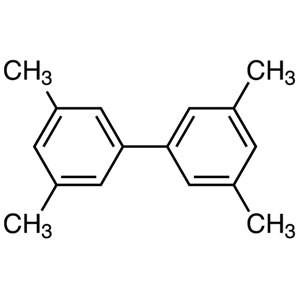
3,3',5,5'-Tetramethylbiphenyl TCI T2948
Regular price From Rp 2.597.700,00Regular price -
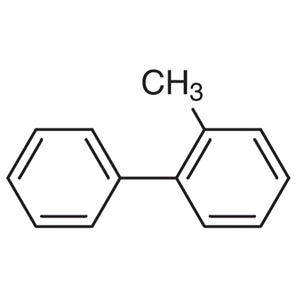
2-Methylbiphenyl TCI M1242
Regular price From Rp 1.405.950,00Regular price -
4-Methylbiphenyl TCI M0563
Regular price From Rp 1.060.500,00Regular price -
3-Methylbiphenyl TCI M0296
Regular price From Rp 1.431.150,00Regular price -
4,4'-Diethylbiphenyl TCI D2938
Regular price Rp 3.683.400,00Regular price -
2,2'-Dimethylbiphenyl TCI D1717
Regular price From Rp 1.590.750,00Regular price -
3,3'-Dimethylbiphenyl TCI D1430
Regular price From Rp 2.650.200,00Regular price -
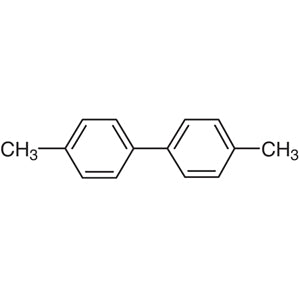
4,4'-Dimethylbiphenyl TCI D1234
Regular price From Rp 823.200,00Regular price